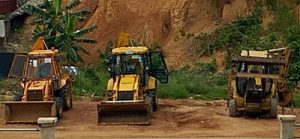
The Persistent Challenge of Galamsey in Ghana
In Ghana, illegal small-scale mining, commonly referred to as galamsey, continues to be one of the country’s most persistent national issues. Despite numerous government interventions, including military operations, bans, and policy reforms, the destruction of water bodies and farmlands remains a pressing concern. The persistence of this issue highlights a critical reality: the fight against galamsey cannot be won through enforcement alone. What is needed is a strategic and inclusive approach that prioritizes stakeholder collaboration as the foundation for sustainable mining governance.
Understanding the Problem
The issue of galamsey has become a national concern due to the severe environmental, economic, and social damage it causes. Over the years, these activities have led to widespread pollution of rivers, deforestation, land degradation, and contamination of drinking water with toxic chemicals like mercury. Recent research has shown that our greens in terms of food have also become contaminated with these harmful substances. These activities not only pose serious public health risks but also undermine the formal mining sector and cause significant revenue losses for the state.
Moreover, illegal mining is often linked to lawlessness, conflicts, and criminal networks that threaten the peace and security of mining communities. Train lines meant to connect communities and foster economic growth are being damaged by individuals driven by greed and short-term gains. These behaviors do not only hinder national progress but also endanger lives and waste taxpayers’ money.
The Limitations of Enforcement
In response to these challenges, successive governments have launched various enforcement campaigns, including military operations and the seizure or destruction of mining equipment. However, these measures have yielded limited long-term success. Despite crackdowns, galamsey activities continue in many parts of the country, highlighting the ineffectiveness of enforcement-only approaches.
This article argues that the solution to the galamsey crisis in Ghana lies not in force but in inclusive stakeholder engagement. Rather than relying solely on punitive measures, it advocates for involving local communities, traditional leaders, small-scale miners, civil society, and local authorities in addressing the root causes of illegal mining.
The Shortcomings of Force-Based Interventions
Since 2017, several high-profile initiatives, such as Operation Vanguard, Operation Halt II, and the Inter-Ministerial Committee on Illegal Mining, have sought to curb galamsey through force. While these efforts recorded temporary successes, they failed to provide lasting results. Within months of each crackdown, illegal mining activities quietly resumed, often with more sophisticated tactics.
The central weakness of these interventions lies in their top-down approach. Communities who live with the direct consequences of mining are rarely part of the solution. Many local residents, particularly the youth, see mining as their only viable livelihood. Without viable economic alternatives or a sense of inclusion, enforcement appears punitive rather than transformative.
Stakeholder Collaboration: The Sustainable Path Forward
Stakeholder collaboration goes beyond consultation. It means bringing all actors—government agencies, traditional leaders, local communities, miners, civil society, and the private sector—into genuine partnership. Each stakeholder holds a piece of the solution. The government provides regulation, the chiefs hold land rights, communities provide local knowledge, and companies bring technical expertise and funding.
In the OECD’s 2016 Due Diligence Guidance for Responsible Mineral Supply Chains, stakeholder collaboration is identified as essential to tackling resource-related conflicts. It ensures that policies reflect the needs of affected groups while upholding environmental and human rights standards. For Ghana, this means creating a mining governance ecosystem that promotes shared responsibility and mutual accountability.
The Crucial Role of Traditional Authorities
Traditional authorities occupy a pivotal position in the fight against galamsey. As custodians of land, they are often the first point of contact for both legal and illegal miners. Engaging them as partners—not mere informants—can transform local resistance into cooperation.
Notably, the Asantehene, Otumfuo Osei Tutu II, has taken a strong stance against galamsey, urging chiefs under his jurisdiction to protect water bodies and reclaim degraded lands. His approach demonstrates that when traditional rulers champion responsible resource use, they can mobilize their communities toward environmental stewardship.
Empowering Communities and the Youth
Sustainable mining solutions must also address the economic realities of rural communities. Many illegal miners are not criminals by choice but victims of limited opportunities. Collaborative initiatives such as the Community Mining Scheme (CMS) introduced by the government offer a promising model—when properly implemented. The CMS encourages licensed small-scale mining within a framework of environmental protection, community ownership, and job creation.
To succeed, however, such schemes require strong local governance and stakeholder oversight. Youth associations, local assemblies, and NGOs can serve as watchdogs to ensure transparency in licensing and compliance with environmental standards.
Private Sector and Civil Society Partnerships
Corporate Ghana and civil society organizations have crucial roles to play. Large mining companies can support alternative livelihood projects, reclamation efforts, and capacity building for small-scale miners. For example, Newmont Ghana’s Ahafo Sustainable Development Foundation invests in community infrastructure and training, reducing dependency on illegal mining.
Civil society organizations like A Rocha Ghana and Friends of the Nation continue to advocate for environmental justice and provide platforms for dialogue between government and communities. Their involvement strengthens policy legitimacy and enhances public trust.
Building a Collaborative Governance Framework
A national Stakeholder Coordination Council on Responsible Mining could institutionalize collaboration. This body would bring together the Minerals Commission, the Environmental Protection Agency, traditional authorities, mining firms, and civil society to design and monitor community-driven anti-galamsey initiatives. The council could also coordinate data collection, environmental reporting, and policy evaluation—ensuring continuity beyond political cycles.
Furthermore, Ghana’s Extractive Industries Transparency Initiative (EITI) framework offers an excellent platform for multi-stakeholder engagement in the mining sector. Strengthening this structure and integrating anti-galamsey objectives could enhance transparency and accountability.
Conclusion
The galamsey crisis is not just an environmental issue—it is a governance test. Decades of enforcement have shown that coercion cannot change entrenched economic realities or local power dynamics. Only collaboration can. When traditional rulers, communities, miners, government agencies, and companies work hand in hand, illegal mining can be transformed into sustainable livelihoods. The solution lies not in the sound of soldiers’ boots but in the power of shared commitment. Ghana must therefore move beyond enforcement and embrace stakeholder collaboration as the true path to ending galamsey—once and for all.


