The Struggle for Nigeria’s Energy Future
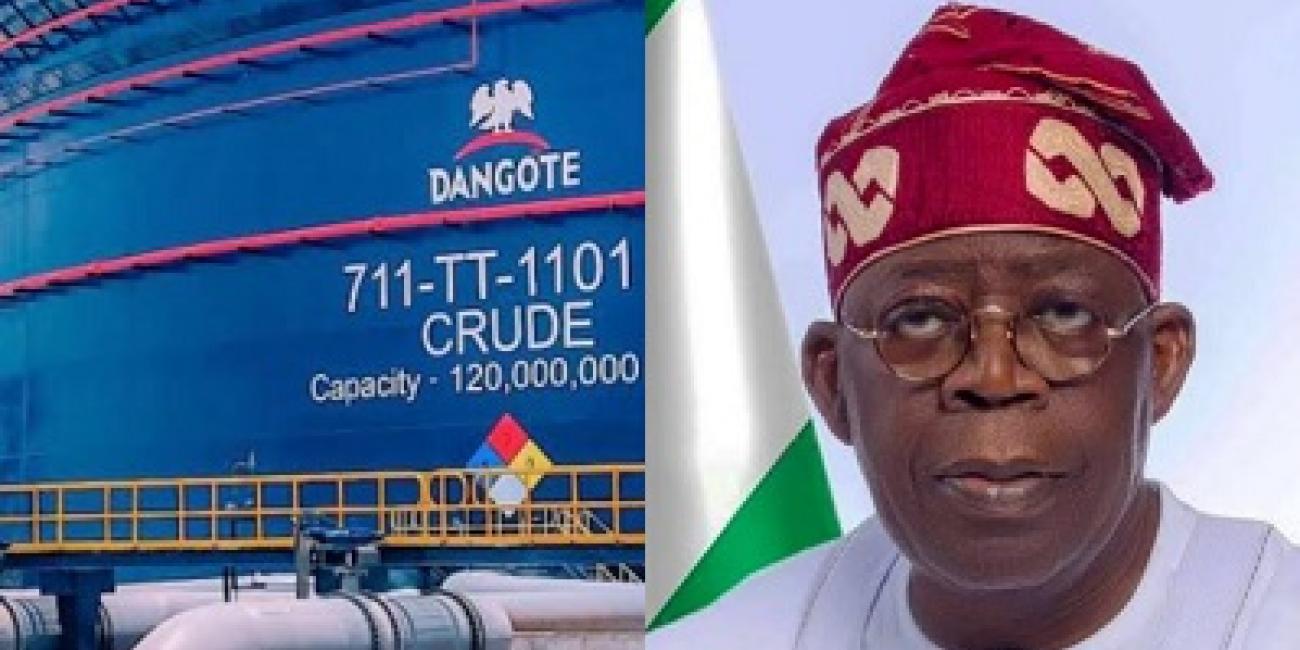
In the heart of Nigeria’s economic engine room, a quiet but consequential battle is unfolding. This is not a war of guns or politics, but rather a struggle over control and influence in the oil and gas sector. On one side is the Nigeria Union of Petroleum and Natural Gas Workers (NUPENG), a powerful labor organization representing thousands of workers in the industry. On the other side stands the Dangote Group, led by Africa’s richest man, Aliko Dangote. His 650,000 barrels-per-day refinery is set to reshape Nigeria’s petroleum landscape, potentially dominating it.
This dispute is more than an industrial conflict; it is a fight over the soul of Nigeria’s energy economy. It touches on the balance between private capital and public interest, as well as the preservation of workers’ rights in a sector that is too vital to be monopolized.
NUPENG’s Stand: Rights Are Non-Negotiable
At the core of the standoff is the alleged refusal of the Dangote Refinery to recognize unionism among its workforce. NUPENG accuses the company of obstructing union activities, intimidating potential members, and violating Nigeria’s labor laws that protect the right to freedom of association.
Union officials claim that efforts to register refinery workers and tanker drivers under NUPENG have been met with resistance. Workers reportedly face subtle threats for aligning with labor movements, while management insists that union membership “is a personal choice.”
Recall that one of Nigeria’s foremost lawyers, Femi Falana, SAN, once stated that any company or employer who denies workers this freedom is acting outside the law and against the democratic spirit of the nation.
For NUPENG, anything that contradicts this position is unacceptable. Under Nigeria’s Trade Union Act (Cap T14, LFN 2004), all junior workers in an organization are automatically deemed members of the appropriate trade union unless they opt out in writing. Section 40 of the Constitution further guarantees workers the right to freely associate.
NUPENG’s President, Prince Williams Akporeha, has vowed that the union will not fold its arms while a new corporate empire attempts to roll back decades of hard-won workers’ rights.
The Bigger Fear: Monopoly in the Making
Beyond the question of union rights lies a larger fear—the growing concentration of power in Nigeria’s oil sector. With its massive refining capacity, expansive logistics network, and over 4,000 CNG-powered tankers, the Dangote Group now controls almost every link in the petroleum value chain: refining, storage, distribution, and retail.
NUPENG warns that this structure represents the embryo of a private monopoly. The union fears that if unchecked, Dangote could replicate his dominance in cement and sugar industries where competition has virtually disappeared and prices remain high despite earlier promises of affordability.
“We cannot allow a repeat of the cement story in oil,” said Afolabi Olawale, NUPENG General Secretary. Dangote dismisses such fears as unfounded, arguing that over 30 other refinery licenses have been issued by the government, and that his refinery is meant to complement, not dominate, the market.
Yet the optics tell a different story. The refinery’s scale and vertical integration have already created a structural imbalance that smaller marketers and tanker owners fear they cannot survive.
Echoes from Cement and Sugar Industries
The lessons from the cement and sugar industries serve as cautionary tales. When Dangote Cement rose to prominence in the early 2000s, it was celebrated for reducing import dependence. But as competitors faded, the market narrowed and prices climbed.
The same story played out in the sugar industry, where government import restrictions designed to encourage local production instead entrenched Dangote’s dominance, leaving smaller producers struggling.
The lesson, according to NUPENG, is clear: Monopoly, whether public or private, always comes at a cost. Today, the risk is that Nigeria’s newly deregulated oil sector could be quietly reconsolidated under one private empire.
Current Effects: Labour Unrest and Market Anxiety
The standoff has already triggered shockwaves across the industry. In early September 2025, NUPENG threatened a nationwide strike, accusing the Dangote Refinery of “anti-labour practices.” The move, backed by PENGASSAN, raised fears of fuel scarcity and price instability.
The DSS and the Federal Ministry of Labour intervened, brokering a temporary truce. A Memorandum of Understanding (MoU) was signed, guaranteeing workers the right to unionise within a given period.
Yet many within the labour movement doubt the sincerity of Dangote’s concession, seeing it as a temporary appeasement to buy time until his market dominance is irreversible.
Meanwhile, smaller marketers report restricted access to supply, delayed allocations, and rising logistics costs—symptoms, they say, of an emerging one-gate control over Nigeria’s oil economy.
Legal and Constitutional Stakes
At stake are not just workers’ rights or business interests, but the rule of law itself. If the Dangote Group continues to limit union activity or dominate market access, it risks violating Nigeria’s trade, competition, and labour laws.
The Federal Competition and Consumer Protection Act (FCCPA, 2019) prohibits monopolistic practices that “prevent, restrict, or distort competition.” Any conduct that “amounts to abuse of a dominant position” can attract penalties, including forced divestment or fines.
No nation deregulates only to replace a public monopoly with a private one. To do so would betray the very philosophy of a free and fair market economy.
An Appeal to President Bola Ahmed Tinubu
See Beyond the Immediate. It is within this context that I join NUPENG and all advocates of economic justice in calling on President Bola Ahmed Tinubu to act decisively.
The Tinubu administration has championed market reforms, including fuel subsidy removal and downstream liberalisation. Yet those reforms must not pave the way for private monopolisation disguised as efficiency.
The Federal Government must:
- Enforce competition laws under FCCPC and NMDPRA frameworks;
- Protect small and medium marketers from exclusionary practices;
- Ensure full recognition of NUPENG’s union rights at the Dangote Refinery;
- Diversify refinery licensing and crude access, preventing any single entity from controlling the entire value chain.
“No economy thrives when one man becomes the market,” says NUPENG.
President Tinubu must look beyond the excitement of a local refinery and see the long-term danger of allowing a single titan to dictate prices, access, and opportunity.
The Future: What Is at Stake?
If left unchecked, Dangote’s dominance could rewrite Nigeria’s economic DNA, shifting the nation from public monopoly to private empire.
Workers could lose their bargaining power, smaller firms could collapse, and government itself might one day negotiate not with an industry, but with an individual.
If fairness and competition prevail, Nigeria’s deregulated market will thrive. But if silence and complicity endure, the nation may soon find itself in a refined version of economic feudalism, where the refinery becomes the new fortress of power.
The Last Wall Standing
NUPENG’s battle with Dangote seems not just a union struggle; it is a national test of will.
Can Nigeria build a capitalist economy that is competitive yet compassionate, dynamic yet democratic? In an era where power increasingly resides in private hands, NUPENG stands battered but unyielding as the last wall between monopoly capital and the Nigerian worker.
I call on the government to choose: Between an open market that empowers millions or a private monopoly that serves a few; between workers’ dignity or corporate dominance; between a refinery for the nation or a nation at the mercy of one refinery. History, as always, will remember who stood where.


