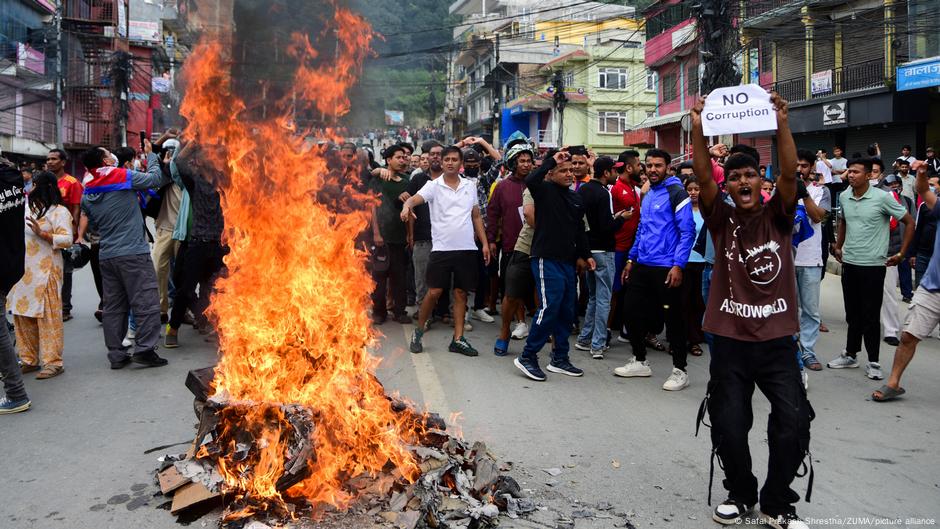
Young People Across South and Southeast Asia Are Shaking Political Systems
Young people across South and Southeast Asia have grown up in a digital age, increasingly frustrated with their leaders. As job opportunities dwindle and inequality widens, their protests are challenging even the most entrenched political systems.
Over the past two months, Gen Z-led demonstrations have spread across various parts of South and Southeast Asia — from Kathmandu to Jakarta, from Dili to Manila. These movements have had varying degrees of impact, but they all reflect a growing discontent among young people.
In Nepal, youth protests against a ban on major social media platforms, combined with long-standing anger over corruption, led to significant changes on September 8. The movement ultimately resulted in the downfall of Prime Minister Khadga Prasad Sharma Oli’s government, the dissolution of parliament, and the reversal of the social media ban.
Indonesia also experienced weeks of unrest, initially sparked by outrage over generous perks for legislators while ordinary citizens struggle with a cost-of-living crisis. Protests that began in late August spread across the country, leading to at least ten deaths and thousands of detentions. In response, President Prabowo Subianto made changes, including reducing privileges for politicians and reshuffling his cabinet.
The wave of protests then reached Timor-Leste, one of Asia’s poorest countries, where student-led rallies outside parliament in late September criticized plans to buy new vehicles for MPs and a law granting lifetime pensions to lawmakers. The government eventually conceded, scrapping the pension law and shelving the car purchase.
In the Philippines, thousands of mostly young protesters gathered in mid-September at Manila’s Rizal Park, rallying against alleged corruption in flood-relief projects that reportedly lost $1.8 billion (€1.56 billion).
Economic Injustice and Elite Privilege as Core Issues
These protests have earned the moniker of a “Gen Z uprising,” referring to those born roughly between 1997 and 2012. However, while young people provided the initial energy and digital infrastructure, the issues of economic injustice and elite privilege resonate across generations.
According to Gita Putri Damayana, a PhD scholar at the Australian National University, the protests in Indonesia and Nepal saw participation from union members, informal workers, and older civil society networks once the initial student push broke the fear barrier.
In Timor-Leste and Indonesia, youth were more strongly involved, though young people played an important role in all three movements. Bridget Welsh, an honorary research associate at the University of Nottingham’s Asia Research Institute Malaysia, highlighted this dynamic.
This is not a wholly new phenomenon. Thailand’s nationwide youth-led protests in 2020-21 challenged establishment power, with calls for reforms even to the monarchy. However, these protests did not lead to structural change, and when they threatened the security of the government, the Thai state used violent repression.
Damayana noted that the recent protests differ from historic upheavals like the popular uprisings that toppled past authoritarian leaders in Indonesia and the Philippines. They were not focused on an immediate overthrow of the entire government, but rather on demanding systemic accountability and better governance within existing political structures.
Will the Region Witness More Gen Z Uprisings?
Governments across Southeast Asia are now aware that conspicuous privilege can be combustible, according to analysts. Yet, the incentives to revert to old ways remain strong, especially in countries facing democratic erosion such as Indonesia and the Philippines.
Officials in these countries are already framing youth actions as “riots,” “anarchic,” or even “foreign-funded” — a familiar tactic to delegitimize dissent. The harder test will be turning street power into slow, technical reform, which involves campaigning for credible election rules, strengthening anti-corruption bodies, and writing detailed laws — work that rarely trends on TikTok.
“The energy needed to embed accountability in institutions is immense — and the process is easily captured or diluted by the same elites the movements seek to restrain,” Damayana said.
Despite these challenges, experts believe that mounting political and economic grievances are likely to fuel more youth-led protest movements in the region. Thailand, mired in political crisis since March, is expected to hold fresh elections before the year’s end.
The youth-focused Move Forward party won the last ballot but was denied the opportunity to form a government by establishment parties and was later dissolved by the Constitutional Court on flimsy charges. It has since regrouped as the People’s Party, which remains popular. If it were to win the next election and face similar obstacles to forming the next government, young Thais could respond with hostility.
In a world where youth are constantly in close contact via social media and news spreads rapidly, successful Gen Z protests in one country can encourage similar protests in other countries, said Robertson.
“This is a positive development for wider accountability and equality that is long overdue, and ideally it will continue to spread to end more autocrats’ looting of state resources and human rights abuses,” he added.


