The Agricultural Revolution: Alfalfa as a Game-Changer for Nigeria
Nigeria’s agricultural sector has long grappled with a multitude of challenges, including unpredictable rainfall patterns and the persistent herder-farmer conflicts that have devastated rural communities. At the core of this conflict is the issue of livestock feed, which has forced herders to migrate in search of pasture, often leading to destructive clashes. A promising breakthrough crop could be the key to transforming not only the livestock sector but also the nation’s approach to food security.
For generations, Nigerian herders have relied on open grazing, while dairy and poultry farmers have struggled with the high cost of imported feed concentrates to meet the nutritional needs of their livestock. Now, alfalfa—a high-protein forage crop known globally as ‘green gold’—is being tested in Nigeria, particularly in Plateau State, with encouraging results. This legume, rich in protein, vitamins, and minerals, has the potential to reduce feed costs, boost livestock productivity, and ease the farmer-herder conflicts that have plagued the country for years.
The Plateau Pilot: A Step Toward Transformation
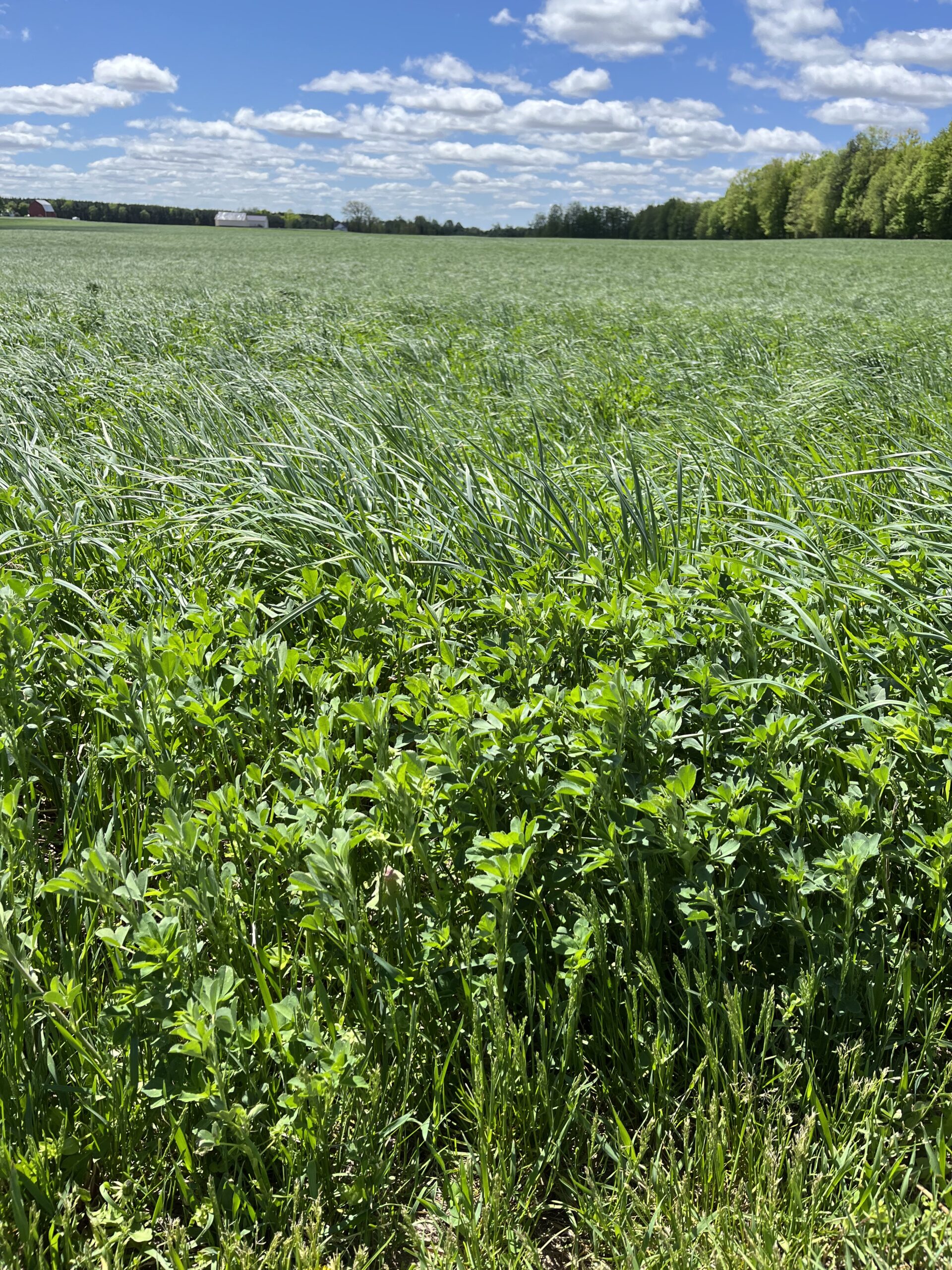
In May 2025, The Alternative Bank, in collaboration with Plateau State University (PLASU) and the Federal Ministry of Livestock Development, launched a groundbreaking pilot project in Plateau State, testing the viability of cultivating alfalfa in Nigeria. The project, conducted in Bokkos, a highland region with a temperate climate ideal for alfalfa’s growth, has delivered very promising results. At the recently held Green Field Day, researchers confirmed that germination rates exceeded 85%, with plants reaching 66.5 cm in just 13 weeks. Projected yields suggest the crop could produce 18-20 tonnes per hectare annually under rain-fed conditions. These outcomes align with what is achieved in established alfalfa-growing regions around the world.
The significance of this project is immense. Professor Hosea Finangwai, the lead researcher from PLASU, confirmed that these results meet global benchmarks, showing that alfalfa can be successfully cultivated in Nigeria’s diverse climates. Furthermore, laboratory tests revealed that the protein content of the locally grown alfalfa was at par with international standards. This is a crucial breakthrough, as it allows Nigerian farmers to access high-quality feed that has previously been imported at a high cost.
At the Green and Brown Field Day events organized to showcase the trial, farmers and herders from the region witnessed the positive impact of alfalfa firsthand. Many had never heard of the crop before but were eager to learn about its potential. Herders, who attended the brown field day, saw alfalfa as a solution to reducing the need for cattle migration, which often leads to conflicts with farmers. For farmers, the introduction of alfalfa promised a new income stream and a way to improve livestock health, thereby increasing productivity.
The Time to Make That Move is Now
The success of alfalfa trials in Plateau State is more than just a milestone—it is a call to action. Nigeria has shown that it can cultivate this ‘green gold’ successfully, but to fully unlock its potential, we must take the next step. This is the moment for all stakeholders, from policymakers to farmers and investors, to come together and drive this transformation forward.
The introduction of alfalfa in Nigeria has the potential to create ripple effects that extend beyond the livestock sector. First, the availability of reliable fodder could significantly reduce the need for pastoral migration, which is one of the root causes of the ongoing farmer-herder conflicts. By transitioning from open grazing to ranching, Nigeria could establish a more settled livestock system, fostering peace between herders and farmers, particularly in regions like the South-West, which has seen rising herder incursions on farms.
Secondly, alfalfa’s nutritional value could boost livestock productivity across Nigeria. Dairy cows fed alfalfa could produce more milk, while beef cattle could reach market weight faster. This would help close the productivity gap between Nigeria and other global livestock producers, ultimately improving the profitability of Nigeria’s livestock sector. With improved feed at lower costs, livestock farming could become more affordable and profitable, helping meet the growing demand for meat and milk in Nigeria. Furthermore, alfalfa farming offers an opportunity for income diversification. Farmers in semi-arid regions of Nigeria could plant alfalfa, providing an income stream that is less vulnerable to climate risks than traditional crops. The growth of fodder markets could create new business opportunities in hay processing, seed production, and feed marketing.
Additionally, alfalfa’s environmental benefits such as soil improvement and drought tolerance could help Nigeria achieve its climate-smart agriculture goals by reducing soil erosion and improving land rehabilitation.
Scaling Up: Overcoming Challenges
While alfalfa’s potential is clear, several challenges must be addressed to scale it nationwide. Alfalfa thrives in cooler climates, and other regions of Nigeria may require irrigation or modifications to planting techniques. Further trials are needed in northern Nigeria and other areas with different climates to assess its adaptability. The establishment of a local seed production system will be essential, as current reliance on imported seeds makes alfalfa cultivation expensive. In addition, farmer education will be key to ensuring that they know how to properly cultivate and harvest alfalfa for maximum productivity.
The Nigerian government’s support is also crucial. The National Feed and Fodder Policy should be fully implemented to provide farmers with the tools, financing, and incentives they need to transition to alfalfa farming. Public-private partnerships will be necessary to facilitate the widespread adoption of alfalfa and ensure that the crop becomes a key component of Nigeria’s agricultural strategy.
The Alternative Bank has begun discussions with parties to explore the potential of scaling the initiative to other states and regions, particularly those facing the most severe herder-farmer conflicts. By extending the pilot project’s success, the Bank aims to encourage state governments and private sector partners to invest in alfalfa cultivation as a viable solution for livestock feed and rural economic development. This expansion could also serve as a foundation for developing modern ranching systems, ensuring a steady supply of nutritious fodder while reducing the environmental and social costs associated with open grazing.


