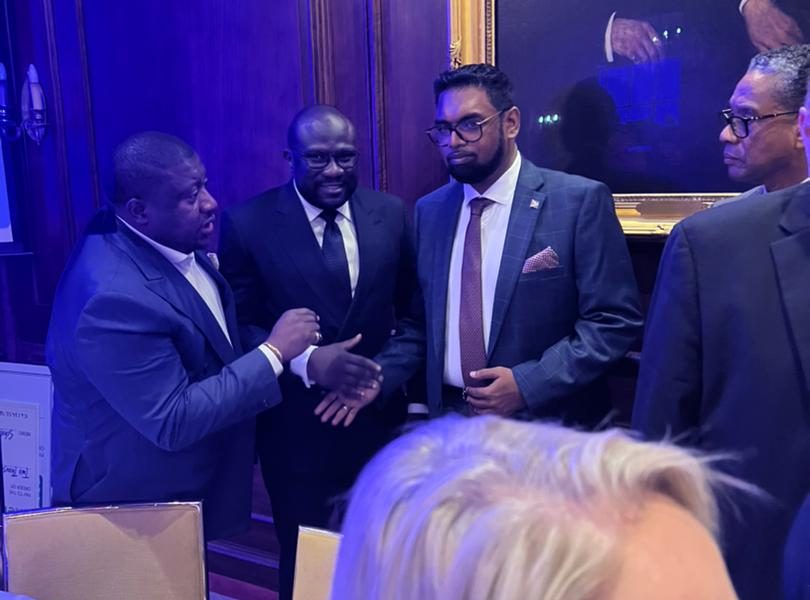
Ex-Buffer Stock CEO and Wife Face Charges This Week
The former Chief Executive Officer (CEO) of the National Food Buffer Stock Company (NAFCO), Abdul Wahab Hannan, and his wife are set to be formally charged and arraigned in court this week over allegations of corruption and unexplained wealth. While details of the charges remain unclear, sources have confirmed that the Economic and Organised Crime Office (EOCO) has completed its investigations into what insiders describe as “massive rot” during Hannan’s tenure at NAFCO.
High-Value Properties Linked to Former CEO
Investigators have traced several high-value properties in Accra, Tamale, and other locations to Hannan, raising serious questions about the source of his wealth. These include a filling station under construction along the Tamale–Bolgatanga highway, a property at Labone built on state land, and another at Airport Hills, east of Kotoka International Airport (KIA). A restaurant complex named “Chicken Republic” on Dagomba Lane, near the SSNIT regional office in Tamale, is also linked to him.
Residents in Tamale and Windana, Hannan’s hometown in the Pusiga District of the Upper East Region, expressed shock at his sudden affluence. Before his appointment in 2017, he reportedly owned only a modest property in the Tamale suburb of Tonayili. His rapid accumulation of assets, including multiple properties and businesses, has drawn public attention and fueled perceptions of widespread plundering among appointees of the previous government.
Legal Proceedings and Bail Conditions
Hannan and his wife were detained for two weeks earlier this year before being granted bail. He was released after meeting bail conditions set at GH¢50 million with two sureties, while his wife had previously secured bail of GH¢30 million. However, delays in processing sureties kept him detained until this week.
The New Patriotic Party (NPP) and the Minority in Parliament have been critical of the bail terms. Deputy Minority Leader Patricia Appiagyei described them as “punitive and excessive,” warning they risk undermining the dignity of the accused. Supporters gathered outside EOCO’s offices in protest, urging the agency to either formally charge Hannan or release him immediately.
Political Tensions and Allegations of Persecution
The Minority Caucus condemned the arrest and bail conditions imposed on Hannan, insisting that “Mr Wahab is not a fugitive.” They argued that the excessive bail conditions, which require sureties to justify their worth in assets, are “harsh” and “humiliating.” The Minority warned against a pattern of political retaliation under the current administration, stating that “Ghana must rise above the politics of revenge and retaliation.”
They cited Section 96 of the Criminal and Other Offences (Procedure) Act and the Supreme Court ruling in Kpebu No. 2 v Attorney-General to argue that bail must be reasonable and take into account a person’s financial capacity. “Where in our laws does it say someone must risk bankruptcy just to secure their freedom while under investigation?” they asked.
Calls for Fairness and Justice
The Minority called on civil society groups, religious leaders, the media, and the broader Ghanaian public to push for fairness in the application of justice. “Let us demand that our justice system be fair and not fearful,” they said. “Enough of the political harassment, persecution and intimidation!”
They concluded by demanding “the immediate review of the bail conditions imposed on Mr Wahab and his wife,” insisting that “he must be released on terms that uphold both his dignity and the principles of justice.”
Ongoing Investigations and Legal Implications
With EOCO’s investigations reportedly complete and the case files submitted to the Attorney General’s Department, the former CEO and his wife are expected to face criminal charges imminently. The 1992 Constitution and the law establishing the Office of the Special Prosecutor mandate public officers to declare their assets and sources of income before assuming office. Failure to comply constitutes a breach that may attract further legal consequences.

Related posts:

Fiction park: He was the best in class. He still wasn’t good enough

Gagan Thapa takes oath as Congress president, vows to regain public trust

Inside knowledge that has locals gripped by fear after gran’s body found decomposing in cattle dip

New property purchase disclosure rule in Japan sparks fears it may curb foreign investment

Dino-mite treasures: inside Singapore’s Fort Knox storing playthings of ultra-rich