A Groundbreaking Vision Restoration Technology
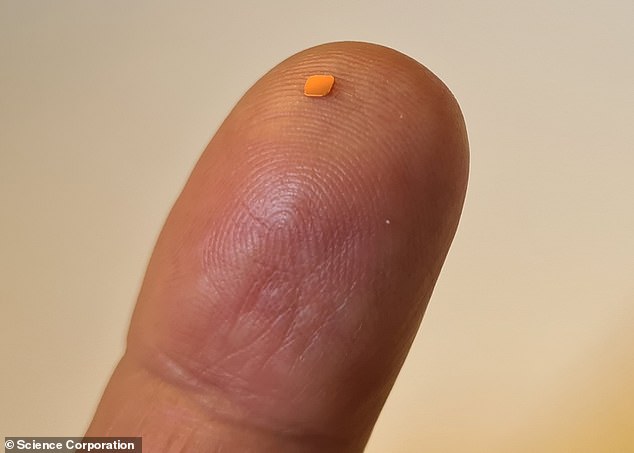
A tiny chip, the size of a grain of sand, implanted in the back of the eye has been shown to effectively restore vision loss, according to recent scientific findings. This innovative technology, which measures just 2mm x 2mm, is paired with a special pair of augmented reality (AR) glasses equipped with a camera. The system has enabled patients who had lost their sight due to age-related macular degeneration (AMD) to read once again.
Sheila Irvine was one of the first patients to receive the implant and described the experience of seeing again as “dead exciting.” She recalled, “It was dead exciting when I began seeing a letter.” Professor Mahi Muqit, an ophthalmologist at University College London and study author, called this development a “new era” in the history of artificial vision. He emphasized that blind patients are now able to have meaningful central vision restoration, something that has never been achieved before.
The chip, which is only 0.03mm thick—about half the width of a human hair—is developed by Science Corporation, a California-based firm founded by Max Hodak, who also co-founded Neuralink with Elon Musk. During a surgery that lasts under two hours, the chip is implanted in the retina, a layer at the back of the eye responsible for detecting light and converting it into signals for the brain.
Patients wear AR glasses with a camera that captures light reflected off objects. This visual information is transmitted to a handheld computer, which translates it into infrared patterns. These patterns are then projected back onto the patient’s eye through the glasses, where they hit the chip at the back of the eye. When the infrared light hits the chip, it is converted into electrical signals that pass through eye cells into the brain, where they are interpreted as vision. A zoom feature on the handheld computer allows patients to magnify letters for better visibility.
How the System Works
- Tiny chip implanted into the retina: The chip is placed at the back of the eye during a quick surgical procedure.
- Light from an object is captured by camera attached to AR glasses: The glasses use a camera to detect light reflecting off objects.
- Handheld computer translates visual information into infrared patterns: The device processes the captured light and converts it into infrared signals.
- An extra module on the glasses projects infrared images through the eye and onto the chip: The infrared image is directed toward the implanted chip.
- The chip translates infrared light to electrical signals: These signals are sent through the eye’s cells to the brain.
- Signal pass through eye cells into the brain, where it is interpreted as vision: The brain processes the signals as visual information.
Clinical Trial Results
To test the system, an international team recruited 38 patients across 17 hospital sites in five countries, including Moorfields Eye Hospital in London. All participants had lost complete sight in their eyes due to AMD, a condition caused by the gradual death of light-sensitive retinal cells over many years.
After the operation, the chip was activated, and participants underwent a rehabilitation process to train their eyes to adapt to the system. They engaged in activities such as solving puzzles, crosswords, and even navigating the Paris Metro. A year after the operation, 84% of participants (27 out of 32) showed a clinically meaningful improvement in visual acuity, allowing them to read letters, numbers, and words at home using the system.
Ms. Irvine described her life with AMD as “like having two black discs in my eyes.” She said, “I was an avid bookworm, and I wanted that back. I was nervous, excited, all those things. There was no pain during the operation, but you’re still aware of what’s happening.”
Future Implications
Currently, there is no licensed treatment for dry AMD, the most common form of the condition. However, the new findings, published in The New England Journal of Medicine, could pave the way for the device’s market approval. It is the first system that enables people to read letters, numbers, and words through an eye that had lost its sight.
While the implantation procedure carries some risks, such as retinal detachment and ocular hypertension, the team believes the benefits of the PRIMA system outweigh these risks. Professor Muqit emphasized that patients who were previously unable to read, write, or recognize faces can now start using their vision again.
Understanding AMD
Age-related macular degeneration (AMD) is a painless eye condition that leads to a gradual loss of central vision. It is the most common cause of visual impairment in the UK and US, affecting around 600,000 adults in the UK and less than two million in the US. AMD causes central vision to become blurred, making it difficult to read and recognize faces. While it does not cause total blindness, it significantly impacts daily activities.
AMD occurs when the macula, the part of the eye responsible for central vision, stops functioning effectively. For most people with dry AMD, there is a slight loss of central vision. The condition usually affects both eyes, though the progression can vary between them. It is often linked to aging, smoking, and genetics.


Related posts:

Fiction park: He was the best in class. He still wasn’t good enough

Gagan Thapa takes oath as Congress president, vows to regain public trust

Inside knowledge that has locals gripped by fear after gran’s body found decomposing in cattle dip

New property purchase disclosure rule in Japan sparks fears it may curb foreign investment

Dino-mite treasures: inside Singapore’s Fort Knox storing playthings of ultra-rich