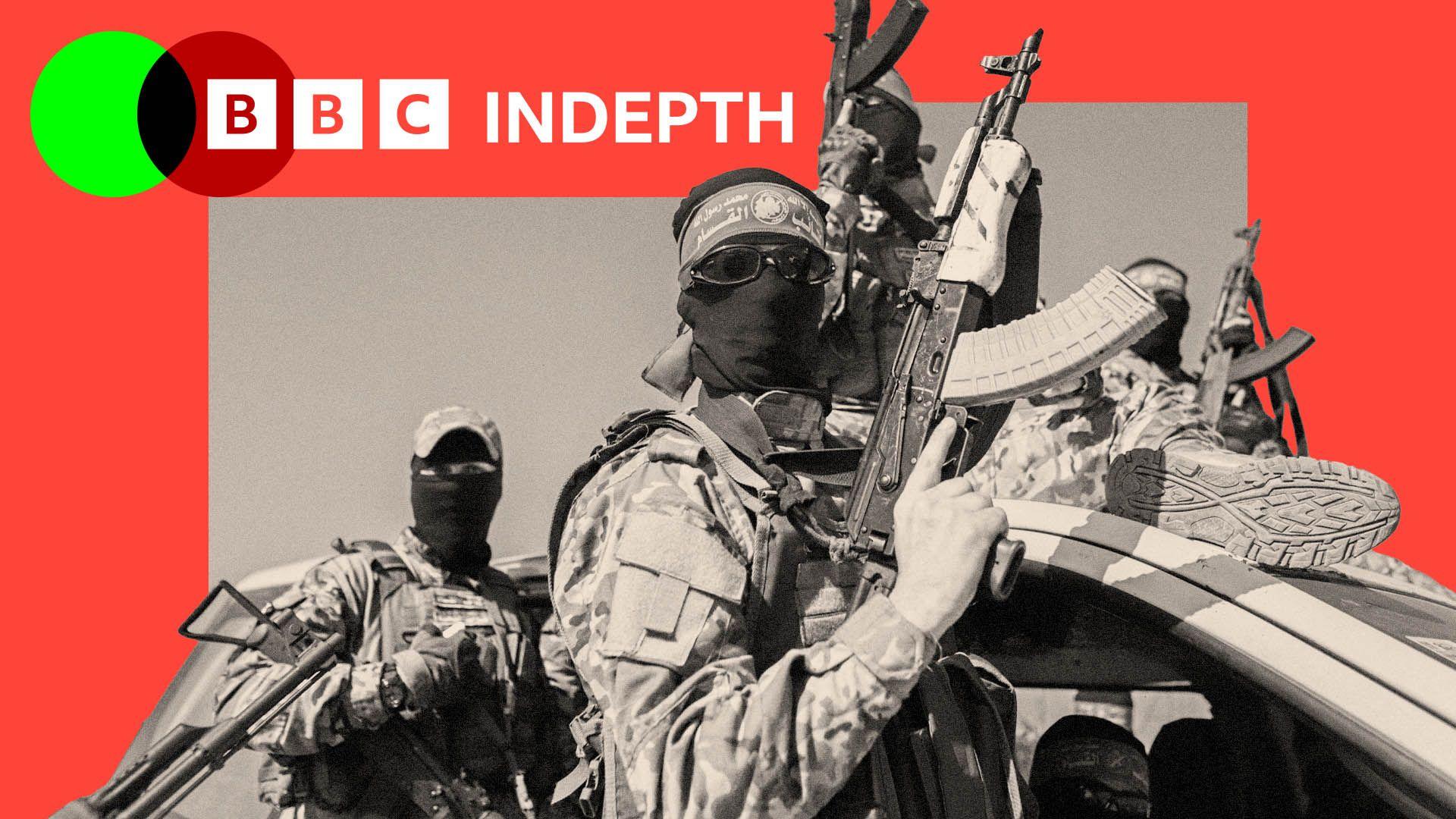

The question of how a group that has ruled the Gaza Strip for nearly two decades, with an iron grip and engaging in repeated conflicts with Israel, could suddenly lay down its arms and relinquish control remains a complex one. However, recent events suggest that Hamas is not only reasserting its authority but also using brutal methods to do so.
Since the ceasefire on 10 October, Hamas has been seen enforcing its will through violent means. Its masked members have been observed beating and executing opponents, with impromptu firing squads targeting individuals they claim are members of rival groups or powerful clans. Others, caught in the crossfire, have been shot in the legs or beaten with heavy clubs. According to an aid worker, some of those being attacked were involved in looting and diverting aid, exacerbating the humanitarian crisis. The United Nations has also accused criminal gangs of stealing aid supplies.
This situation contrasts sharply with the vision outlined in former U.S. President Donald Trump’s 20-point Gaza peace plan, which envisioned Hamas fighters surrendering their weapons, submitting to an amnesty, leaving Gaza, and handing over control to an international stabilization force.

Trump’s initial response to the violence was ambivalent. On his way to Israel on 13 October, he indicated that the U.S. had given Hamas—designated as a terrorist organization by the U.S., UK, and others—a green light to restore order. “We have given them approval for a period of time,” he told reporters aboard Air Force One. However, three days later, he shifted his tone, stating, “If Hamas continues to kill people in Gaza, which was not the Deal, we will have no choice but to go in and kill them.”
So, where does this leave Hamas today? After two years of war, which has caused unprecedented suffering for the people of Gaza and resulted in the deaths of most of its key figures, what future awaits the group?
‘A complete loss of law and order’
For many Gazans, traumatized and exhausted by two years of relentless conflict, the current situation is both nerve-wracking and somewhat expected. Conversations with aid workers, lawyers, and a former adviser to a Hamas leader reveal varied perspectives on whether Hamas will lay down its arms and relinquish control.

Hanya Aljamal, an aid worker from Deir al-Balah, described the situation as a “complete loss of law and order.” She emphasized the need for someone to take control, even if it means Hamas, despite its unqualified governance. Dr. Ahmad Yousef, a former advisor to Hamas’s political leader, believes a firm grip is necessary at present. “As long as there are still people who try to take the law into their hands, we need somebody to scare them and squeeze them to the corner.”

He suggested that within a month, police forces and soldiers from Turkey and Egypt could be deployed to help stabilize the region. This would mark a moment when Hamas might set aside its weapons. However, other Gazans remain skeptical about the likelihood of Hamas relinquishing power.

Moumen al-Natour, a lawyer imprisoned multiple times by Hamas, is among those who doubt the group’s willingness to give up its power. He has been in hiding since July, after masked Hamas gunmen ordered him to report to al-Shifa hospital for interrogation. “Hamas is sending a message to the world and to President Donald Trump… that they will neither relinquish power nor hand over their weapons.”

Al-Natour describes Hamas as “a gang, not a government” and expresses fear that the group will continue to dominate Gaza. He argues that Hamas should not be allowed to remain in government or security roles, nor should its ideas spread in mosques, streets, or schools.

Dr. Michael Milshtein, a former head of the department for Palestinian Affairs in Israeli Military Intelligence, acknowledges that Hamas still exists as the dominant player in Gaza. He warns against relying on “suspicious players” such as clans, militias, and gangs, many of whom have links to ISIS or have committed terror attacks against Israel. “Considering them as a kind of alternative to Hamas is an illusion.”

Despite Hamas’s stated willingness to hand over political control, the question of whether its fighters will lay down their weapons remains a significant challenge. The group’s power has always relied heavily on the use of force.
Rise of Hamas and its iron grip
Understanding how Hamas consolidated power requires looking back at its origins. Emerging in the 1980s as an offshoot of the Egyptian Muslim Brotherhood, Hamas became a militant group responsible for attacks on Israeli civilians. Initially, Israel discreetly supported Hamas as a counterweight to the secular Palestine Liberation Organization (PLO).

However, when Hamas launched deadly suicide bombings in the 1990s and 2000s, Israel responded with high-profile assassinations. A power struggle with Fatah led to Hamas gaining sole control of the Gaza Strip after winning the 2006 election. Over the next 18 years, Hamas ruled under an Israeli military and economic blockade, with periodic armed conflicts.

Despite Israeli claims that “Hamas is ISIS,” the Netanyahu government previously viewed Hamas as manageable. “His was a policy of managing the conflict,” says Ami Ayalon, former head of Israel’s domestic security service, Shin Bet. “He said we are not going to solve it and we are totally against the reality of two states, so the only way is to divide and control.”

Hamas was always preparing for war. Its elaborate network of tunnels, used to attack Israeli positions, expanded over time. In 2006, Hamas fighters used a tunnel to attack a military post near Kerem Shalom, killing two Israeli soldiers and kidnapping a third, Gilad Shalit. He was released in 2011 in exchange for 1,027 Palestinian prisoners, including Yahya Sinwar, who later masterminded the 2023 attacks.

Over the years, Hamas’ tunnel network grew, including workshops, weapons-manufacturing sites, and command centers. Regional developments, such as the fall of Gaddafi in Libya, allowed Hamas to smuggle increasingly sophisticated weapons into Gaza, including sniper rifles and rocket launchers. Iran, seeing Hamas as part of its “Axis of Resistance,” provided financial support.

Tunnels: a project shrouded in secrecy
Public discussion of the tunnels could lead to accusations of espionage, resulting in arrest or worse. Local residents noticed signs of construction, such as sand removal and new entrances. What began as an opportunistic response to isolation evolved into a multi-layered subterranean industrial and military complex. Some tunnels were concealed under civilian infrastructure, including hospitals and schools.

After the 7 October 2023 attacks, Hamas used the tunnels as underground prisons. Hostages were held in these tunnels, often in distressing conditions. Eli Sharabi, one of the hostages, described being tied with ropes and experiencing severe physical pain during his captivity.

Hamas used hostages as bargaining chips, releasing them in exchange for Palestinian prisoners. However, internal and external pressure eventually forced Hamas to abandon this strategy.
A leadership in tatters
Restoring tunnels is one thing; reconstituting the organization is another. Hamas’ leadership is in tatters, with key figures eliminated or killed. Despite this, the group continues to operate, recruiting young fighters and splitting into small cells.

Ahmed Yousef, a former Hamas adviser, suggests that the group is tired of war and may seek to rebrand itself. He compares this to the ANC’s transition from guerrilla warfare to political rule in South Africa. However, Dr. Milshtein doubts this, predicting another Gaza war within five years.

Ami Ayalon, the former Shin Bet chief, believes Israel must find another way to tackle its enemy. “Unless we defeat the ideology, they will flourish,” he says. “The only way to defeat the ideology is by creating and presenting to the Palestinian and the Israeli people a new horizon. A horizon of two states.”



