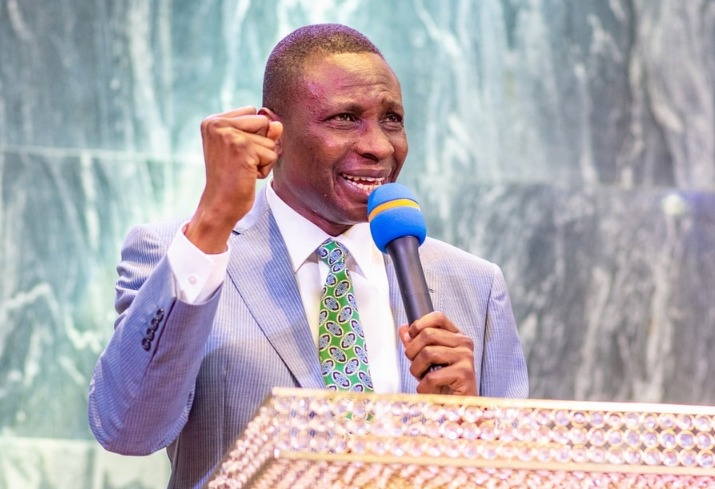
President Tinubu Praises EFCC’s Anti-Corruption Efforts
President Bola Tinubu has commended the Economic and Financial Crimes Commission (EFCC) for its significant progress in the fight against corruption. During the opening of the 7th EFCC-NJI Capacity Building Workshop for Justices and Judges, held in Abuja, Tinubu highlighted the agency’s achievements, including securing over 7,000 convictions and recovering more than N500 billion in fraud proceeds within the first two years of his administration.
Tinubu emphasized that the success of the government’s anti-corruption drive depends on the collaboration between all branches of government. He stressed that judges play a crucial role in ensuring accountability and maintaining public trust in the justice system.
“Nigeria can be free of corruption if we all commit to doing what is right in our respective spheres of influence,” Tinubu said. “A robust judicial system is central to the success of anti-corruption efforts, and I count on our judges.”
The President also called for all arms of government to lead by example, warning that the fight against corruption would lose credibility if public officials failed to uphold integrity. He reiterated that courts and judges are essential pillars of the anti-corruption process and that their actions must reflect the principles of justice.
The Role of the Judiciary in Combating Corruption
Tinubu pointed out that corruption undermines national development and fuels insecurity. He urged all Nigerians to unite in confronting it, emphasizing that no one is above the law.
“There are no special roads, hospitals, or communities for judges. We all face the same risks that arise from decades of willful theft and wastage of our nation’s resources,” he said. “It is in the interest of all Nigerians to join hands in fighting and winning this war.”
Concerns Raised by EFCC Chairman
Earlier, the EFCC Chairman, Ola Olukoyede, raised concerns about the persistent delays and procedural setbacks in high-profile corruption cases. He warned that these issues have cast a shadow over the agency’s achievements and eroded public confidence in the judicial process.
Olukoyede described a recurring pattern in which defendants in corruption cases, especially those with political connections, exploit legal loopholes to delay proceedings. He cited instances where charges were not properly served, or defendants suddenly claimed chronic ailments to avoid appearing in court.
“The milestones we have recorded in the past two years are almost overshadowed by public concern over the progress of high-profile cases in court,” Olukoyede said. “Without mentioning specific cases and courts, there are cases filed by the commission 15 or 20 years ago that appear in limbo, moving in circles.”
He warned that the “weaponisation of procedure” and the prioritization of technicalities over justice have serious consequences for the integrity of the judiciary. Prolonged trials often result in witness fatigue, faded memories, and, in some cases, the death or unavailability of key witnesses or prosecutors.
Judicial Overreach and Contradictory Judgments
Olukoyede also expressed concern over the conduct of some state high court judges, accusing them of issuing orders beyond their jurisdiction to obstruct the Commission’s lawful investigations into money laundering and financial crimes.
“The commission is disturbed by the trend in which some judges of state high courts issue orders to apprehend the powers of the commission to investigate money laundering cases, even though it is clearly established that those matters are outside their purview,” he said.
He also criticized contradictory judgments by courts of coordinate jurisdiction in high-profile corruption cases, which complicate the Commission’s work. Additionally, he faulted some senior lawyers for filing frivolous applications aimed at delaying the arraignment of suspects, further fueling public suspicion that both the judiciary and prosecutors are complicit in frustrating justice.
Call for Judicial Accountability
The EFCC chairman called on judges and justices to exercise greater circumspection in their rulings, especially in cases with significant implications for the country’s anti-corruption campaign. He urged them to prioritize justice over procedural technicalities and to ensure that the courts remain temples of justice.


