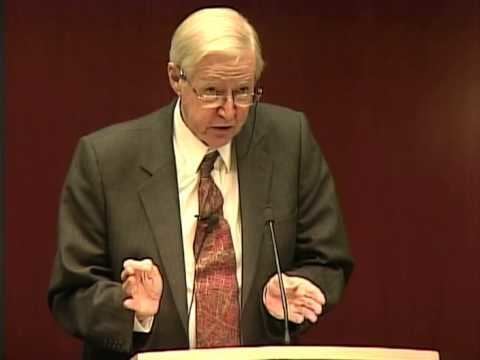
A Life of Influence and Legacy
The passing of Professor William Twining on Thursday, October 9, 2025, marked the end of a remarkable life. His battle with an aggressive cancer had been ongoing for months, making his death somewhat expected. While it may be seen as a relief from suffering, it is still difficult to come to terms with the loss of such a significant figure. The enduring value of life lies in the virtues one leaves behind, which are remembered and celebrated long after one’s time has passed. In this spirit, I would like to share my personal reflections on my late teacher, mentor, and friend, William Twining.
Writing a tribute about a professor, especially one of such global stature as William Twining, is no small task. His academic journey began immediately after studying Law at Oxford University, where he was appointed lecturer at the University of Khartoum in 1958. Following his tenure there, he taught law at the University of Dar es Salaam in Tanzania, where his father had served as Governor-General during British rule. Later, he took the position of Dean of the Law Faculty at Belfast.
Professor Reymundo Gama Leyva of the Autonomous Technological Institute of Mexico (ITAM) highlighted Twining’s distinguished career in his obituary, noting that he played a pivotal role in transforming legal education. His contributions spanned jurisprudence, evidence, and the globalization of law from a cross-cultural perspective. Twining’s impact extended beyond academia, as he was also a dedicated teacher, mentor, and institutional builder.
Twining’s focus on legal realism, particularly the works of Karl Llewelyn, emphasized the intersection of law and empirical research. He believed in understanding law through social and economic contexts rather than abstract rules. Together with Professor Robert Stevens, he co-founded the “Law in Context” series, which produced numerous influential books. One such publication, Human Rights: Southern Voices, featured contributions from scholars like Abdullahi Ahmed An-Na’im, Yash Ghai, and Upendra Baxi, reflecting his commitment to engaging Southern scholars on global issues.
My personal connection with William Twining began when he joined Khartoum University in 1958, the same year I started as a law student. Though only a few years older, he carried himself with great dignity and became a beloved figure among students. I benefited greatly from his support, especially during fieldwork in customary law, which was not well-received by the Islamic Sudanese establishment at the time.
Twining’s mentorship continued even after I left Sudan. When I faced political persecution in England, he arranged for me to meet Yale professors, which eventually led to my admission to Yale Law School in 1964. During this period, he encouraged me to write my autobiography, which later became Invisible Bridge: An African Journey Through Cultures. He wrote the foreword, recognizing the importance of documenting my cross-cultural experiences.
William also urged me to archive my materials, which eventually led to the creation of a significant collection now housed at the Hoover Institute. His persistence in this endeavor was a testament to his belief in preserving the legacy of those he mentored.
Beyond my own story, William touched countless lives around the world. His ability to blend scholarly rigor with a deep commitment to human rights and cross-cultural understanding was truly remarkable. My association with him evolved from teacher-student to lasting friendship, and I will always cherish the moments we shared.
In the Dinka tradition, there is a concept known as Kooc e nhom, or “Standing the head of the dead upright,” which emphasizes the importance of remembering those who have passed. Through this, I believe William will continue to live on in the memories of his family, friends, colleagues, and students worldwide.
My wife Dorothy and our family join me in praying for William’s soul to rest in eternal peace. May his immediate family, including his beloved wife Penelope, their children Karen and Peter, and their grandchildren, find comfort in the support of the global community that cherished him.


