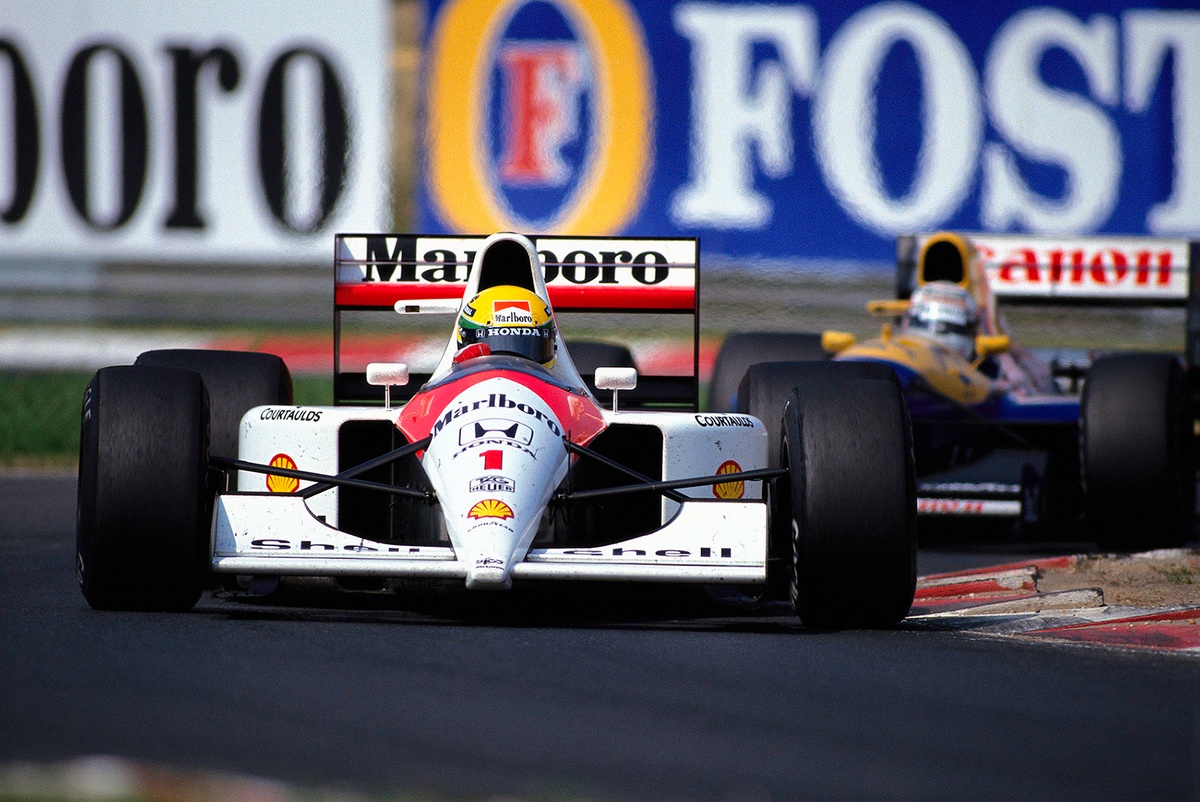
Alan Jones’ 1979 Season: A Late-Season Surge
In 1979, the Formula 1 landscape was dominated by Ferrari, but Williams’ Alan Jones emerged as a dark horse for the title despite scoring just four points in the first half of the season. The year marked the widespread adoption of ground effect technology, following Lotus’ success the previous year.
Jones started the season with the FW06, a car that showed promise but suffered from reliability issues. He managed only one podium finish at Watkins Glen, finishing third behind the Ferraris of Gilles Villeneuve and Jody Scheckter. The introduction of the FW07, inspired by the 1978 Lotus 79, brought more potential, though it also faced its share of mechanical problems.
Jones took his first career pole position at Silverstone, leading the race until a water pump failure ended his day. With Jabouille also retiring due to engine issues, team-mate Clay Regazzoni inherited the victory. At this point, with six races remaining, Jones was 13th in the standings on seven points, far behind Scheckter, who led with 32 points.
However, Jones staged a remarkable late-season surge. He won three consecutive races at Hockenheim, Spielberg, and Zandvoort, outduelling Villeneuve each time. By July, he had climbed to third in the championship with a 10-point deficit to Scheckter. Despite these achievements, the rules of the time limited each driver’s best four results for each half of the season. Jones’ poor first-half performance meant he couldn’t overtake Scheckter, who already had 44 points.

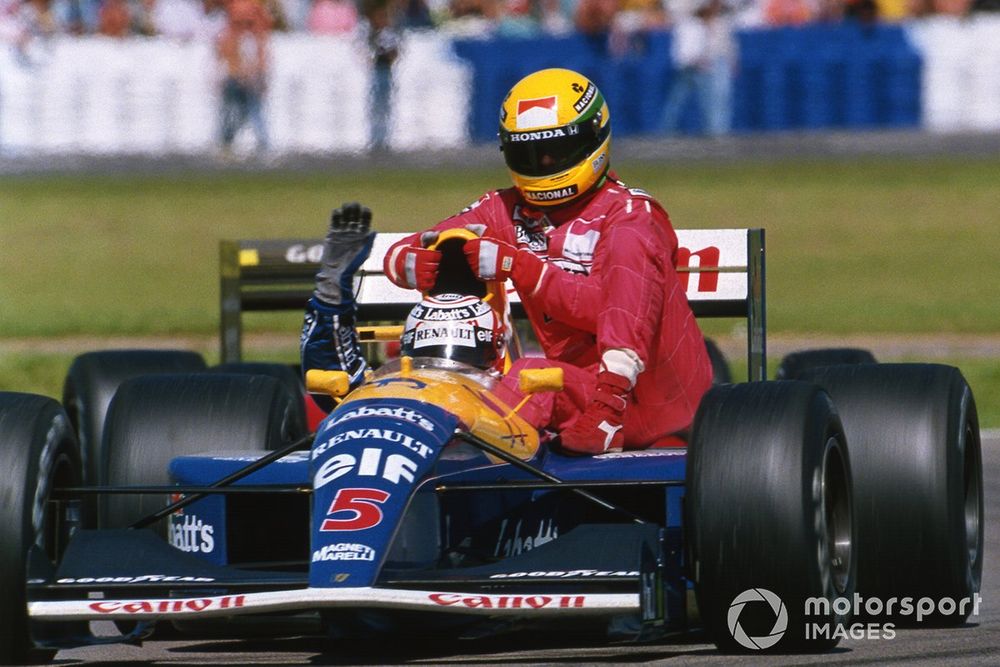
Nigel Mansell’s 1991 Battle with Ayrton Senna
After a controversial 1990 season between McLaren’s Ayrton Senna and Ferrari’s Alain Prost, Senna began 1991 strongly, winning the first four races. However, Williams’ Nigel Mansell faced several setbacks, including gearbox issues that cost him positions in the United States and Brazil.
Mansell’s struggles continued in San Marino, where a start-line incident saw him drop from fourth to 10th. His frustration was evident as he questioned the mechanics about the car’s performance. Despite these challenges, Mansell found success in Monaco, where he finished second to Senna, and led the Canadian Grand Prix until a mechanical failure forced him to retire.
The Adrian Newey-designed FW14 showed promise, achieving a 1-2 finish in Mexico with Senna and Patrese. Mansell then defeated Prost at Magny-Cours and secured a popular win at Silverstone when Senna ran out of fuel. This performance earned him 43 points, putting him within 8 points of Senna.

Mika Hakkinen’s 2000 Challenge Against Michael Schumacher
By 2000, Ferrari had been waiting for a drivers’ title for years. Michael Schumacher led the mid-season with a 20-point advantage over McLaren’s David Coulthard and Mika Hakkinen. However, Schumacher suffered three consecutive retirements, allowing Hakkinen to close the gap.
Hakkinen’s strong form continued, leading the championship by six points before Schumacher made a final push. Despite engine failures and penalties, Schumacher secured the title, leaving Hakkinen 19 points behind.

Michael Schumacher’s 2006 Farewell
Fernando Alonso started the 2006 season strongly, securing six victories and three second-place finishes. Schumacher, however, faced challenges, including an engine-related grid penalty in Malaysia and a controversial move in Monaco. Despite these setbacks, Schumacher closed the gap, winning five races in a row.
Alonso’s Renault struggled with mass dampers being outlawed, costing him crucial points. The two drivers entered the penultimate round tied on points, but Schumacher’s engine failed at Suzuka, giving Alonso a decisive edge.
Sebastian Vettel’s 2012 Title Win
Alonso’s 2012 season was one of the most consistent in F1 history. Despite Ferrari’s lack of pace, Alonso secured three race wins and maintained a 37-point lead over Lewis Hamilton. Vettel, though struggling for consistency, finished the season strongly, winning four straight races.
Vettel’s final victory came in a dramatic finale at Interlagos, where he recovered from a first-lap collision to claim his third world title. Alonso, despite a podium finish, fell short by three points.

The Evolution of F1 Rivalries
Throughout the decades, F1 has seen numerous thrilling title battles, with drivers like Alan Jones, Nigel Mansell, Mika Hakkinen, Michael Schumacher, and Sebastian Vettel making their mark. Each season brings new challenges, strategies, and moments of brilliance that define the sport.


