A Call for Mass Mobilization in Nigeria’s 2027 Elections
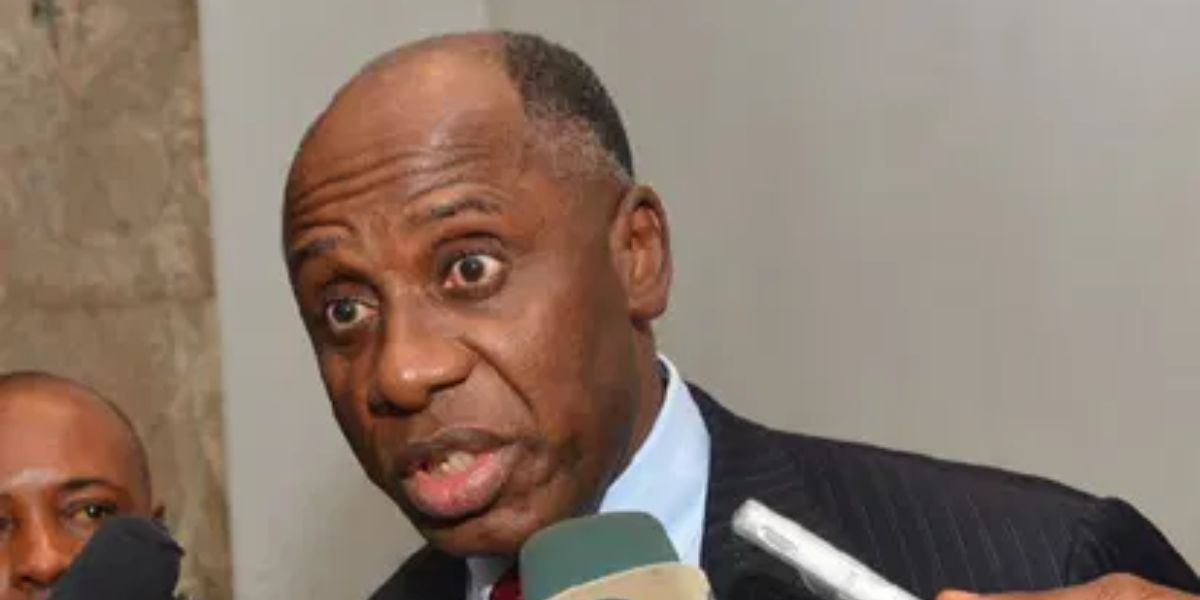
A former governor of Rivers State and prominent figure in the opposition coalition, the African Democratic Congress, Rotimi Amaechi, has called on Nigerians to prepare for a massive voter turnout in the 2027 elections. His message is clear: President Bola Tinubu must be defeated, and this can only happen if citizens take an active role in the electoral process.
Amaechi, who recently declared his intention to run for president in 2027, highlighted that Tinubu’s defeat in Lagos State during the 2023 elections proves he is not invincible. Speaking at the fifth anniversary lecture of First Daily newspaper in Abuja, he emphasized the importance of civic engagement and warned against complacency.
The Role of Voter Apathy in Electoral Malpractice
Amaechi stressed that voter apathy creates an environment where electoral malpractice thrives. He urged citizens to participate in the next elections to prevent Tinubu from securing a second term. “The first solution to electoral reform is not the government. The people are the problem,” he said. “The more you say they have written the results, the more you have voter apathy. Voter apathy will make President Bola Tinubu return to Villa.”
He also challenged the perception of Tinubu as an unbeatable leader, pointing out that his loss in Lagos shows that it is possible to defeat him. “If Tinubu is that invincible, how was he defeated in Lagos? It can be repeated but first and foremost you must agree that the man there is not invincible. The problem is the opposition.”
The Opposition’s Responsibility
Amaechi criticized the opposition parties for failing to develop effective strategies to challenge the ruling elite. He pointed out that internal divisions and lack of focus weaken their ability to mount a strong campaign. “I tell the opposition parties that you’re the problem. The opposition party is not discussing how to save Nigeria. Nobody is saying oh things are bad, how do we change the candidate,” he said.
He also argued that it is unrealistic to expect the current government to undertake meaningful electoral reforms. “The problem with election in Nigeria is that there is no incumbent government that can achieve electoral reform. None. We already tried it and failed,” he added.
Condemnation of Election Rigging
Seriake Dickson, a former governor of Bayelsa State, echoed Amaechi’s concerns about the integrity of Nigeria’s elections. He described the manipulation of election results as “the worst coup” against democracy. “Rigging of elections is the worst coup you can plan,” he said. Dickson emphasized that when politicians, governments, and security agencies collude to manipulate results, they undermine the sovereignty of the people.
He recounted his own experiences during his time in office, where he witnessed firsthand the extent of electoral manipulation. “What the average Nigerian politician who calls election planning, my dear friends and fellow Nigerians, if we’re honest, it’s conspiracy to commit crimes,” he said.
The Need for Electoral Reforms
Dr. Sam Amadi, Director of the Abuja School of Social and Political Thought, delivered a critical analysis of Nigeria’s electoral system. He condemned the growing entanglement between election management and political power, arguing that “everyone who has something to do with the management of electoral election is connected to the President.” Amadi lamented the abandonment of the practice of appointing neutral and independent election officials, stating that “our elections are always rigged in one form or another.”
He pointed to systemic issues such as high campaign costs, the rewards of office, and a political economy that turns elections into “warfare.” These factors, he said, deepen civic cynicism and depress voter turnout. “Free and fair election is the only way a divided, poor society can have peaceful transition,” he concluded.
A Call to Action
Amadi urged focused civic pressure on institutions and actors who can bring about change, particularly the Independent National Electoral Commission (INEC). “INEC must be opened to scrutiny,” he said, blaming both political parties and complicit lawyers and judges for enabling rigging.
Daniel Markson, publisher of First Daily, lamented Nigeria’s negative global reputation, attributing it to flawed elections. “There is a leadership issue in this country,” he said. “We have failed. I can’t remember any time Nigeria worked for me.” Markson announced that First Daily would launch a nationwide voter sensitization campaign next year to address these challenges.
The Path Forward
Nigeria’s struggle to achieve credible elections has been a persistent issue since the return to civilian rule in 1999. Despite reforms such as the Smart Card Reader in 2015 and the Bimodal Voter Accreditation System in 2023, allegations of vote-buying, intimidation, and result manipulation continue to plague the system.
The 2023 general elections, which brought Tinubu to power, were marred by technical glitches, logistical failures, and accusations of bias against INEC. These controversies have eroded public trust, with many Nigerians questioning whether their votes truly count—an issue that remains central to political discourse ahead of the 2027 polls.
The event brought together political figures, diplomats, and media executives who discussed the future of Nigeria’s democracy and the urgent need to restore integrity to the nation’s electoral system.

Related posts:

Fiction park: He was the best in class. He still wasn’t good enough

Gagan Thapa takes oath as Congress president, vows to regain public trust

Inside knowledge that has locals gripped by fear after gran’s body found decomposing in cattle dip

New property purchase disclosure rule in Japan sparks fears it may curb foreign investment

Dino-mite treasures: inside Singapore’s Fort Knox storing playthings of ultra-rich