A Legacy of Challenges and Resilience
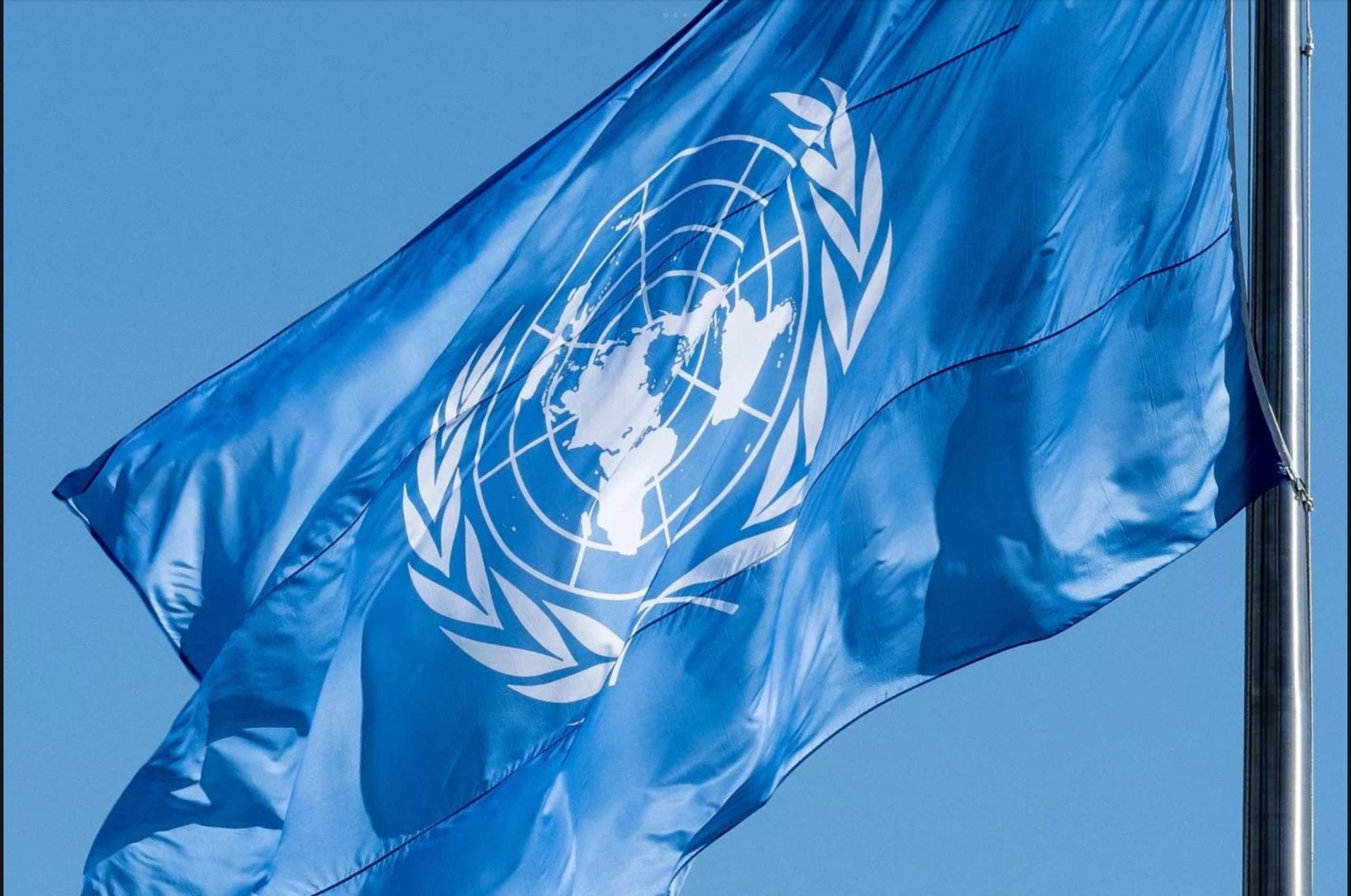
Nepal, Oct. 26 — United Nations Secretary-General Dag Hammarskjold once said, “The UN was not created to lead mankind to heaven but to save humanity from hell.” When he made this statement in 1954, the world was still reeling from the Korean War, the Security Council was often paralyzed by vetoes, and trust in multilateralism was waning. Hammarskjold’s words were not an admission of failure, but a reflection of the realities of international politics. Eighty years later, the question remains: Has the UN truly succeeded in saving humanity from the worst?
A History of Disappointment
The ongoing war in Ukraine has once again exposed the limitations of the United Nations. Article 2(4) of the UN Charter explicitly prohibits the use of force between states, yet Russian military actions have continued since 2022. Every attempt to pass a symbolic resolution calling for a ceasefire is blocked by Russia’s veto. Similarly, the devastation in Gaza, where Israeli bombardment has led to widespread destruction and loss of life, has seen every call for a ceasefire met with a U.S. veto. In many eyes, the UN now appears more like a passive observer than a guardian of peace.
Closer to home, Nepal has also experienced the UN’s shortcomings. In 2015, India imposed a months-long economic blockade on Nepal after the country adopted a new constitution that it found inconvenient. This embargo severely impacted Nepal, especially during a time when the nation was recovering from an earthquake. Despite the UN Convention on the Law of the Sea guaranteeing landlocked states the right to free transit, Nepal faced severe shortages of fuel and medicine. The situation was further exacerbated by India’s continued occupation of parts of Nepalese territory, which undermines the principles of international law and the UN.
This is not the first time the UN has failed to act. In 2003, the U.S.-led invasion of Iraq occurred without Security Council approval, despite the fact that such authorization is one of only two legal ways to conduct a war. The UN was powerless to stop it, just as it could not prevent Russia’s invasion of Georgia in 2008 or India’s annexation of Sikkim in 1975. These events have fueled skepticism about the organization’s relevance and effectiveness.
The “Almost” That Matters
Despite these failures, it is important to recognize that the UN is not entirely ineffective. Louis Henkin, a renowned professor at Columbia Law School, once noted that “almost all nations obey almost all of international law almost all the time.” The focus should be on the vast amount of compliance that goes unnoticed rather than on the rare instances of non-compliance.
The same principle applies to the UN. While it may fail in high-profile cases, it continues to function in countless other areas where there are no vetoes or media attention. For example, the police, prosecutors, and courts in any country may sometimes falter, but no one would declare the entire judiciary defunct because of a few high-profile cases. The UN, too, works quietly in the background, supporting millions of people around the world.
Even those who violate the Charter rarely reject it outright. The U.S. justified its 2003 invasion of Iraq by citing certain resolutions, while Russia claimed its invasion of Ukraine was an act of self-defense. Although these arguments have been widely criticized, the powerful nations do not openly renounce the UN; instead, they seek to justify their actions within its framework.
Beyond the Security Council
Critics often overlook the fact that the UN encompasses much more than the Security Council. While the Council’s vetoes can hinder progress, other UN agencies and bodies have made significant contributions to global well-being. Organizations like UNICEF have immunized billions of children and expanded access to education. The UNHCR provides shelter for millions displaced by conflict, and UNESCO works to preserve cultural heritage, such as Lumbini in Nepal. The International Court of Justice (ICJ) has also played a crucial role in limiting the use of force and preventing wars through peaceful dispute resolution.
These efforts go beyond the UN’s original goal of “saving humanity from hell,” offering dignity and hope to millions. They remind us that the UN’s failures are political, not humanitarian or technical.
The Role of Member States
It is essential to remember that the UN operates through its member states. While exceptions exist, most countries, especially the powerful ones, have not upheld their commitments. When Russia or the United States veto a resolution, it is not the UN itself that fails—it is the lack of political will among its members. As Shakespeare wrote about Brutus in Julius Caesar, the fault lies not in the UN but in its members.
Calls to reform the Security Council by adding more permanent seats may seem appealing, but they risk multiplying the number of vetoes without addressing the underlying issues. Before criticizing the UN, we must ask whether states have kept their own promises. While the Charter begins with “We the Peoples,” it is governments that hold the real power.
The Inevitability of Imperfection
Even if the UN were abolished tomorrow, human conflict would likely lead to the creation of another organization with similar flaws. The problem is not the structure of the UN, but the behavior of its members. The question, then, is not whether the UN has failed, but whether humanity can afford a world without it.
For all its imperfections, the UN remains the only universal forum where a small country can speak with the same dignity as a superpower. It upholds the idea that law, not force, should govern international relations. And it is the only place where even those who defy it must still explain themselves.
As Hammarskjold understood, the UN was never meant to take humanity to heaven. But as long as it keeps us from descending into hell, it is not just relevant—it is indispensable. Its existence reminds us that civilization itself is a work in progress.


