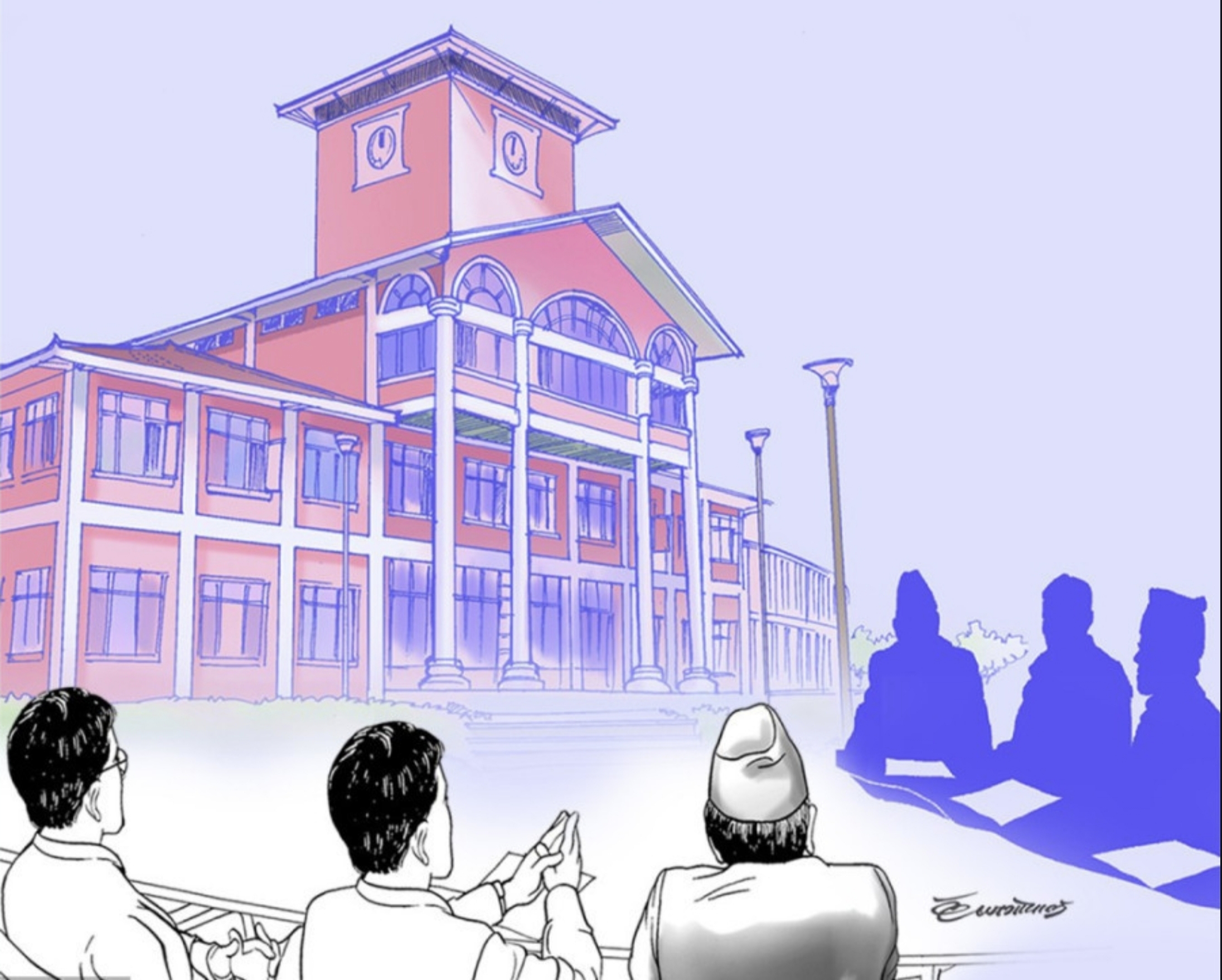
The Generational Dynamics in Higher Education
The evolving landscape of higher education in Nepal calls for a thoughtful and in-depth discussion. Specifically, this conversation revolves around university education, which is often the focal point of academic discourse. The Gen Z movement has sparked generational conversations across various fields, including education. Drawing from my own experiences as both a student and teacher at the university level, I believe it is essential to construct a narrative that reflects the challenges and transformations faced by all stakeholders in the education system—educationists, managers, students, and teachers.
While Western generational categories like Generation Z, Boomers, and Millennials are widely recognized, they do not fully capture the unique context of Nepal. In recent years, the concept of Gen Z has emerged with a sense of surprise, influencing discussions on change and challenging political establishments. This wave of change carries a strong political orientation, focusing on constitutional reforms and the need for a more transparent and ethical governance system. It is not about dismantling the democratic federal system but rather addressing systemic corruption and the rise of authoritarian figures who threaten the development of a forward-looking democratic framework.
As someone who has spent over half a century teaching at Tribhuvan University, I have witnessed the evolution of different generational cohorts. A journalist recently asked me about the connection between youth movements and the university system. This prompted me to reflect on my long experience, the changes I’ve observed, and the challenges faced by students and teachers across generations. My aim is to capture the essence of the past and evaluate the present, while sharing my insights, frustrations, and aspirations.
As a student, I belonged to a generation that grew up under the one-party Panchayat system, yet actively opposed it. We were part of a group that sought alternative identities and experienced moments of persecution and transformation. While I find the history of Western generational groups useful for discussion, my focus remains on my personal experience as a university teacher. Over the years, I have seen how different generational groups interacted within the university setting.
These groups were characterized by their independence and resistance against the Panchayat machine. They sought names and methods that reflected their autonomy. Most importantly, they aimed to bring about political change. I encountered various generational groups, including those labeled as Generation X in the West, who came to Nepal under the guise of hippies protesting the Vietnam War. Although they espoused radical values, they lacked structured programs to support them. Their influence, however, was felt across the educational landscape.
At the university, I observed how different generational groups developed a pattern of alignment with major political ideologies, primarily through the Nepali Congress and Communist parties. However, they did not function as regular party members. Instead, they used the language of these parties to express their discontent with the restrictive Panchayat system. Political parties, lacking proper organizational structures, found these generational groups to be a valuable force. In turn, the generations did not fully organize themselves around their own slogans but instead adopted the rhetoric of the political parties.
This dynamic became an established norm, especially after 1990 when political parties gained freedom to operate. The energy of the generational groups was channeled into partisan politics, dominated by major political entities. This led to confusion, as political parties exerted control over student organizations. It became common practice for party leaders to manage student groups, creating an imbalance that left the students’ history of resistance in a state of uncertainty.
The role of students in university education, particularly when influenced by generational consciousness, demands serious consideration today. Educational planning and policy should take into account the patterns and models of education, as well as the use of innovative methods. Despite the challenges, there is a shared recognition of the universal importance of university education.
As a senior academic and advocate for the spirit of young generational forces, I urge that universities remain free from the undue influence of political parties. It is crucial to work closely with educationists and young generations to design curricula and creative strategies that foster growth and innovation.


