FIFA’s Controversial Use of Kebbi Stadium Image Sparks Outrage in Nigeria
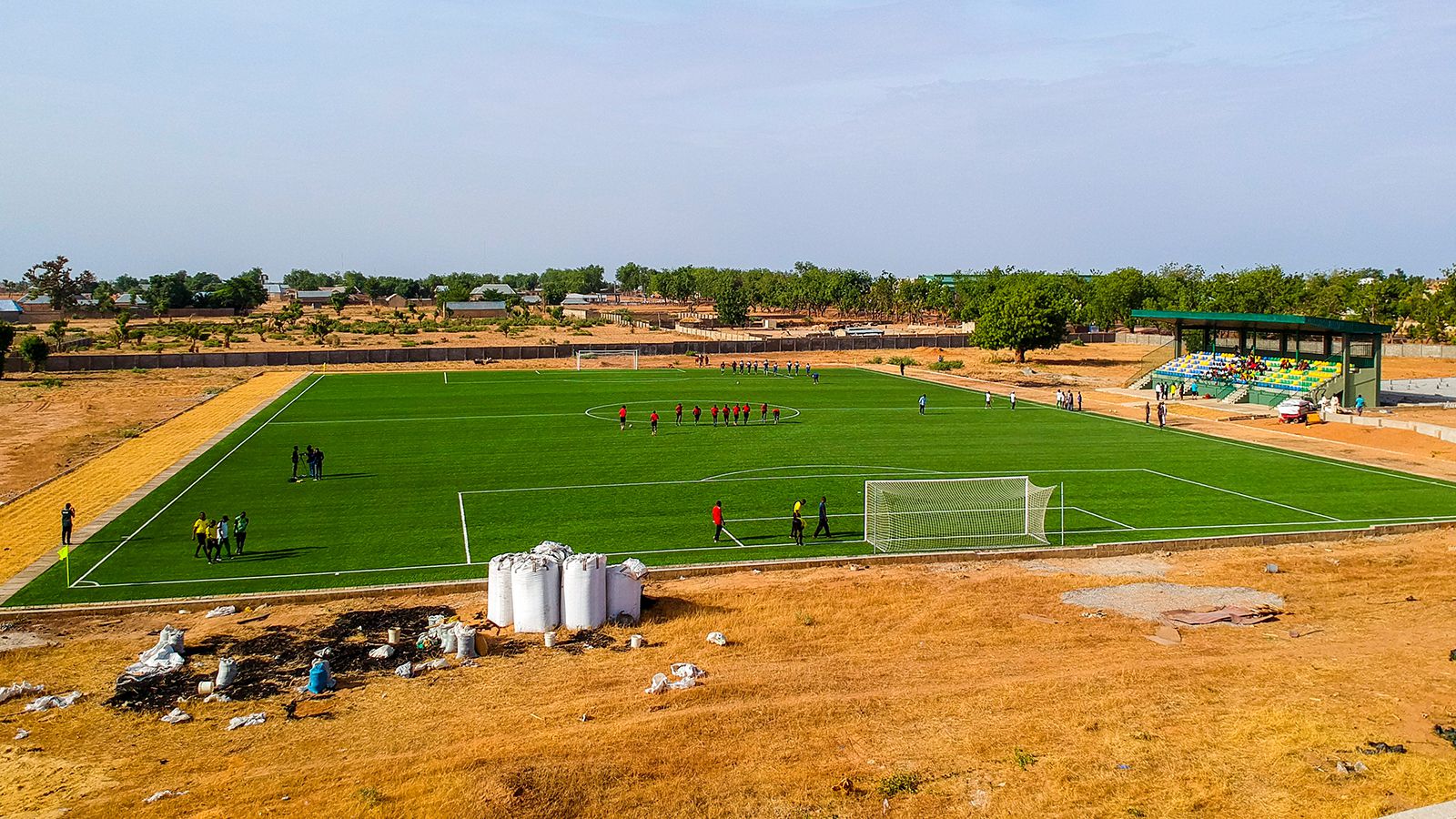
FIFA recently sparked widespread controversy in Nigeria after featuring an image of the Birnin Kebbi Stadium on its official social media platforms. The stadium, which was part of a $1.2 million project co-funded by the Nigeria Football Federation (NFF), was showcased as the new profile banner on FIFA’s X and Facebook accounts. The image, taken in 2023, depicted a half-furnished stadium and quickly went viral, igniting a wave of public outrage.
Built under the FIFA Forward Programme, the stadium was intended to symbolize progress in grassroots football development. However, the post triggered a storm of reactions, with many interpreting it as a subtle jab at the NFF. This came just days after football critic Chinedu Mobike accused the NFF of mismanaging funds meant for infrastructure projects, including a twin stadium project in Delta State.
Mobike claimed that FIFA had allocated $1.2 million for two stadiums—one in Kebbi and another in Ugborodo, Delta State—but neither had been completed. He criticized the NFF for failing to deliver tangible results, contrasting Nigeria’s efforts with those of other nations that have successfully used FIFA funds to develop their football infrastructure.
Public Outcry and Calls for Accountability
The accusations resonated across Nigerian social media, where users demanded accountability from the NFF. One user, S.A.L.A.K.O, questioned how the NFF could spend $1.2 million on a “chicken farm” instead of a proper stadium. Another user, MBAH, called for a nationwide campaign against the NFF, citing rampant corruption in Nigerian football.
The NFF responded to the allegations with a statement issued on October 24, 2025, titled “NFF: Monies received from FIFA & CAF are for specific purposes, and audited in every cycle.” The statement denied any wrongdoing, emphasizing that all funds are tied to specific projects and undergo annual audits. It also highlighted ongoing FIFA Forward initiatives such as the NFF/FIFA Players’ Hostel and new training pitches at the MKO Abiola National Stadium.
Despite the clarification, the backlash continued, with many viewing FIFA’s profile update as a deliberate signal. Comparisons were drawn to Senegal’s 50,000-seat Stade Abdoulaye Wade, which cost $270 million. User @FemiOguntayo2 remarked that Nigeria’s $1.2 million investment in the Kebbi stadium seemed inadequate, suggesting it was a reflection of the NFF’s alleged corruption.
#SaveNigerianFootball Gains Momentum
The controversy has led to the emergence of the hashtag #SaveNigerianFootball, which has gained traction on social media. Users express frustration over the state of Nigerian football governance and hope that collective pressure will bring about transparency. The campaign has drawn parallels to broader infrastructure challenges in the country, with many pointing to the neglect and mismanagement of sports facilities.
From the National Stadium in Lagos, which has been closed for repairs for over five years, to the MKO Abiola Stadium in Abuja, which was recently disqualified by CAF from hosting international matches, Nigeria’s sports infrastructure tells a story of decay. The Kebbi stadium controversy is particularly significant, as it represents a relatively modest investment that should have been straightforward to complete and maintain.
Pattern of Decay and Neglect
The situation mirrors broader challenges in Nigeria’s sports landscape. The National Stadium in Lagos, once dubbed “the new Mecca of sports” when commissioned in 1972, has been in various states of disrepair for over two decades. Despite promises from multiple sports ministers, including Sunday Dare, who assured the main bowl would be ready by May 2021, the facility remains problematic.
Similarly, the MKO Abiola Stadium in Abuja, constructed at a cost of $360 million for the 2003 Africa Games, has cycled through multiple renovations—including a $1 million facelift by Aliko Dangote—only to fall back into disrepair. CAF’s recent disqualification of the stadium for international matches cited poor pitch conditions and substandard facilities.
Experts argue that Nigeria’s approach to sports infrastructure focuses on construction rather than sustainable upkeep, leading to perpetual cycles of decay and emergency rehabilitation. As of press time, FIFA had yet to issue any official comment explaining the use of the Kebbi stadium image on its banner. The silence has only fueled speculation, with many Nigerians interpreting it as a pointed commentary on the state of Nigerian football infrastructure.
The controversy has also raised broader questions about accountability in Nigerian sports administration. Despite the NFF’s insistence that all funds are audited and properly accounted for, public trust remains low, particularly given the visible state of sports facilities across the country.
The #SaveNigerianFootball campaign shows no signs of abating, with fans demanding not just explanations about the Kebbi project, but comprehensive accountability for all FIFA and CAF funds received by the NFF over the years. As one social media user put it: “We deserve to know where every dollar goes. Our football’s future depends on it.”


