Overview of Sugar Imports in Nigeria
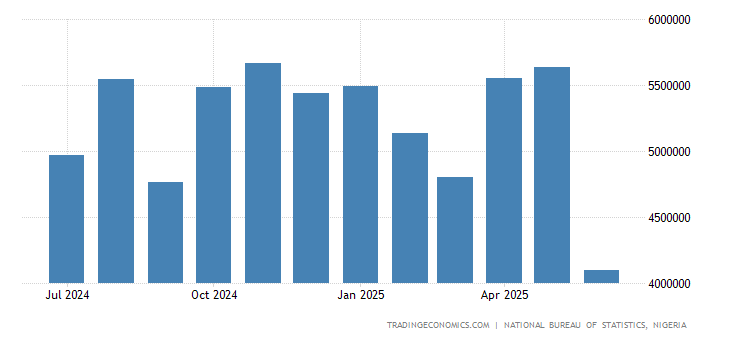
Nigeria’s sugar industry has seen significant developments over the years, particularly through the Backward Integration Policy (BIP) aimed at local production and sourcing of raw sugar. Despite these efforts, major producers of refined sugar have imported a substantial amount of raw sugar into the country. According to foreign trade statistics from the National Bureau of Statistics, approximately N953,971bn worth of raw sugar was imported between July 2024 and June 2025.
The data shows that N156.752bn worth of the product was imported in the third quarter of 2024, followed by N332.52tr in the fourth quarter. For the first quarter of 2025, N305.73bn was imported, and N158.95bn was imported in the second quarter of 2025. This trend highlights the ongoing reliance on imported raw sugar despite domestic production initiatives.
Key Sources of Raw Sugar Imports
A breakdown of the imports reveals that N952.59bn of the commodity came from Brazil, while N1.376bn was sourced from the Netherlands. These figures underscore the global nature of Nigeria’s sugar supply chain and the continued dependence on international markets for raw materials.
The Nigeria Sugar Master Plan (NSMP)
Launched in 2012, the NSMP aims to boost local sugar production through sugarcane plantations. Over the years, billions of naira have been invested in the BIP program to establish farmlands that supply feed for the growing sugar industry. This initiative has led to various incentives such as tax holidays, crop loans, tariffs, and regulated imports of foreign sugar.
According to the National Sugar Development Council (NSDC), these incentives were designed to meet local demand and transform sugar production into a foreign exchange earner. The plan also aims to harness Nigeria’s sugarcane resources, create jobs, and develop a ready market through the value chain.
Under the NSMP, local investors are encouraged to make significant investments in the industry within 10 years to ensure self-sufficiency in sugar production. Operators with backward integration plans are given import quotas to import raw sugar, which has helped attract investments and positively impact production.
Expansion of the Sugar Industry
Nigeria’s sugar industry has expanded significantly, with producers investing heavily in cultivating large sugarcane plantations and building mills. According to the NSDC, local production increased from 6,843 MT in the early stages of the BIP to 38,597 MT in 2019. This growth has enabled major players like Golden Sugar Company, BUA, and Dangote Sugar to continue making substantial investments across the value chains.
Despite this progress, Nigeria’s sugar refinery capacity is still operating below its potential. It increased from 2.75 million metric tons per annum in 2019 to 3.4 million metric tons per annum in 2020, but it is currently running at less than 70% capacity.
Challenges Facing the Industry
While the second phase of the NSMP is being implemented through 2033, there are several challenges that continue to affect the sector. Demographic growth and the expansion of the food and beverage industry are driving sugar demand. However, high import costs and weak consumer spending are expected to lead to a decline in consumption this year.
Smallholder farmers in major producing states have abandoned sugarcane cultivation due to higher demand for other crops. However, some are returning to the production of the commodity since the introduction of the BIP. Despite this, recent data on the marginal rise in production is limited, and the USDA projects the 2024/2025 output to remain unchanged at 1.7MMT due to insufficient government support.
Rising Sugar Imports
Sugar imports have continued to rise, with the commodity ranking as the second most agricultural import in Nigeria after wheat. According to the Nigeria Sugar Master Plan, the ratio of production to demand is only 2.1%, highlighting the need for increased local production.
In 2023, Nigeria spent an estimated N517.8 billion on importing sugarcane, up from N350.8 billion in 2022. This trend reflects the persistent reliance on imports despite the BIP’s objectives.
Factors Contributing to Importation
An economist, Dr. Marcel Okeke, highlighted several factors contributing to the continued importation of raw sugar. Insecurity in farming areas is a major issue, as farmers cannot access their farmlands. Additionally, Nigerians’ preference for foreign products and inadequate infrastructure further exacerbate the situation.
Dr. Okeke emphasized that the harsh environment for local production, including high interest rates and poor infrastructure, makes it difficult for local producers to compete. He pointed out that even when products are available locally, they may not match the quality or cost-effectiveness of imported alternatives.
Conclusion
The Nigerian sugar industry faces both opportunities and challenges. While the NSMP has driven growth and attracted investments, the sector continues to rely heavily on imports. Addressing issues such as insecurity, infrastructure, and competition from foreign products will be crucial for achieving long-term self-sufficiency in sugar production.


