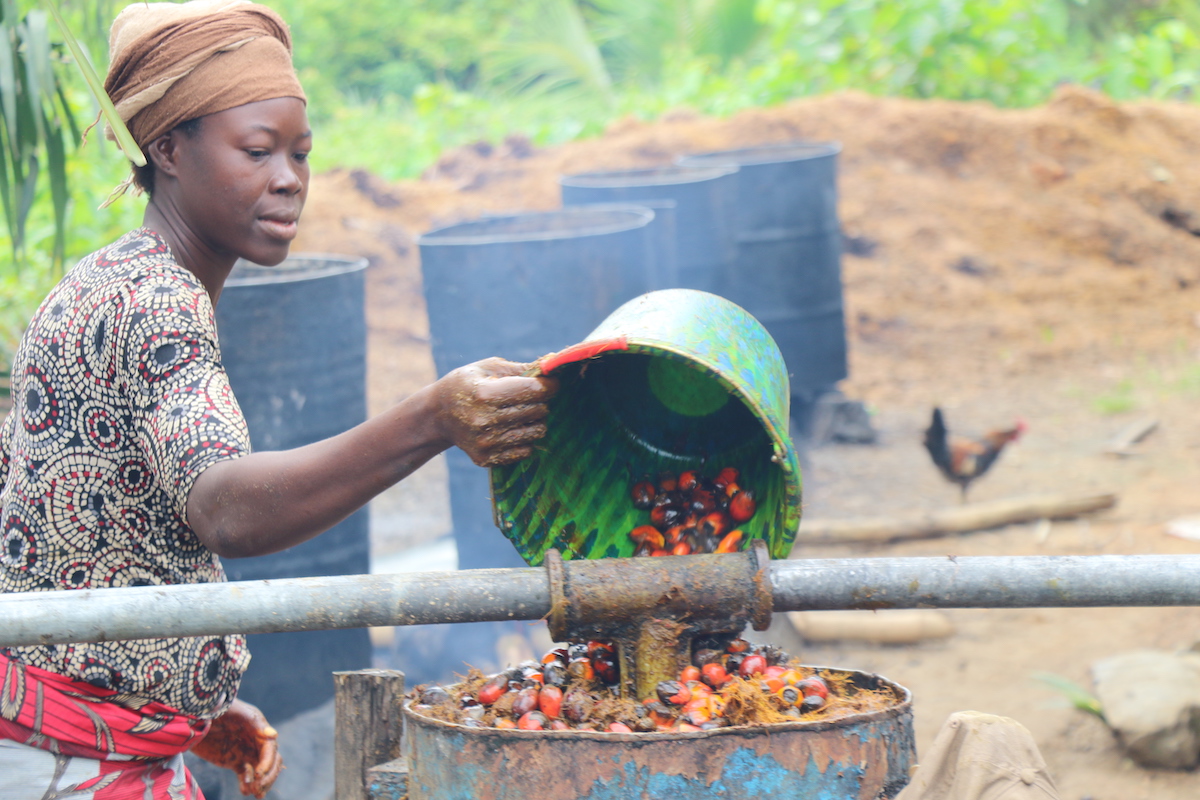
The Crossroads of Ghana’s Oil Palm Sector
Once a cornerstone of Ghana’s rural economy and a leading export before cocoa’s rise, the oil palm sector now stands at a crossroads. In the 19th century, Ghana was among the world’s foremost exporters of palm oil, a product that symbolized indigenous enterprise and rural prosperity. Today, however, the country imports between 250,000 and 400,000 tonnes of palm oil products annually, including both crude and refined forms, according to data from the USDA and FAO. This paradox — resource abundance yet dependency on imports — reveals decades of policy neglect, fragmented investments, and limited attention to inclusive business models.
Despite its vast agro-ecologically suitable land and skilled farming population, Ghana continues to rely heavily on palm oil imports. The challenge lies in structuring the country’s palm oil expansion around equity, sustainability, and smallholder empowerment. The sector’s revival is within reach, provided it adopts a modern, inclusive growth framework anchored in outgrower schemes that link farmers, mills, and financiers.
The Promise of the Golden Crop
Ghana’s oil palm belt — stretching across the Western, Central, and Eastern Regions — is home to more than 20,000 smallholder farmers, though fewer than 5,000 are formally linked to large mills such as Benso Oil Palm Plantation (BOPP), Twifo Oil Palm Plantations (TOPP), NORPALM Ghana Limited, and Ghana Oil Palm Development Company (GOPDC). These mills remain the backbone of the country’s formal oil palm processing industry. Around them lie vast communities of smallholders and outgrowers who supply about 70% of Ghana’s palm oil and palm kernel oil.
However, average smallholder yields hover around 4 tonnes of Fresh Fruit Bunches (FFB) per hectare, barely one-quarter of the potential yields of 15-22 tonnes per hectare achieved under best management. The productivity/yield gap stems from poor agronomic practices, limited access to quality planting materials, weak extension systems, and inadequate finance.
The proposed Oil Palm Development Scheme seeks to reverse this trend through a coordinated model that:
- Improves smallholder yields through training and adoption of Best Management Practices (BMP) and improved inputs,
- Organizes farmers into viable outgrower groups, and
- Links them to financial institutions and mills under structured tripartite agreements.
This integrated approach aims to transform smallholders from subsistence farmers into commercial producers supplying sustainable palm oil to both domestic and export markets.
Why Outgrowers Matter
Outgrower schemes represent a proven and pragmatic route to self-sufficiency. Under such arrangements, smallholders cultivate their own or leased land but operate within structured partnerships involving a mill (technical operator) and a bank or financing institution (financial operator). As Proforest (2014) explains, “Scheme smallholders are structurally bound by contract or credit agreement to a particular mill… supervised in their planting and crop management techniques.” In contrast, “Outgrowers cultivate oil palm outside the nucleus estate on their own land… sometimes supervised in their planting and crop management techniques, and often organized by the mill to which they are structurally linked.”
This partnership model spreads opportunity, improves productivity, and reduces/shares risk. It allows farmers to access inputs, technical guidance, and secure markets, while processors benefit from a consistent and traceable FFB supply. The result is mutual prosperity — a shared value chain that transforms rural livelihoods and strengthens national output.
Proven Models: Lessons from BOPP and TOPP
BOPP — Partnership in Prosperity
In Ghana’s Western Region, BOPP provides a textbook example of how smallholder inclusion can drive both profitability and social impact. Established in 1994–96, BOPP’s outgrower scheme engaged 438 farmers across 1,650 hectares under a tripartite arrangement involving the farmers, the Agricultural Development Bank (ADB), and BOPP. This project started in 1995 and has gone one full cycle and palms have been felled and replanted under a new financing partnership for a second-generation scheme.
According to Proforest’s Ghana Company–Smallholder Profiles (2014), “BOPP has been running a 1,650-hectare oil palm smallholder scheme since 1994/96 with 438 participating farmers (about 25% being women) drawn from surrounding communities. The annual yield of these farmers is currently 14–15 tonnes of FFB per hectare.”
The results speak for themselves — participating farmers achieve yields nearly three times the national average, with substantial improvements in household income, access to education, and healthcare. The scheme has also strengthened gender inclusion, enabling women to participate in nursery and processing activities.
TOPP — Building Inclusive Growth through BOPOP
Further east, in the Central Region, the TOPP outgrower programme — the Buabin Oil Palm Outgrower Project (BOPOP) — has become a benchmark for inclusive, public–private development. Co-financed by the Government of Ghana and the French Development Agency (AFD), BOPOP developed 3,300 hectares for 986 farmers, with TOPP serving as the technical operator and off-taker. This model ensured farmers retained land ownership — a crucial feature for rural inclusion and trust — while securing finance through AFD-backed credit. Farmers began repayment only in the sixth year after planting, with deductions automatically made from their FFB sales to TOPP.
The FAO (2011) praised the project, noting it “built new roads, reinforced the use of high-yielding tenera varieties, and improved farmers’ standards of living.” These improvements increased local productivity and fostered a culture of accountability, collective organization, and reinvestment in the community.
Scaling a National Model
Building on these successful models, Ghana’s Oil Palm Development Scheme proposes a structured expansion plan built on three pillars:
- Rehabilitating existing smallholder farms linked to mills,
- Supporting new entrants with secure land tenure and financing for at least four hectares, and
- Replanting aged farms (25+ years) with improved high-yielding varieties.
The scheme should embed accountability through well-defined institutional roles:
- Technical Operators (mills) — provide agronomy, extension, and off-take;
- Financial Operators (banks) — manage credit and recovery through sales deductions;
- Development Partners (Solidaridad, Proforest, etc.) — support training and monitoring;
- Policy Regulators (MoFA, TCDA) — align interventions with national agricultural frameworks.
This approach ensures a clear division of responsibility, minimizes default risk, and enables scalability through performance-based financing.
Mitigating Risks, Building Confidence
To ensure sustainability, the scheme integrates risk-mitigation tools at every stage:
- Weather and pest risks are managed through parametric insurance and adoption of Best Management Practices (BMPs).
- Market volatility is reduced through bulk input procurement partnerships with leading input dealers.
- Credit diversion risks are minimized via tripartite agreements and direct disbursement to accredited input and service providers.
Transformative Impact Ahead
Over a 10-year horizon, the scheme should target the development and rehabilitation of 15,000 hectares across Ghana’s palm oil belt. This is expected to:
- Generate thousands of jobs in production, logistics, and processing;
- Increase household incomes through improved yields and stable prices;
- Reduce CPO import dependency, conserving foreign exchange; and
- Strengthen rural economies through inclusive, climate-smart agriculture.
As Solidaridad (2022) emphasizes, “Transforming the palm oil sector requires smallholders at the center of supply chains — supported, rewarded, and organized to deliver both sustainability and shared prosperity.”
Conclusion: Building on Proven Foundations
The experiences of BOPP and TOPP demonstrate that Ghana’s path to palm oil self-sufficiency lies in the hands of empowered smallholders, given the constraints posed by the country’s land tenure system. Outgrower schemes offer a model of shared growth — blending profitability, sustainability, and inclusion.
When farmers are equipped with finance, technical support, and market assurance, productivity soars, communities thrive, and national food security strengthens. Ghana’s “golden crop” can once again become a national symbol of resilience and prosperity — this time, built on partnerships that work for everyone.


