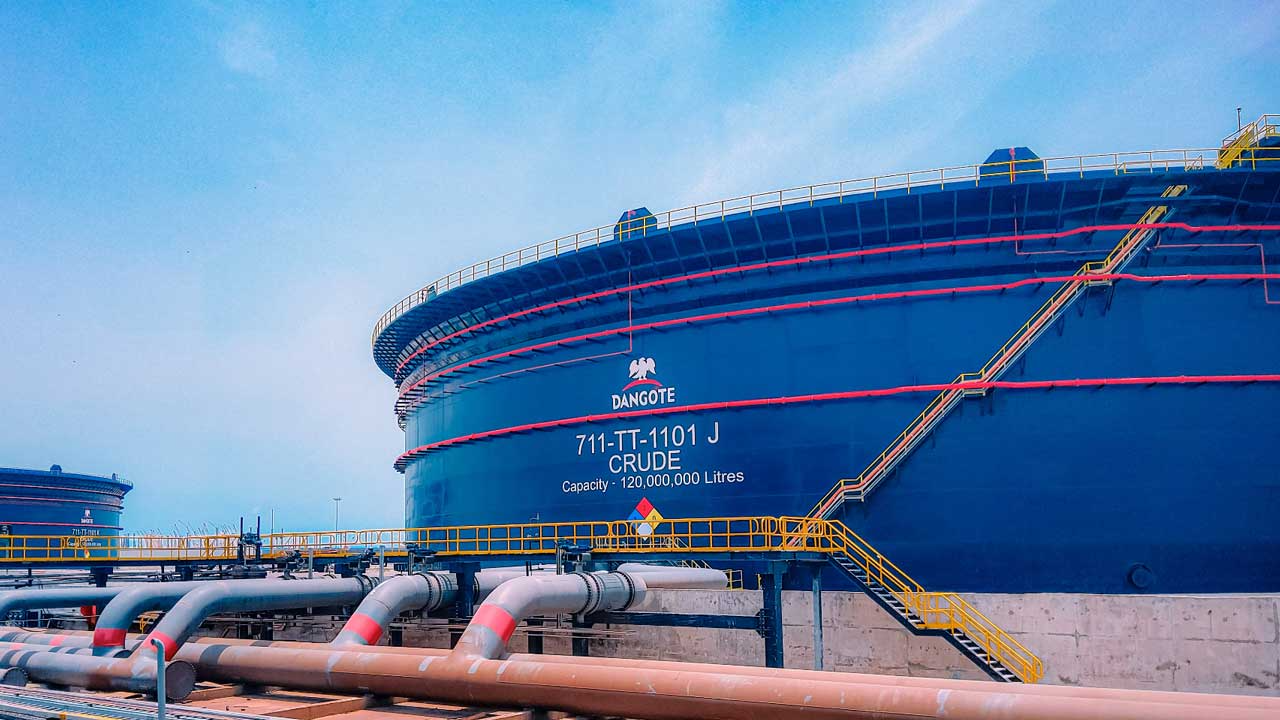
Dangote Refinery Expansion: A New Era for Energy in Africa
President/Chief Executive of Dangote Industries Limited, Aliko Dangote, has announced a significant expansion of his refinery’s daily production capacity from 650,000 barrels to 1.4 million barrels per day (bpd). This development was revealed at a press conference in Lagos on Sunday, where Dangote was accompanied by his friend and fellow entrepreneur, Femi Otedola.
The expansion is expected to make the Dangote Refinery the largest in the world, surpassing India’s Jamnagar Refinery, which has a capacity of 1.24 million bpd. Dangote emphasized that the project will take three years to complete and reflects his confidence in Nigeria’s future, as well as his belief in Africa’s potential.
“This expansion reflects our confidence in Nigeria’s future, our belief in Africa’s potential and our commitment to building energy independence for our continent and the world,” he stated.
Workforce and Power Generation
With the expansion, the refinery will require approximately 65,000 workers during the construction process. Additionally, the power generation capacity will be increased from 500MW to 1,000MW. Dangote also mentioned plans to list the refinery on the Nigerian Stock Exchange in 2026, providing Nigerians with an opportunity to become shareholders.
“[This] is a step towards broader ownership and market transparency. We want to give all Nigerians the opportunity of owning parts of the refinery. You can buy as many shares as you can. Therefore, we are making sure that this refinery belongs to all Nigerians.”
Environmental and Production Standards
Dangote highlighted that the refinery will transition from producing Euro V to Euro VI fuel standards, meeting the highest global environmental benchmarks. He also noted that polypropylene production will increase from 900,000 metric tonnes annually to 2.4 million metric tonnes.
“We will also be expanding our Polypropylene production from 900,000 metric tonne to 2.4 mm metric tonne per annum. This will further enrich the production of linear alkylbenzene, a key ingredient for the production of detergent, and additional production of base oils.”
Local Employment and Sustainability
Over 85% of the workforce will be Nigerian, with ongoing investments in skills and technology transfer. Dangote reiterated the company’s commitment to safety, sustainability, and local participation throughout the expansion process.
“Our goal has never been just to refine oil, but to refine opportunities for our people.”
Addressing Crude Supply Concerns
When asked about potential challenges with crude supply, Dangote expressed confidence that the issue would not be a problem. He explained that the refinery currently exports crude produced in Africa and imports finished products. However, he stressed that refining locally would help reduce poverty and create jobs.
“Crude supply shouldn’t be an issue. We have already worked out our numbers and I think we are good.”
Challenging DAPPMAN to Act
Dangote also challenged the Depot and Petroleum Products Marketers Association of Nigeria (DAPPMAN) to take over some of the existing refineries in the country to reduce reliance on importation. He used a football analogy to illustrate the need for more players in the industry.
“It is better when you are playing football, it is better if everybody plays football, not that some people will be playing football, but somebody will be playing cricket.”
Supporting Government Policies
Dangote commended President Tinubu and the Federal Government for their support of industrialization policies such as Nigeria’s First, Naira-for-Crude, and the One-Stop Shop initiatives. These policies, he said, have encouraged investors to pursue transformative projects.
He also praised the government’s role in mediating disruptions at the refinery linked to union activity and sabotage attempts, calling it a demonstration of effective collaboration between the public and private sectors.
Economic Impact and Challenges
Despite not yet recouping the initial investment in the 650,000 bpd phase, Dangote emphasized long-term transformation over short-term returns. He argued that refining is a long-term project and that the refinery has already made a difference by stabilizing local fuel supply, strengthening the naira, and preventing capital flight.
“Nigerians today buy petrol at roughly half the price of what our neighbours pay, and it is even cheaper than in Saudi Arabia,” he noted.
Industry Reactions
Industry stakeholders have welcomed the expansion. Alhaji Abubakar Maigandi, President of the Independent Petroleum Marketers’ Association of Nigeria (IPMAN), described the coming of the Dangote Refinery as a blessing for Nigeria.
Professor Emeritus of Petroleum Economics, Wumi O. Iledare, highlighted the potential for economies of scale but warned against the risks of monopoly without strong governance.
Prof. Dayo Ayoade, an Energy Law expert at the University of Lagos, noted that while the expansion could bring economic benefits, it would also require significant imports of crude oil and careful management of international markets.
Conclusion
The Dangote Refinery expansion marks a significant milestone for Nigeria and Africa. It represents a bold move toward energy independence and economic growth, while also raising important questions about regulation, competition, and sustainability. As the project moves forward, its success will depend not only on its size but also on its efficiency, transparency, and ability to serve the needs of the people.

Related posts:

Fiction park: He was the best in class. He still wasn’t good enough

Gagan Thapa takes oath as Congress president, vows to regain public trust

Inside knowledge that has locals gripped by fear after gran’s body found decomposing in cattle dip

New property purchase disclosure rule in Japan sparks fears it may curb foreign investment

Dino-mite treasures: inside Singapore’s Fort Knox storing playthings of ultra-rich