A Playlist of Pain and Humanity
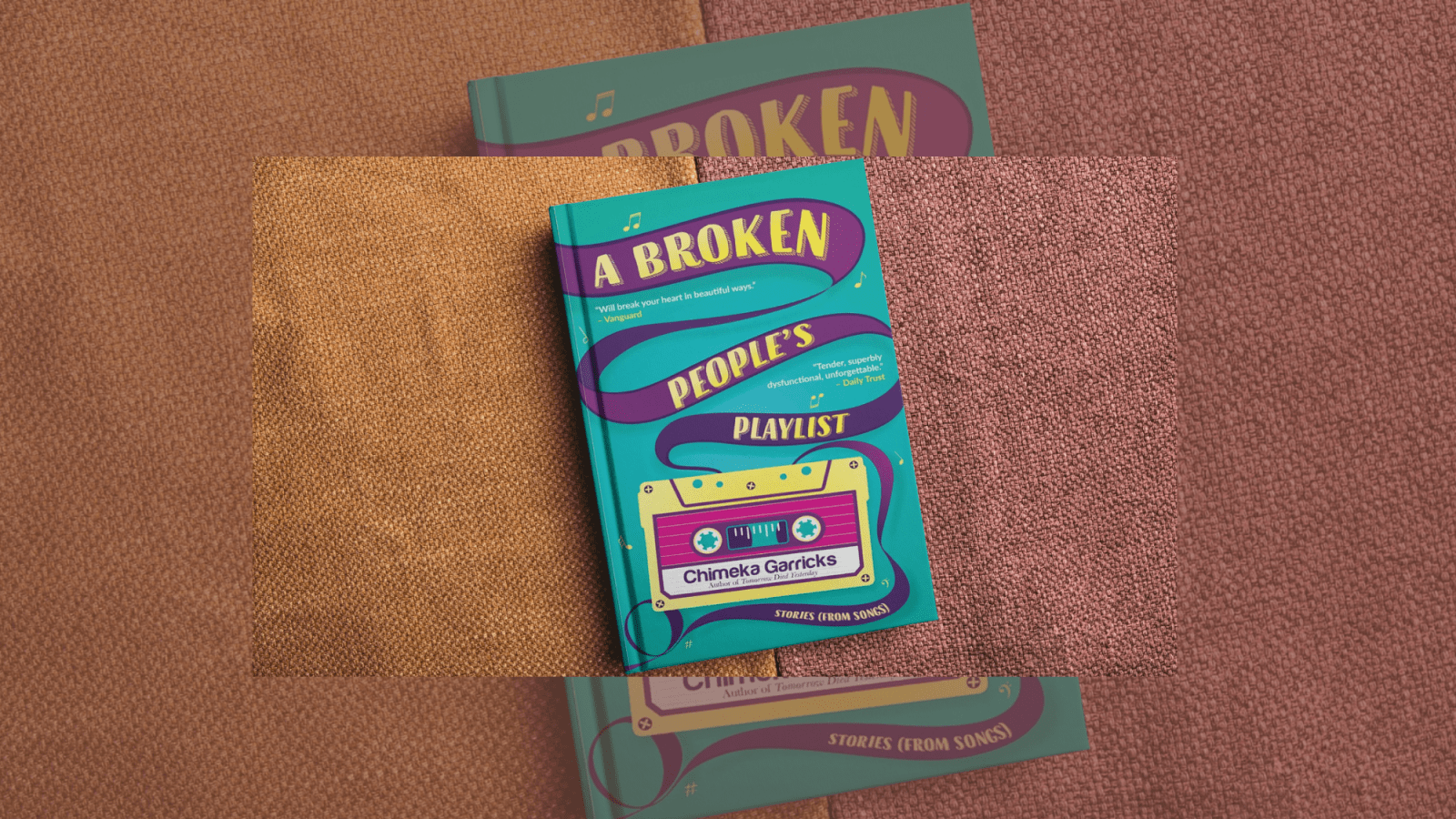
Chimeka Garricks’ A Broken People’s Playlist offers a deeply resonant reflection on the Nigerian experience. Through twelve stories, each inspired by a song, Garricks captures the essence of heartbreak, humor, memory, and regret. His work feels like a mirror held up to everyday life, revealing the beauty, pain, and contradictions that define our existence.
The book is fiction that feels like déjà vu. Each story is familiar not because we’ve lived it exactly, but because we’ve all experienced some form of brokenness. The ache in Garricks’ writing is sharp and undeniable. He doesn’t just tell stories; he composes emotional symphonies. His words move like music—tender one moment, ferocious the next—and leave echoes long after the last note fades.
Stories That Resonate
From “Lost Stars” to “You Suppose Know,” the twelve stories in A Broken People’s Playlist form a meditation on love, loss, and survival in a country that bruises its people daily. Garricks writes with a Nigerian voice—raw, rhythmic, and real. His prose moves between English and the cadences of Port Harcourt street talk, blending the deeply personal with the painfully political.
The book opens with “Lost Stars,” a story about romance, timing, pride, and the tragedy of what-ifs. Sira and Kaodini’s relationship unspools like a slow song you can’t skip. They’ve known each other since childhood, loved each other quietly across the years, but life, ambition, geography, and timing get in the way. When Kaodini finally decides to move from Port Harcourt to Lagos to be with Sira, fate intervenes with brutal finality. His death isn’t just his; it’s the death of every unfinished dream, every “we’ll make it work” that life never lets us keep.
Love, Lust, and the Linger of Memory
In “Music,” Garricks introduces a DJ whose life mirrors the chaos of the sounds he spins. Beneath the beats lies a story of broken families, absent fathers, and the impossible task of loving people who never learned how to love themselves. Garricks paints domestic dysfunction not with melodrama, but with quiet, human truth, like watching your neighbor’s windows at night and realizing their chaos looks just like yours.
Then there’s “Hurt,” where the tone shifts to something darker. Dami, a man both charming and cruel, is dying of cancer but desperate to choreograph his own farewell. His “living funeral” is equal parts absurd and devastating, a performance staged by a man who has hurt too many people to die quietly. Garricks doesn’t let us off easy; he makes us sit with Dami’s contradictions, the abuser and the victim, the brother who inspired laughter and caused tears.
The City as a Character
Garricks doesn’t isolate pain within individuals; he lets the city bleed through them. Port Harcourt isn’t just a setting—it’s a character. Its soot-stained air, its weary streets, its pulse of survival, all play backup vocals to the heartbreaks of its people.
In one story, a young man named Godson becomes collateral damage in a corrupt police operation. Wrong place, wrong time, wrong face. The casual cruelty of his fate feels horrifying precisely because it’s so believable. We meet Corporal Enenche, a policeman counting down to his retirement, trying to survive the moral grime of the force. We watch him participate in an extrajudicial killing, not out of malice, but habit. Garricks’ brilliance lies in how he writes these moments without moral grandstanding. He doesn’t point fingers; he simply holds up a mirror, and the reflection is damning enough.
A Playlist of Life
In “In the City,” Garricks trades sentiment for suspense. It’s a crime thriller threaded with puzzles and peril, showing how desperation turns good people into survivors and survivors into sinners.
Love, in Garricks’ world, is never pure. It’s laced with guilt, nostalgia, and self-sabotage. In “I Put a Spell on You” and “I’d Die Without You,” love becomes both an addiction and a curse. The stories interlink through recurring characters like Dr. Tonse, whose appearances serve as emotional bridges, reminding us that pain doesn’t end with a story; it ripples into others.
Characters We Can Relate To
Every story in this collection feels like an encounter with someone you know. The adulterous husband. The grieving lover. The tired cop. The woman who still prays for a man who broke her heart.
Dami, the charming monster. Prof, the brilliant but morally adrift father. Sira, the woman who chooses logic over love and loses both. They are not admirable, but they are unforgettable. The characters in this book don’t seek redemption; they seek understanding. They don’t find happy endings; they find survival.
What ties them together is the music, the playlists of their lives. Each story is inspired by a song, but Garricks doesn’t simply borrow the titles; he borrows their emotional DNA. The rhythm of Johnny Cash’s “Hurt” bleeds into the story’s despair. The yearning in Seal’s “Love’s Divine” echoes through broken relationships. Bez’s “You Suppose Know” becomes a colloquial confession, a reminder that every heartbreak carries its own chorus of guilt and hope.
Chimeka Garricks’ A Broken People’s Playlist asks us to sit with pain, to see ourselves in people we might otherwise judge. Every story is a window into the flawed, fragile, and often foolish parts of being human. There are no easy resolutions, no moral preaching, just a quiet insistence that life, like music, goes on, sometimes off-key, sometimes out of tune, but always, somehow, worth hearing again.


