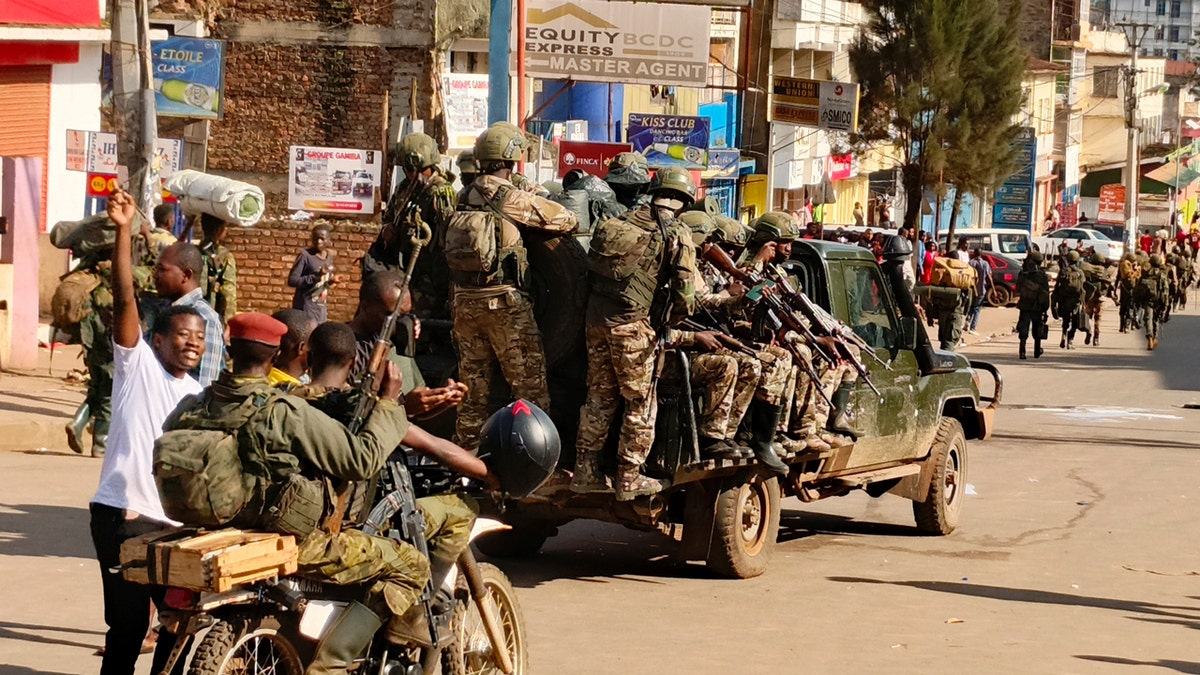
Congolese rebels M23 said they were withdrawing from Uvira — the strategic city it seized recently — describing the move as a “trust building measure” aimed at giving peace a chance amid mounting international pressure on the rebel group.
The decision announced on Monday night, came on the back of mounting US pressure to stop new violence that was threatening the peace deal mediated by US President Donald Trump, between the Democratic Republic of Congo (DRC) and Rwanda.“The Alliance Fleuve Congo (AFC/M23) wishes to refer to the Doha Peace Process under which significant progress was recently achieved, including the signing of the Doha Framework Agreement on 15 November 2025.
Read: The protagonists in new fighting in Congo’s South Kivu“In light of these achievements, and despite continued provocations and abuses from the FARDC and its allies, the Alliance Fleuve Congo (AFC/M23) is initiating a unilateral trust-building measure to give the Doha peace process the maximum chance of success in providing lasting solutions to the conflict,” the group said, referring to the political alliance it operates under.“AFC/M23 will unilaterally withdraw its forces from the city of Uvira as per the United States mediation request,” read a statement from its leadership.
The announcement follows growing international pressure, including open condemnation from Washington after the rebels captured Uvira, a key port city.
Mediation requestThe reference to a US mediation request appears linked to recent forceful statements from American officials, who directly criticised Rwanda for aiding M23 to violate agreements intended to de-escalate the conflict in eastern DRC.
US Secretary of State Marco Rubio said on December 13: “Rwanda’s actions in eastern DRC are a clear violation of the Washington Accords signed by President Trump, and the United States will take action to ensure promises made to the President are kept.”A day earlier, US representative to the United Nations Mike Waltz accused Kigali of backing M23, describing it as “its proxy armed group” since its re-emergence in 2021.
Waltz alleged Rwanda had been “intimately involved in planning and executing the war in eastern DRC, providing military and political direction to M23 forces and AFC for years.”He claimed the Rwanda Defence Forces had supplied material, logistics and training support, and fought alongside M23 with 5,000–7,000 troops as of early December.
His warning that “we will use the tools at our disposal to hold to account spoilers to peace,” combined with Rubio’s stern remarks, appeared to jolt the advancing rebels, who moved to avoid provoking Trump’s anger by announcing the withdrawal.
The rebels, however, voiced concern that “based on past experiences, FARDC, Wazalendo and their allies have sought to take advantage of AFC/M23’s trust-building measures to retake control of previously lost territory and target populations perceived as sympathetic to the Alliance.”They called on guarantors of the peace process to establish measures for managing Uvira, including demilitarisation, protection of civilians and infrastructure, and monitoring of the ceasefire through a neutral force.
Incidentally, one of the guarantors, Burundi, is now directly involved in combat, making it a war party. Kenya is the other country invited to the peace deal 10 days ago, as were leaders from Angola and the African Union.
Also read: Congo, Rwanda leaders affirm commitment to Trump-backed peace dealM23, meanwhile, also pledged not to allow armed groups hostile to Burundi to use liberated areas as rear bases, stressing their commitment to good neighbourly relations.
The capture of Uvira had alarmed Burundi, nonetheless, as it lies just 25–30 km from its commercial capital Bujumbura. Its fall prompted Bujumbura to close the border with DRC, triggering economic and humanitarian disruption as refugees and nationals were blocked from crossing.
The retreat from Uvira could mark a significant de-escalation after months of fighting that killed thousands and displaced more than 200,000 people, adding to millions already uprooted this year. Continued fighting in eastern DRC is a direct threat on the implementation of the recently signed Regional Economic Integration Framework (REIF), which grants US companies access to critical and rare earth minerals.
The withdrawal may have been out of pressure, but it could also be strategic for M23 who had always argued on defending the Banyamulenge.
That argument doesn’t hold much beyond their current strongholds, even though it could stop the movement on land by Burundian troops that have fought alongside Congolese forces. Provided by SyndiGate Media Inc. (Syndigate.info).