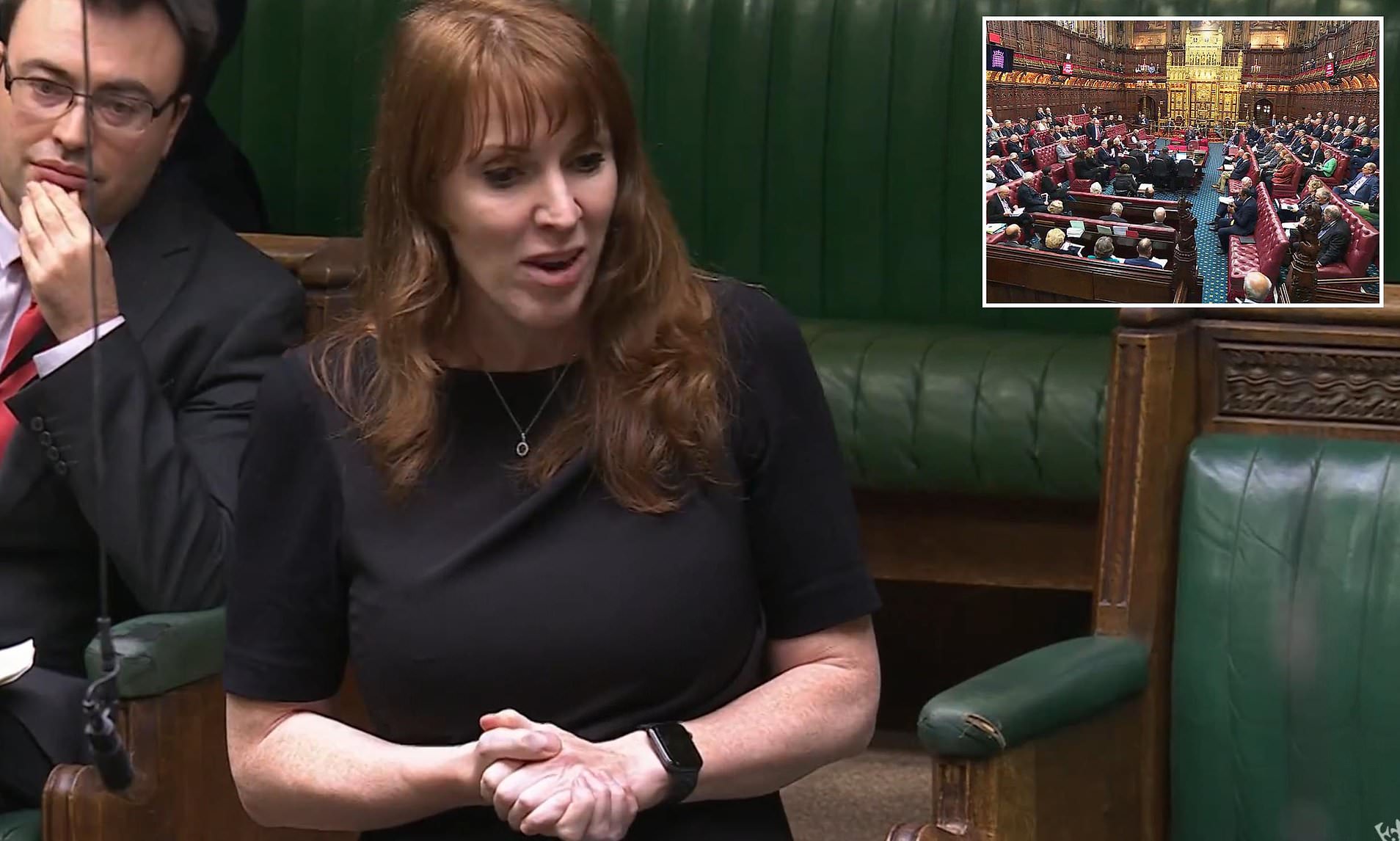
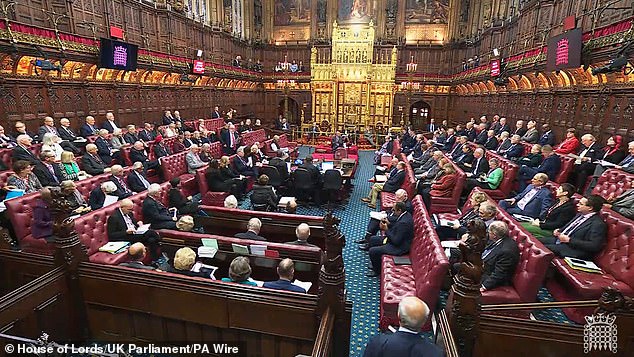
New workers’ rights laws were finally passed by Parliament today after the House of Lords ended its long battle over Labour’s flagship legislation.
Peers on Tuesday dropped their extended opposition to the controversial Employment Rights Bill, which is now poised to become law.
It had previously been caught up in a battle between the House of Commons and Lords, where the Government suffered a series of defeats.
In a desperate bid to get the Bill passed before Parliament shuts down for Christmas later this week, Labour ministers had made a series of concessions.
The Government ditched a day-one right to protections against unfair dismissal and replaced it with a six-month qualifying period.
It also moved to scrap compensation caps for unfair dismissal, which are currently the lower of 52 weeks’ pay or £118,223.
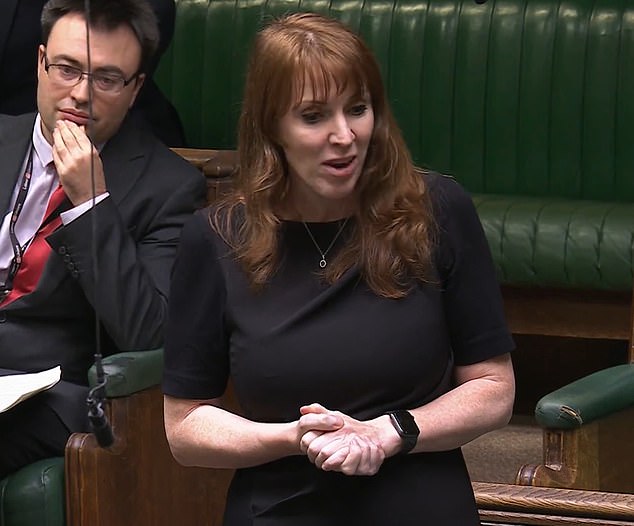
Angela Rayner, the ex-deputy prime minister who fronted the Bill’s passage through Parliament before her resignation, hailed an ‘historic achievement’ for Labour.
She said the Bill, which also includes a ban on zero-hour contracts and day-one rights to statutory sick pay, was ‘the biggest boost to rights at work in a generation’.
Ms Rayner had previously lashed out at hereditary peers in the Lords for ‘blocking’ the legislation and demanded Parliament work ‘through the night’ to pass the Bill.
The former Cabinet minister posted on X on Tuesday: ‘Proud that the Employment Rights Bill has now passed the Commons AND the Lords.
‘The biggest boost to rights at work in a generation. An historic achievement for this Labour Government.’
Prime Minister Sir Keir Starmer also posted: ‘We did it. We have just introduced the biggest upgrade to workers’ rights in a generation.
‘Today our plans passed through Parliament, and will soon become law. This is a major victory for working people in every part of the country.’
Business Secretary Peter Kyle hailed the passing of the ‘landmark legislation’.
He said it would ‘drag Britain’s outdated employment laws into the 21st century’ and ‘offer dignity and respect to millions more in the workplace.’
The Conservatives vowed to scrap the ‘disastrous elements’ of the ‘bad’ legislation if they returned to power, warning it will harm business and jobs.
Senior Tory MP Andrew Griffith, the shadow business secretary, said: ‘It’s ironic Labour’s job-destroying Unemployment Bill passed the very same day official figures confirmed unemployment has risen every month this Government has been in office.
‘Relentless pressure from the Conservatives forced the Government to finally perform a U-turn on their disastrous ‘day one’ rights, accepting instead a six-month probation period.
‘This will save literally thousands of jobs that would otherwise be lost. But this was and remains a bad Bill.
‘It will pile costs onto small businesses, freeze hiring, and ultimately leave young people and jobseekers paying the price for Labour’s capitulation to their union paymasters.
‘The Conservatives will scrap the most disastrous elements of this Bill and get Britain working again.’
Speaking in the Commons on Monday evening, Ms Rayner hit out at the Lords for delaying the passage of the Bill she fronted before her resignation from Government.
She said: ‘What message does this send to the British public, when 33 hereditary peers have tried to defeat the Government by 24 votes on a manifesto promise on sick pay, for example, which will miss the deadline for April for some of the lowest earners from some of the wealthiest?
‘Shouldn’t we get on, go through the night if we have to, and get this Bill passed?’
Business groups including the Confederation of British Industry (CBI) and the British Chamber of Commerce (BCC) had earlier said ‘now is the time for Parliament to pass the Bill’.
A joint letter to Mr Kyle was signed by the Confederation of British Industry, the British Chamber of Commerce, the Chartered Institute of Personnel and Development, the Federation of Small Businesses, the Recruitment and Employment Confederation and Small Business Britain.
They said: ‘We believe that the best way forward is to keep working with the Government and trade unions to find balanced solutions through secondary legislation.
‘To avoid losing the six months qualifying period, we therefore believe that now is the time for Parliament to pass the Bill.’
Read more
- Is Labour’s workers’ rights bill in jeopardy as business groups plea for a speedy pass, fearing lost reforms amid fierce Parliamentary tug-of-war?
- Could Labour’s controversial Employment Rights Bill sideline Parliament and reshape British workforce regulations with unprecedented speed?
- Is Labour’s New Bill a devastating blow to businesses or a ground-breaking win for workers’ rights?
- Is the Employment Rights Bill a ticking time bomb for the government as unions and MPs push for drastic measures to ensure its passage before the holiday break?
- Blockbuster showdown: Can Labour’s Employment Rights Bill navigate fierce opposition from business leaders fearing economic chaos?