TOKYO – In July 2018, 24-year-old Tsubasa Wada woke up in a hospital bed, his face covered in cuts and bruises.
“You’re lucky to be alive,” the doctor told him.
Having suffered a serious brain injury, Wada had no memories of the previous weeks. Worse, he didn’t even know his own name, age or occupation. His life to that point was a blank.
His amnesia began to improve a month later. After hearing the story of what had happened from his family and friends, his memories gradually returned.
Wada had racked up 100 wins in the Japan Racing Association. He was thrown from his horse during a race and transported to the hospital unconscious. The life of a promising young jockey was changed in one second.
Born into a horseracing family in 1994, Wada’s grandfather was stable groom Mamoru Wada, while his uncle is JRA jockey Ryuji Wada. At age five, Tsubasa saw his uncle win at the racetrack for the first time. “That was so cool. I wanted to ride horses too,” he said. That’s when he aspired to become a jockey.
After graduating junior high school, Tsubasa attended a jockey training school and made his debut in 2013. His first win came at a race in Kyoto.
“I didn’t really feel anything special when I crossed the finish line,” he recalled. “But when everyone congratulated me, it really hit home.”
He notched 12 wins in his rookie year. He steadily built his career, winning 27 races in his second year (2014) and 28 in his fifth year (2017). He also began achieving good results in the “grade races” — races with higher status and larger prize money.
These big races are held multiple times a year in descending order of G1, G2 and G3 in Japan. Wada placed second in 2014 and third in 2017 in G3 races, leading to a boost in confidence. Then, the life-altering fall happened during one of the graded races.
It occurred on July 8, 2018, during the Tanabata Sho (G3) held in Fukushima, northeastern Japan. His horse was the third favorite and had a chance to win its first graded race.
However, Wada’s mount made contact with a horse in front of it on the final turn. Wada was thrown from the saddle, his body slamming hard against the track. He still has no memory of that moment.
He was diagnosed with a subarachnoid hemorrhage, a bleed between the brain and tissues that cover it. While retracing his memories, he formed a firm conviction to return to the turf, saying, “I told myself, ‘I won’t let this defeat me’.”
His recovery was swift. After repeated rehabilitation sessions, by September, two months after the fall, he was able to begin practical training using a wooden horse. Wada restarted training on an actual horse in the latter half of September and made his comeback to horseracing late that month.
“I had no fear and enjoyed my ride,” he said.
The next year, in November 2019, he also achieved his long-awaited first mount in a G1 race.
But Wada did not achieve the results he had hoped for. Although he secured a victory in January 2021, he was unable to build on it. He began to question his sense of balance, his riding posture and whether he was applying the correct pressure to his horse. He would study race footage in slow motion repeatedly, but he got nowhere.
In April 2022, he fell from his horse during training, dislocating and tearing ligaments in his right shoulder.
Before he knew it, Wada had suffered 140 consecutive defeats. Although he managed another win, in December 2022, he only secured three victories from 2021 to 2023.
Wada’s decision to hang up his boots was triggered by a tragedy that hit close to home. Kota Fujioka, a 35-year-old jockey, was killed when he was thrown from his horse in April 2024. Fujioka had treated Wada like a close friend, often taking him out for meals.
Wada began to dread another accident, and remembered his doctor’s warning that another fall could kill him.
“Of course, when I rode, I aimed for the best possible finish. But there was also fear now. I felt it would be unfair to my horse and my supporters to ride with anything less than complete commitment.”
Wada decided to retire at age 31, making his final run on Aug. 30.
“It didn’t really feel like the end. I was able to approach it with a calm mind,” said Wada, who finished next-to-last in the 10-horse field. “I was disappointed, but relieved to have finished safely. I was determined to end with a smile.”
Since retiring, he has turned to writing. A fan of self-help books, Wada published a novel online while still active as a jockey in October 2024. The story follows a person reevaluating his way of life.
It is a poignant reflection of the falls that he and Fujioka experienced, which made him keenly aware of life’s fragility.
“After nearly dying in a fall from my horse,
I tackled rehabilitation with unwavering resolve
and returned to racing. Through it all, I realized that
if you don’t give up, a path will open up.”
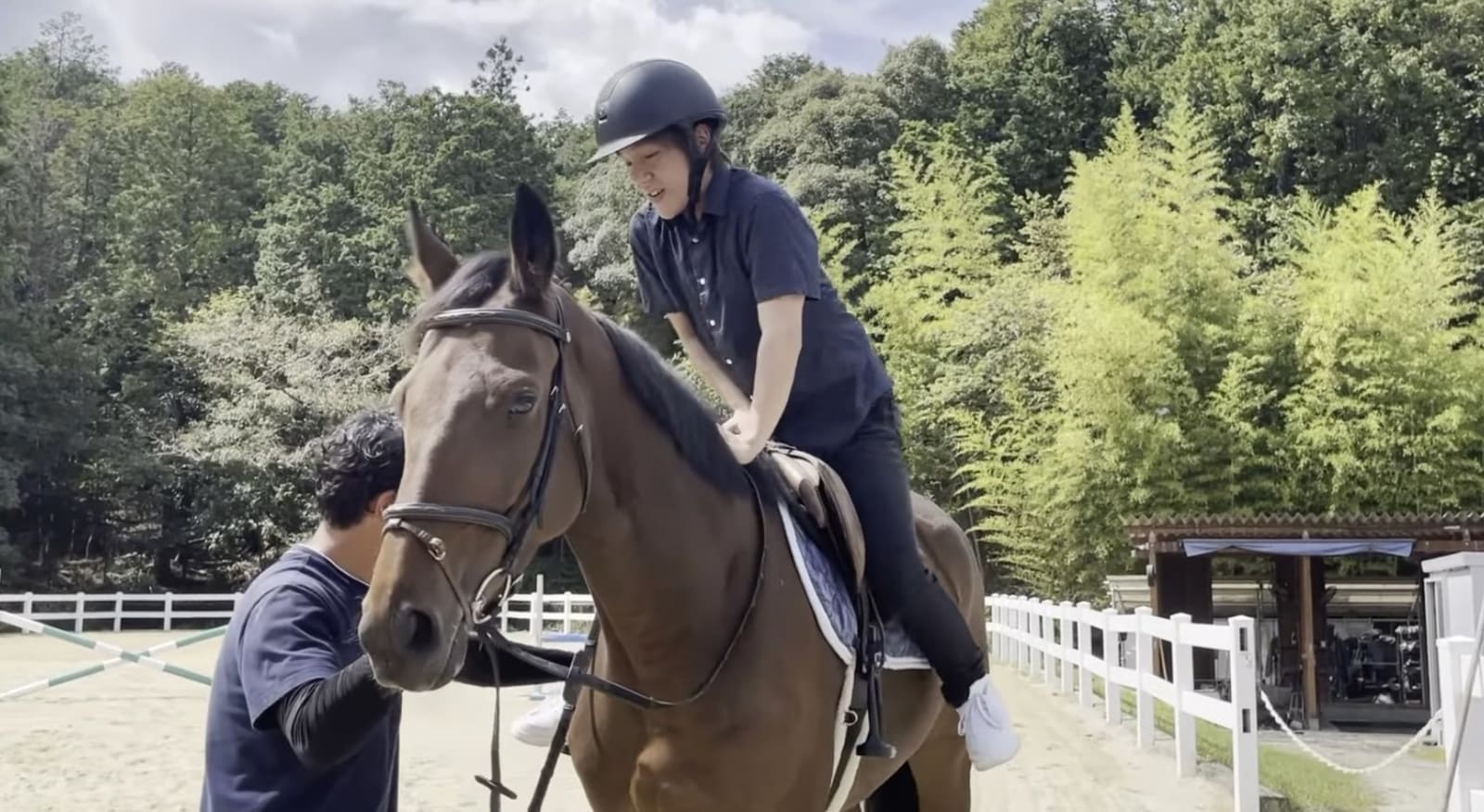
On his YouTube channel, he introduces facilities where racehorses are put out to pasture, explaining how they spend their remaining years, as well as what it is like to attend horse racing school to become a jockey.
“My 13 years as a jockey will never change, even after I die. I want to share insights based on my own experiences,” Wada said. “Having experienced life as a jockey, I want to share what only I can convey — not just the sporting aspects of horse racing, but also what goes on behind the scenes.”