Nigeria’s Persistent Corruption Crisis
Nigeria’s ongoing struggle with corruption has been highlighted by the latest Corruption Perceptions Index (CPI) released by Transparency International. The country ranks 142nd out of 182 nations, with a score of 26 out of 100. This places Nigeria as the 36th most corrupt nation globally, sharing its rank with countries like Cameroon, Guatemala, and Papua New Guinea. Despite being Africa’s largest economy and possessing significant human capital, this ranking is not just embarrassing but a deep reflection of the nation’s entrenched corruption.
The reasons for Nigeria’s inability to improve are well-known and deeply rooted. Corruption is pervasive across all levels of governance, from oil block allocations to local government budgets. One of the most infamous examples is the OPL 245 Malabu oil deal, which exemplifies how billions can disappear through opaque transactions involving politically connected individuals and multinational corporations.
Public officials often amass considerable wealth while in office, acquiring luxury properties both domestically and internationally without credible explanations. The issue is not only the scale of graft but also the lack of meaningful consequences. Corruption cases are frequently stalled by bureaucratic red tape, endless adjournments, and political patronage. Trials can drag on for years without resolution, and judges are often reassigned, allowing technicalities to override substantive justice.
In many cases, convictions are rare, and when they do occur, they are often short-lived. Former governors such as Jolly Nyame and Joshua Dariye were convicted of embezzlement but received presidential pardons. Loyalty to political factions often takes precedence over legal accountability. A notable example is former Delta State governor James Ibori, whose corruption charges were initially dismissed in Nigeria but later led to a conviction in a London court. This highlights a systemic failure where foreign jurisdictions sometimes achieve what local systems cannot.
Plea bargains have also reduced major thefts to minimal restitution, reinforcing the belief that corruption is profitable if one belongs to the right political camp. When Adams Oshiomhole once remarked that joining the ruling party could guarantee forgiveness of sins, it resonated because many Nigerians already suspected this truth.
The Nigerian Bar Association president, Afam Osigwe, described the judiciary as “cash and carry,” a characterization that reflects public sentiment. The economic consequences of this corruption are severe. Foreign investors closely monitor CPI rankings, assessing risk, predictability, and the rule of law. Nigeria’s low score signals weak institutions and uncertain contract enforcement, deterring rational investors who prefer environments with reliable due process and lower corruption risks.
Government contracting remains a critical weakness. Competitive bidding is often bypassed, and large-scale projects like the N15 trillion Lagos–Calabar Coastal Highway project have raised serious concerns about transparency and procurement standards. When contracts of such magnitude proceed without open competition, public trust continues to erode.
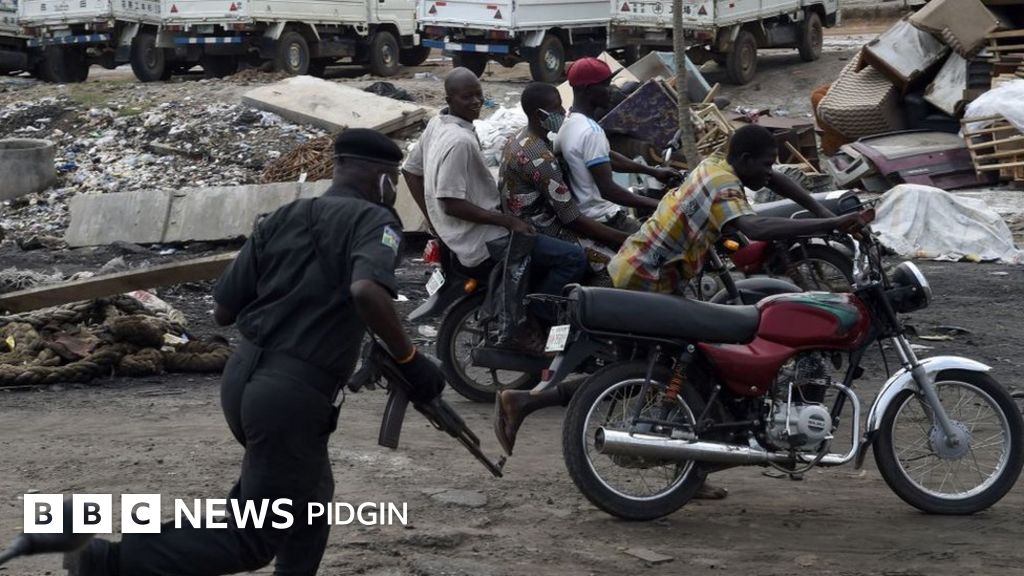
The Nigeria Police Force and Customs Service consistently rank among the most corrupt institutions in domestic surveys. From checkpoints to ports, bribes are commonplace, and billions of naira routinely vanish from public treasuries. The irony is stark: Abdulrasheed Maina, once brought in to reform the pension system, later faced embezzlement charges. Similarly, Betta Edu, former Minister of Humanitarian Affairs, was relieved of her duties amid allegations of financial impropriety, yet the public still awaits decisive legal closure.
There is no coherent or consistent anti-corruption framework in Nigeria. While agencies like the Economic and Financial Crimes Commission (EFCC) target internet fraudsters, high-profile political actors often remain insulated. This fuels the perception that the anti-graft campaign is selective.
Other countries demonstrate that a different path is possible. Denmark, Finland, and Norway consistently top the CPI, often scoring above 80. These nations combine strong, independent judiciaries, transparent procurement systems, robust freedom-of-information laws, and zero tolerance for conflicts of interest. Public officials’ assets are scrutinized, political financing is regulated, and civil services are professionalized and merit-based, reducing incentives for graft.
Even within Africa, there are instructive examples. Seychelles, Cape Verde, and Botswana lead regional rankings. Botswana, in particular, built a reputation for prudent management of diamond revenues, strong parliamentary oversight, and relatively independent anti-corruption bodies. Seychelles and Cape Verde have prioritized transparent governance, smaller bureaucracies, and consistent enforcement of anti-graft laws. Their success underscores the importance of political will, not just size.
Nigeria’s challenges are significant, but they are not insurmountable. Systemic reforms are needed, including transparent procurement portals, time-bound corruption trials, whistleblower protections, genuine judicial independence, and the political courage to prosecute allies. Asset declarations must be verified, not merely filed at the start and end of office. Presidential pardons for convicted corrupt individuals should be unthinkable.
The CPI does not measure perceptions in a vacuum; it aggregates the lived experiences of investors, analysts, and citizens. Until corruption is punished swiftly and impartially, and public office truly becomes a public trust, Nigeria will remain stuck in the mire.