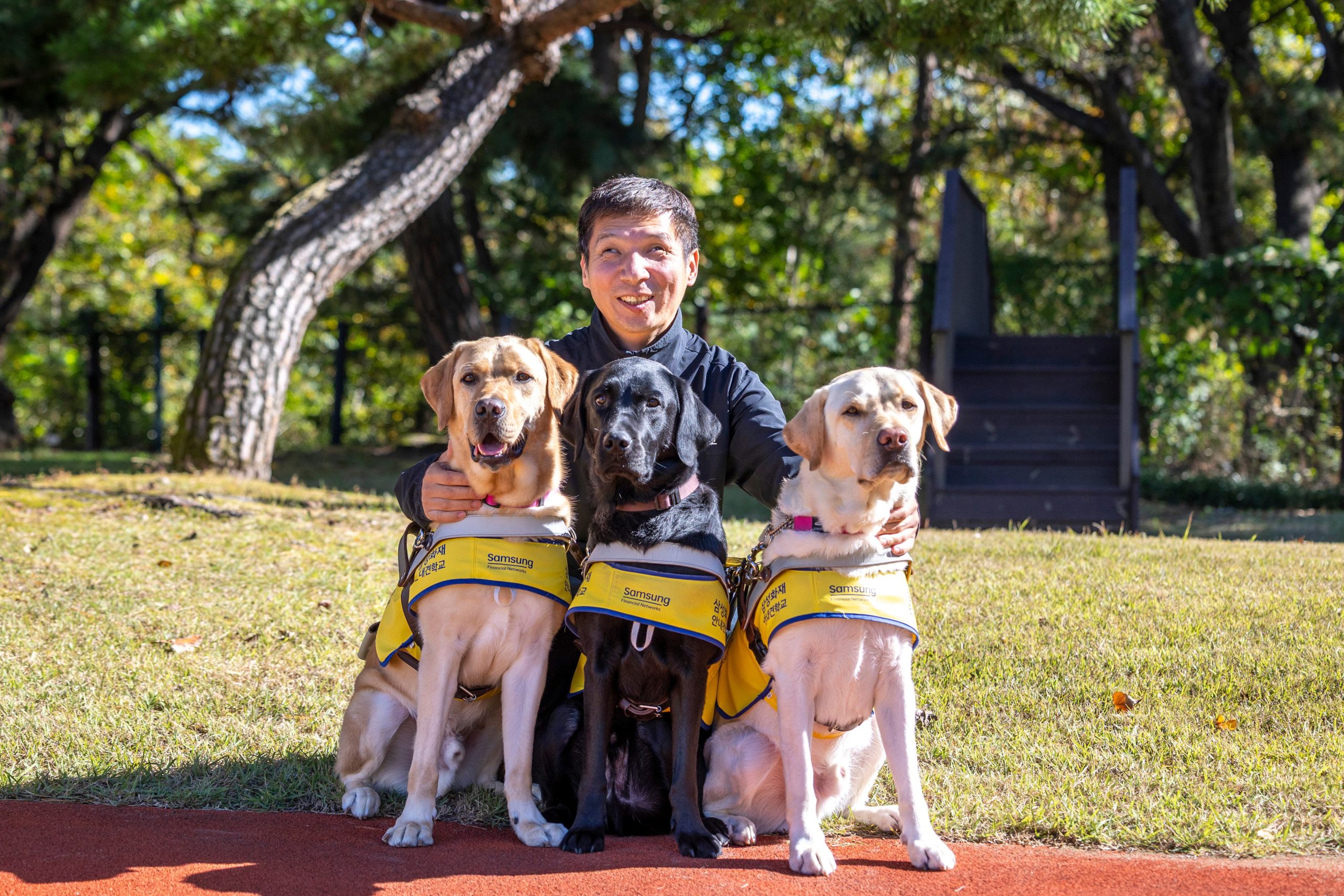
Helping the visually impaired become self-reliant, he found his own path. Yu Seokjong, 45, a professional at Samsung Fire & Marine Insurance Guide Dog School, is a ‘matching consultant expert’ who has been connecting visually impaired individuals with guide dogs for 20 years this year. His role is to assess whether applicants can coexist with guide dogs, considering their walking ability, lifestyle, rehabilitation willpower, and other factors. He has connected approximately 200 visually impaired individuals with guide dogs. For this contribution, he received the ‘Disability Person of the Year Award (Presidential Award)’ at the commemoration ceremony for ‘Disability Day’ last April.
He himself is completely blind due to congenital glaucoma. Yu, the first visually impaired employee at the guide dog school who lives with a guide dog, was the protagonist of a 2005 Samsung Fire & Marine Insurance public service advertisement titled *‘Beautiful Companionship’*. He appeared alongside his first guide dog, *Gangto*. The advertisement, which depicted their companionship with the lines, “There are dogs that never run their whole lives. There are dogs that do not bark even when stepped on,” received the Korea Advertising Ethics Award (Broadcasting Commission Chairman’s Award) the following year.
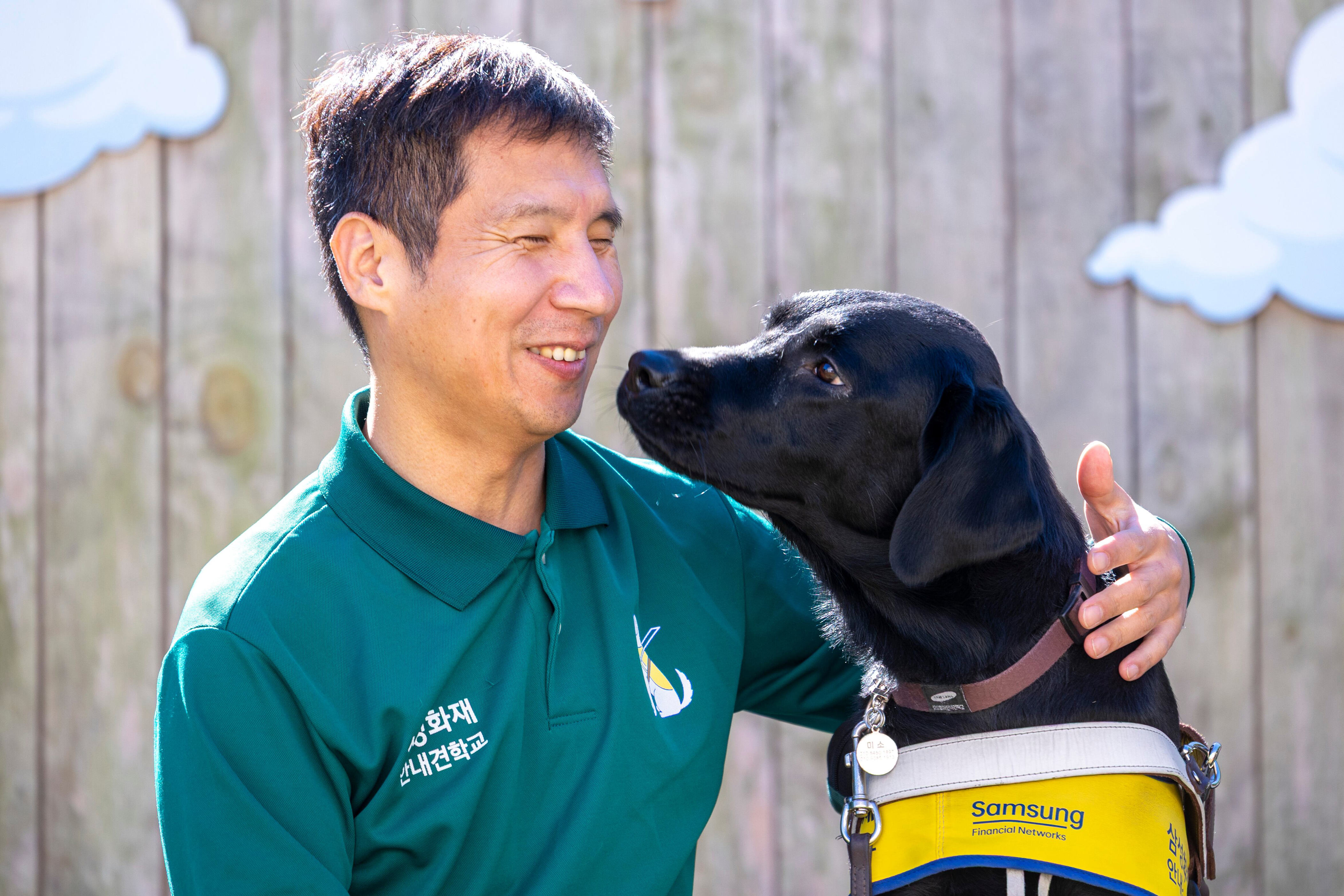
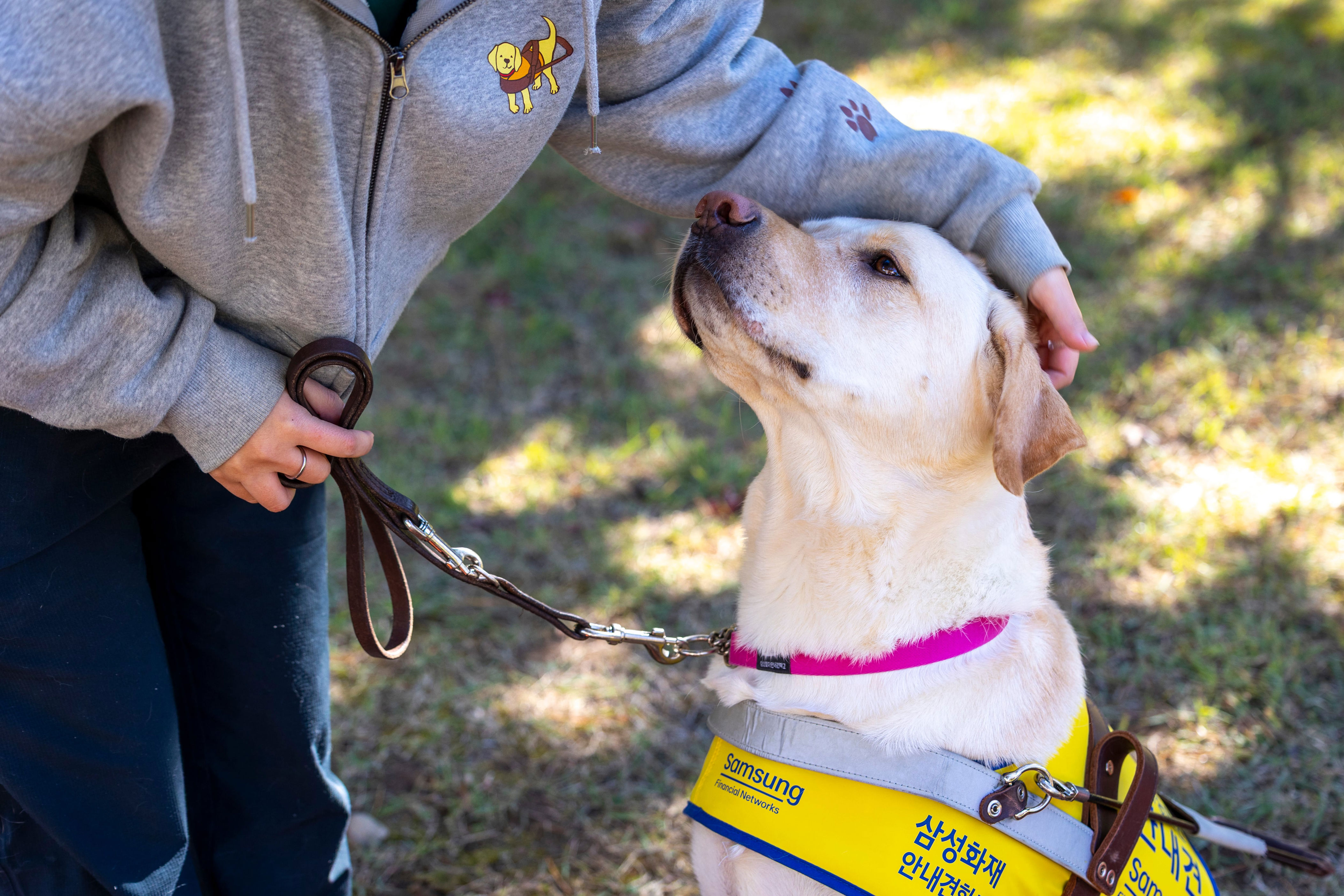
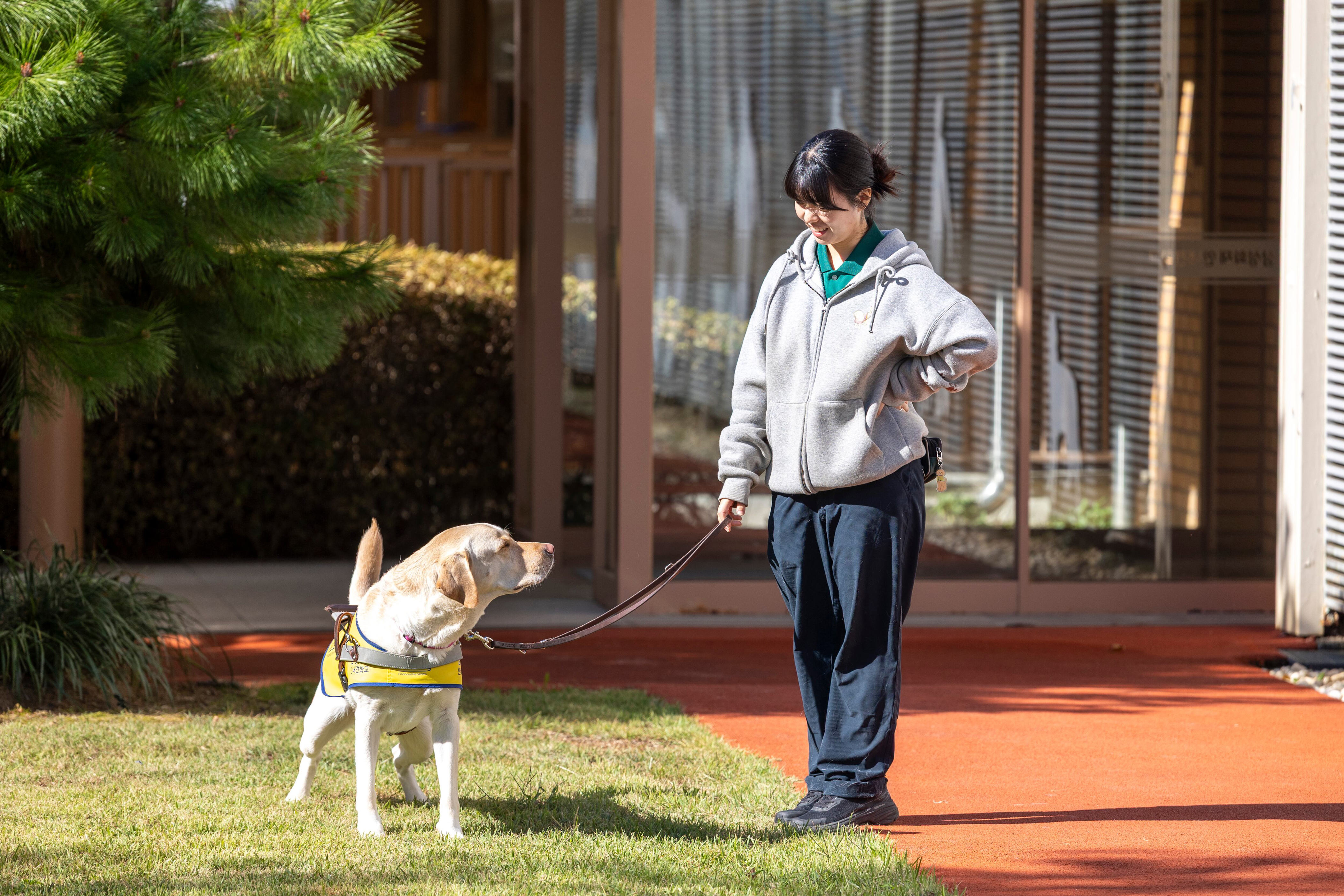
On October 15, coinciding with *‘International White Cane Day’*, we met Yu at the guide dog school in Yongin, Gyeonggi Province. The white cane is a tool used by visually impaired individuals to navigate obstacles and terrain changes, symbolizing their self-reliance and achievement. Beside him was *Miso*, a two-year-old Labrador Retriever guide dog.
◇ Rehabilitation Willpower is Most Important
-How long have you been with Miso?
“She is a curious and lively friend. I have now been living with Miso for a little over three months.”
-Your previous guide dog recently retired, right?
“Gangto, Chaesongi, Taeguk, Haedali… Miso is my fifth. Guide dogs typically undergo annual comprehensive checkups starting at age seven, and their retirement is decided in consultation with the visually impaired individual based on their health. After retirement, they live out their remaining years in volunteer foster homes. They retire while still healthy and energetic, as adapting to a new environment requires physical strength.”
-It must be very hard to say goodbye.
“Because we spend more time together than with family. The feeling of parting is hard to describe. Still, knowing how the retired dogs are cared for through the retirement management system and volunteers gives me peace of mind.”
-What do you do at the guide dog school?
“When a visually impaired individual considering life with a guide dog contacts us, I conduct the first interview. I confirm through lengthy consultations whether they are in a situation to live with a guide dog. Since I am also visually impaired and have long lived with guide dogs, I can understand their difficulties and what preparations are needed based on my experience.”
-What specific factors do you check?
“First, I ask about family composition, when they lost their sight, and their usual lifestyle. They must like dogs, but liking them and living with them are different, so I check their willingness to actually coexist.”
-What do you prioritize?
“The most important thing is the willpower to accept their disability and rehabilitate themselves to go out independently. They must have the desire to walk outside with a guide dog.”
-You also ask about independent walking ability, right?
“Yes. They must have experience going out without assistance. They should be able to navigate to their destination using residual vision or a white cane.”
-Why is that?
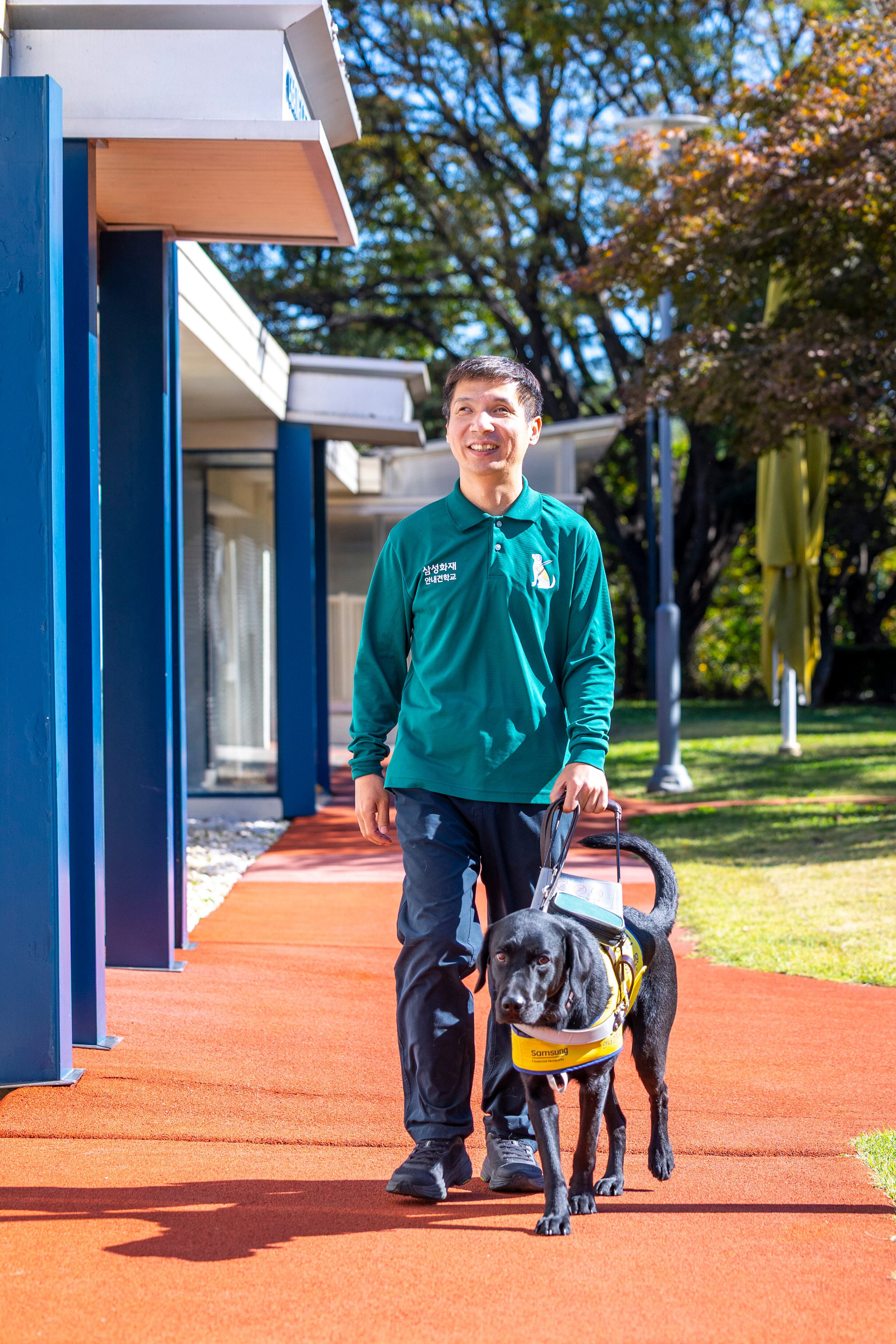
“People often think guide dogs lead them to their destination, but that’s not true. The person decides the route, and the guide dog ensures safe passage. If the visually impaired individual is the ‘navigation,’ the guide dog is the ‘autonomous vehicle.’ Through consultations, I judge these aspects first and, if suitable, relay my opinion to the field training manager.”
-What does the field manager check?
“Just as people walk at different paces, guide dogs vary too. They find a match based on walking speed and temperament. Before placement, they assess the visually impaired individual’s usual walking style and ability, and confirm compatibility over 3–4 weeks of training.”
-Are guide dogs ever replaced due to mismatches?
“Rarely. Before training, they visit the individual two or three times to observe their walking environment and characteristics, and walk with the prospective guide dog in advance. Relationships are checked six months and one year after placement, but changes are uncommon.”
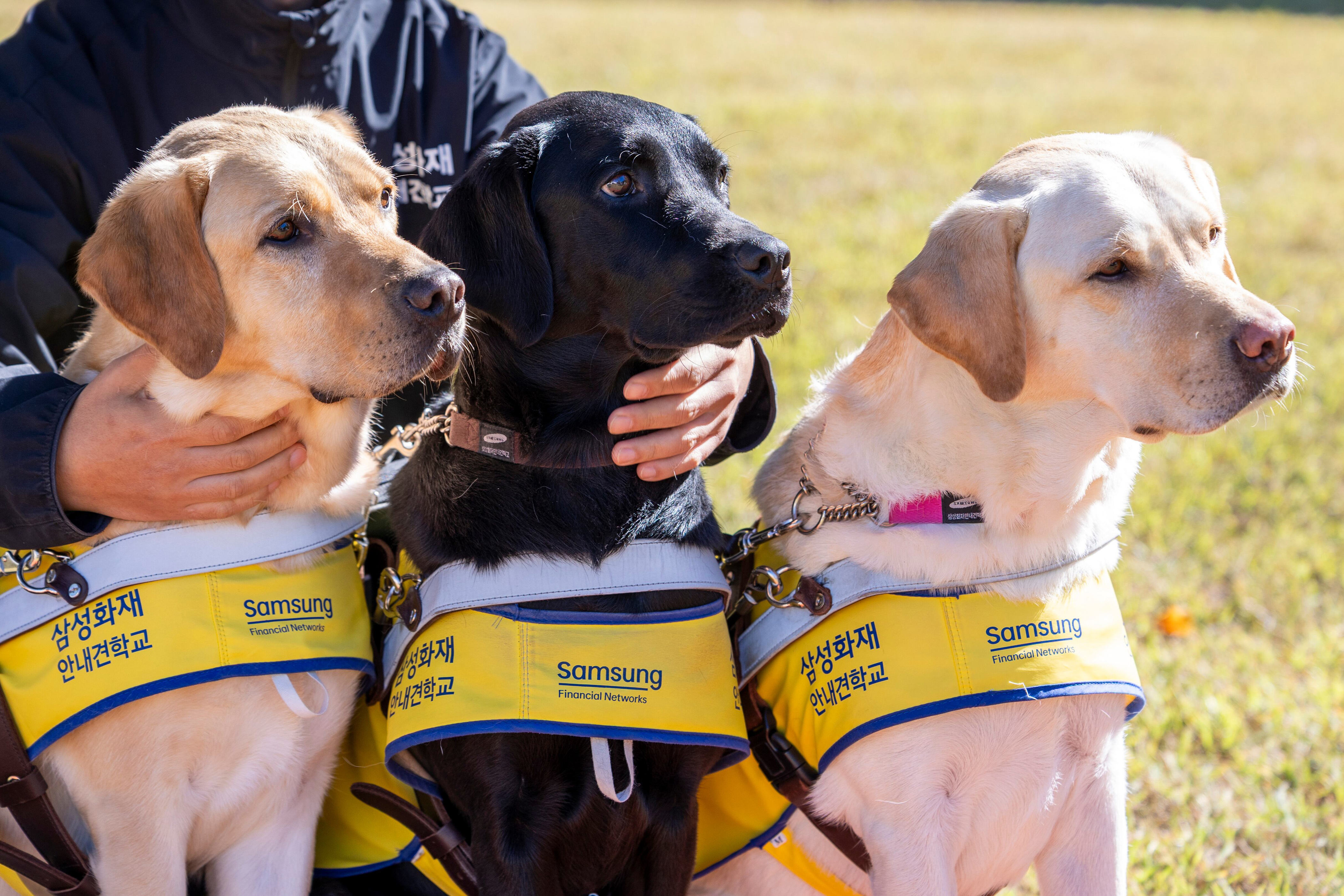
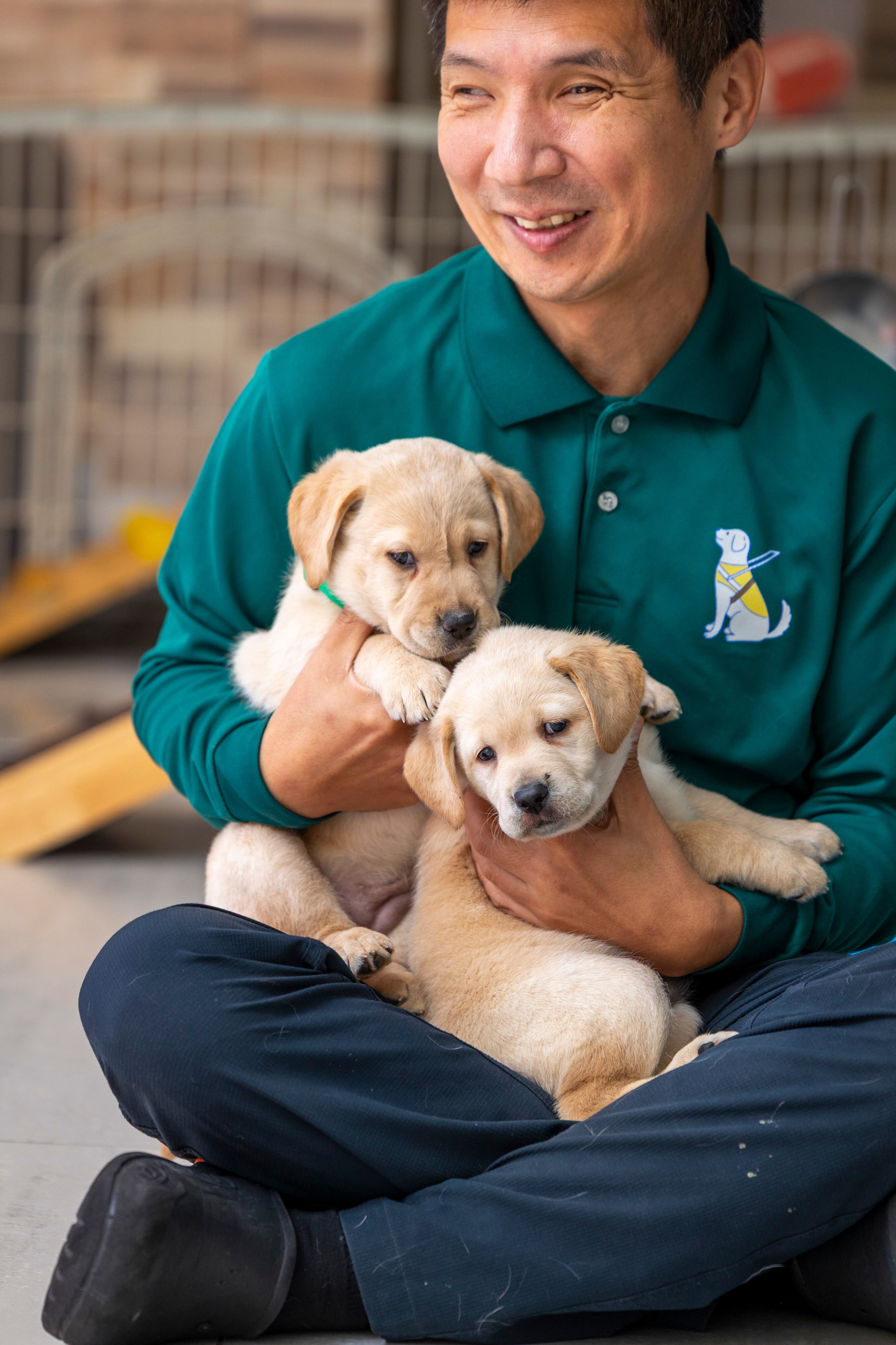
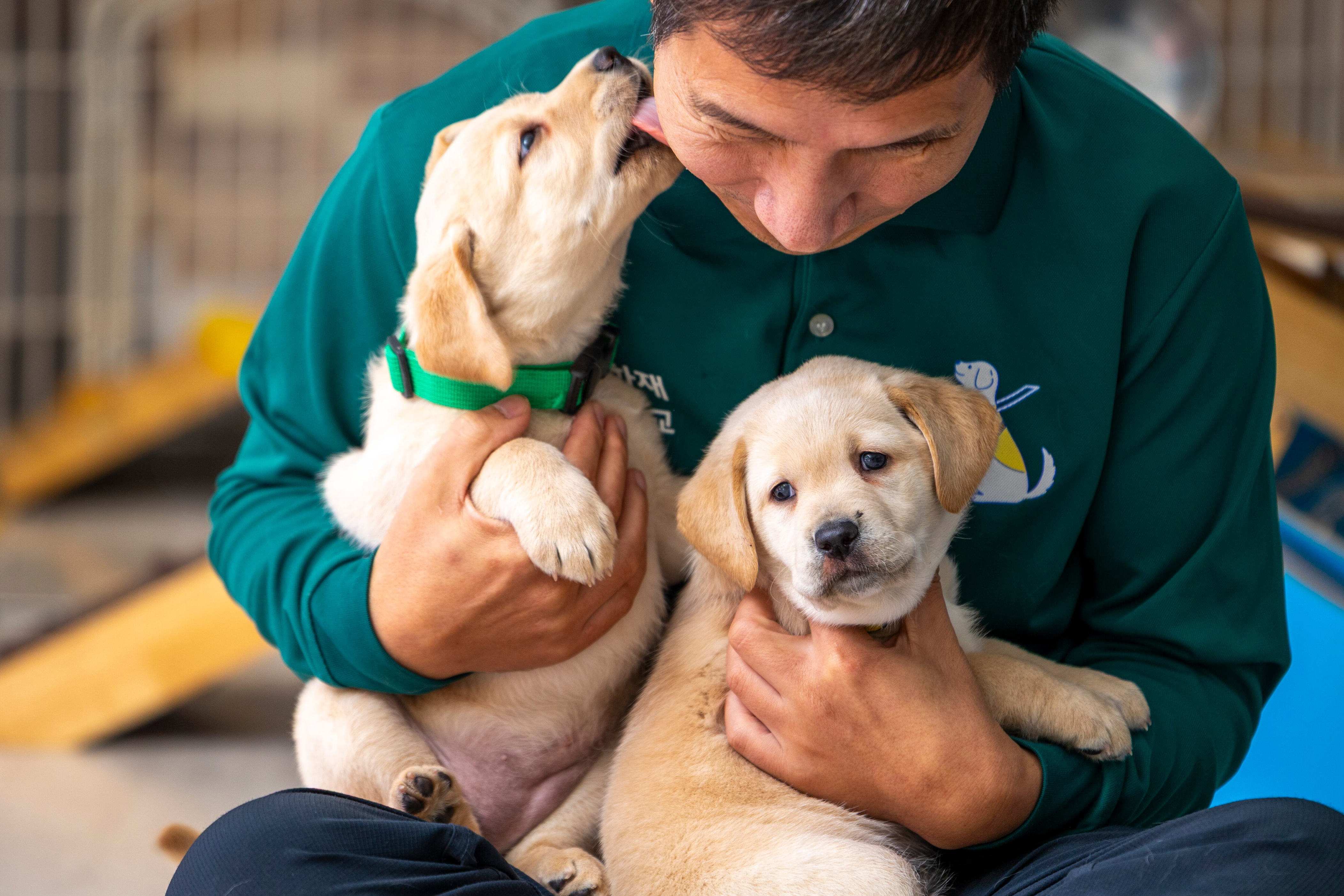
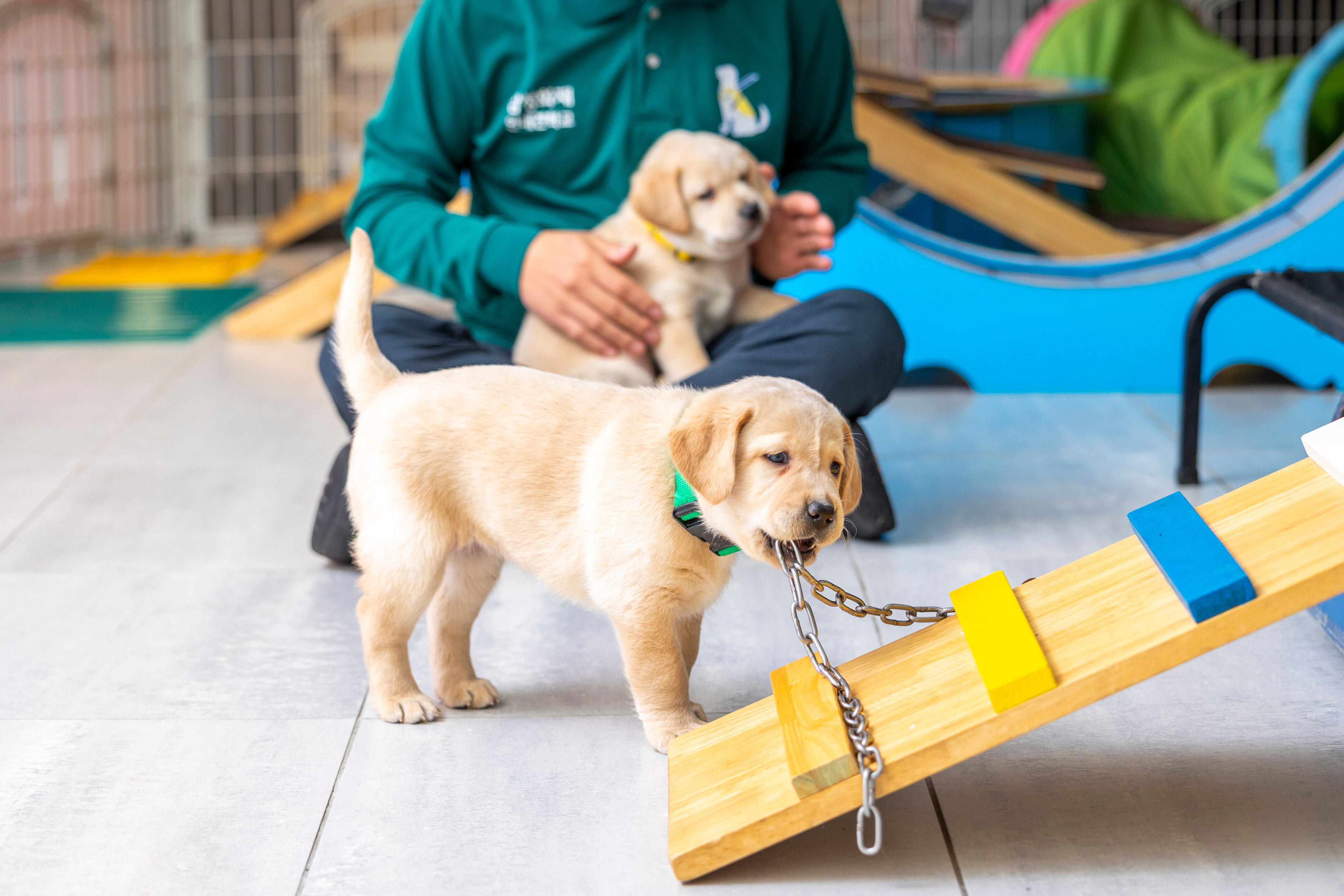
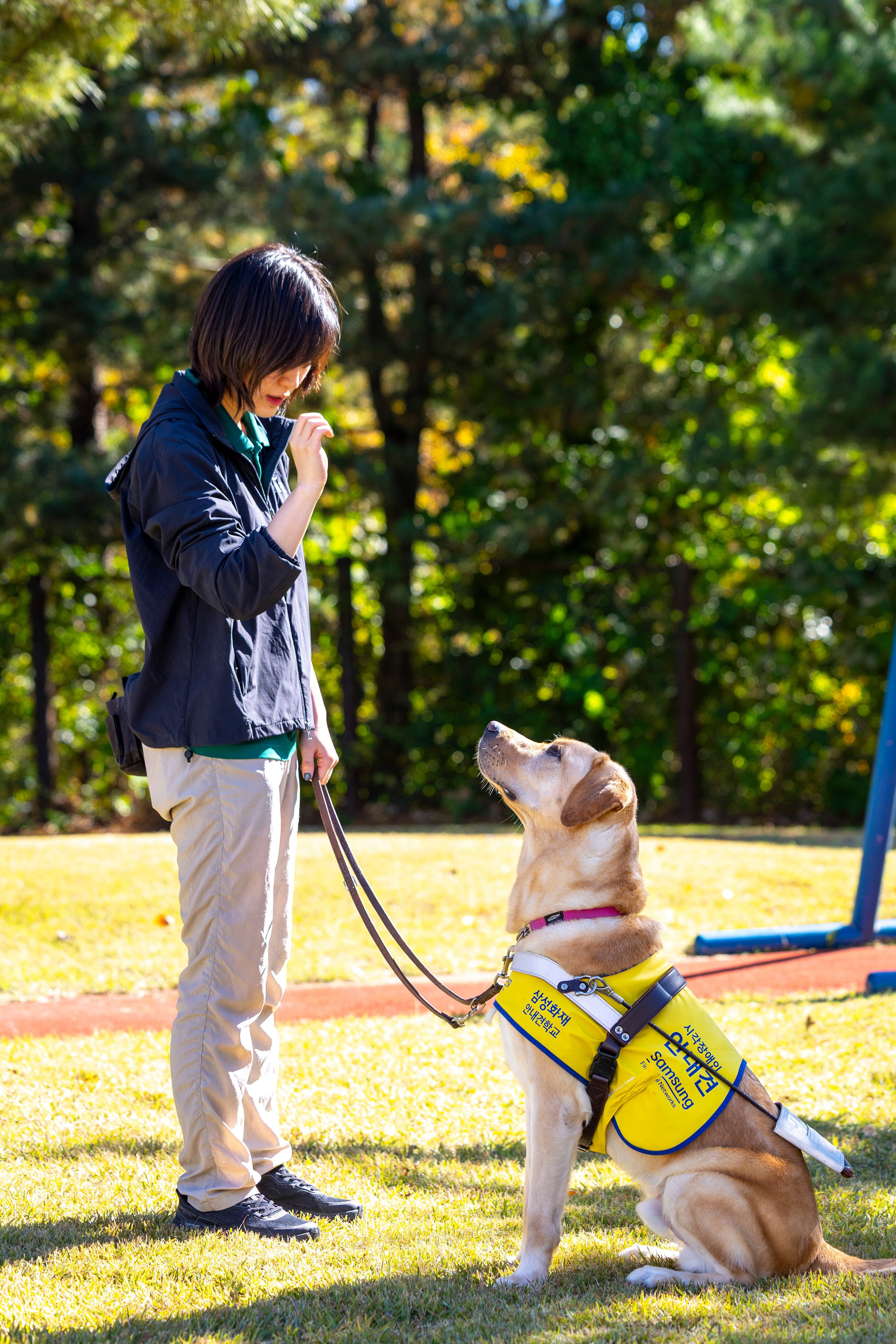
The representative breed for guide dogs is the Labrador Retriever. The temperament of the parent dogs is most important. Genetic diseases, health, physical anxiety, resilience, and other factors are thoroughly considered. Even if a puppy is born with the right temperament, its adaptability can depend on ‘puppy walking’—the process of experiencing various environments like public transport, restaurants, and supermarkets in volunteer foster homes. After puppy walking, if deemed suitable, the puppy receives formal training from professional trainers, such as straight-line walking, destination navigation, and obstacle avoidance. Yu explained, “Only three out of ten prospective guide dogs become active guide dogs after this process.” As of last month, 96 guide dogs from the school are living and working with visually impaired individuals.
◇ Frequent Refusals of Guide Dog Access Persist
Yu said, “Guide dogs bring changes beyond just assisting with walking. Caring for them provides a sense of competence and efficacy.”
-What do you mean?
“People want to confirm their worth by caring for others. The happiness from influencing another being is also significant.”
-What does this mean in context?
“If someone becomes disabled mid-life, they may lose the sense of competence they once had. They might think, ‘Am I useless now?’ In such cases, the experience of caring for someone, influencing them, and taking responsibility is crucial.”
-Caring for a guide dog can be such an experience?
“Exactly. Living together is not easy. You have to feed, bathe, and groom them. Cleaning is frequent. If they get sick, you must take them to the hospital. Guide dogs are not just helpers but also beings that require care.”
-People often think guide dogs make life easier for the visually impaired.
“That’s a misunderstanding. Caring for a guide dog requires time and money. While people naturally accept raising pets, some view visually impaired individuals as ‘using dogs for their own convenience.’ They don’t understand. Guide dogs are companions who share daily life. They are rarely alone and always by their side.”
-Did your personality become more proactive after living with a guide dog?
“Most people change. When refused entry or misunderstood, they must explain and persuade. If I face unfair treatment, I might endure it. But when my guide dog is mistreated, I actively speak up. Caring for the guide dog drives me to take action.”
-Are there still cases of guide dog access refusals?
“They often cite reasons like ‘some customers fear dogs or have allergies,’ even if no complaint was made. Alternative solutions like distancing or changing seats are not considered. What’s more regrettable is that such remarks paint the visually impaired as ‘people who demand consideration while causing inconvenience to others.’ By law, restaurants, cafes, hotels, and public transport cannot refuse guide dog access.”
◇ How My First Guide Dog, Gangto, Changed My Life
For Yu, guide dogs taught him how to love another being and the happiness that comes from influencing them. He naturally realized he was different from others through his family’s and peers’ reactions during childhood. After graduating from Daejeon School for the Blind—a special school for the visually impaired—he enrolled in Changwon University’s Special Education Department, becoming the first first-class visually impaired student there. “I spent 12 years in the separated environment of a blind school. I wanted to see how well I could adapt to society. I studied hard to get into university.”
-There must have been difficulties.
“The physical environment was completely different. In blind schools, textbooks are in Braille, and teachers adjust lessons for visual impairments. After a few months, you forget your disability. The spaces are also relatively small. But in university, I suddenly became a special person. My movement range expanded significantly.”
-How did you manage?
“I had to ask someone for help every time I moved. It was hard to set my own schedule or act independently. As someone receiving help, I couldn’t assert myself strongly. There was pressure to always be kind and polite.”
-This must have affected your personality.
“Many visually impaired people share this experience. Personalities can shift in two directions: avoiding situations where you must ask for help and staying home, or becoming overly assertive to avoid rejection. This isn’t their true personality but an adaptation to survive.”
He began living with his first guide dog, Gangto, upon entering university—a time when the concept of guide dogs was still unfamiliar. The biggest change was being able to leave home whenever he wanted. “For the visually impaired, going out alone is highly stressful. You either ask someone for guidance, use a disability taxi, or tap your way with a white cane. Avoiding obstacles while navigating is exhausting.”
-Walking must not have been easy.
“Going out itself is labor. But people don’t always go out for errands. Sometimes they just want fresh air or a mood change. After meeting Gangto, I discovered the joy of walking while contemplating. I gained more freedom to act on my will.”
-Guide dogs also act as social bridges?
“When I use a white cane or hold someone’s arm, people see me first as ‘visually impaired.’ But with a guide dog, they notice the dog first. Their gaze, having shifted elsewhere, returns with the disability slightly diluted. This makes me feel comfortable. Living with a guide dog drastically reduced the moments I thought, ‘I am disabled.’”
Like any college student, he joined a club and played the keyboard in a band. He also worked part-time teaching computers and IT to visually impaired students. Yu shared his changed daily life with his first guide dog on the school’s website. This led to his appearance in the 2005 Samsung Fire & Marine Insurance public service advertisement with Gangto, and the following year, the school offered him a one-year contract position. The reason was the need for an employee who understood the visually impaired perspective while providing balanced opinions.
-What was your role?
“I informed visually impaired individuals seeking guide dog placements about the process. Since I was the school’s first visually impaired employee, my duties weren’t clear. So I decided to create meaningful work myself.”
He proved his opportunity with results. He planned a two-day, one-night career development camp inviting high school seniors from blind schools to experience university life. He also created a ‘campus walking’ program for visually impaired students. “I recalled how happy I was receiving two weeks of walking training on campus with my first guide dog. I wanted other visually impaired students to experience the joy of self-reliance—being able to go where they need to go on their own.”
◇ Opportunities to Interact from Childhood Are Essential
During the interview, his phone rang. His daughter, who had arrived home but left the keys inside, asked him to unlock the door via voice recognition—a system using his voice to open the door.
-Has technological advancement made life easier for the visually impaired?
“Not entirely. These days, many systems like lighting, heating, cooling, and elevator buttons are touchscreens, which are hard for the visually impaired to operate.”
-Technology can create barriers.
“It’s similar to how elderly people struggle with kiosks. As technology advances, accessibility for diverse users must be considered.”
-Where should integration of disabled and non-disabled individuals begin?
“Opportunities to interact should start in childhood. Children accept disabilities faster than adults. My childhood friends naturally adjusted play rules once they knew I couldn’t see, and we played together.”
-Does this mean integrated education?
“Broadly, yes, but simply placing everyone in the same space isn’t enough. Physical opportunities to meet frequently are needed, along with adult mediation to help them understand differences and how to study and interact beyond them. The goal is to create an environment where children build relationships on their own.”
-It won’t be easy.
“For students with sensory disabilities like visual or hearing impairments to perform as well as non-disabled students in the same educational process, detailed support is required. Teachers need high expertise, and school facilities and environments may need changes. For example, if a visually impaired student attends a daycare or school, stairs and facilities must be checked first. Since this requires cost and effort, integrated education for sensory-disabled students remains low. But with proper support, high achievements are possible.”
As the interview ended, he recalled an experience from just two years ago. While waiting for a bus as usual, a driver passed by upon seeing his guide dog. The next day, he mentioned this to another driver he greeted daily. A week later, that driver told him, “Public transport drivers shouldn’t do that. I’ve firmly told the other driver not to.”
-What was the difference between the two drivers?
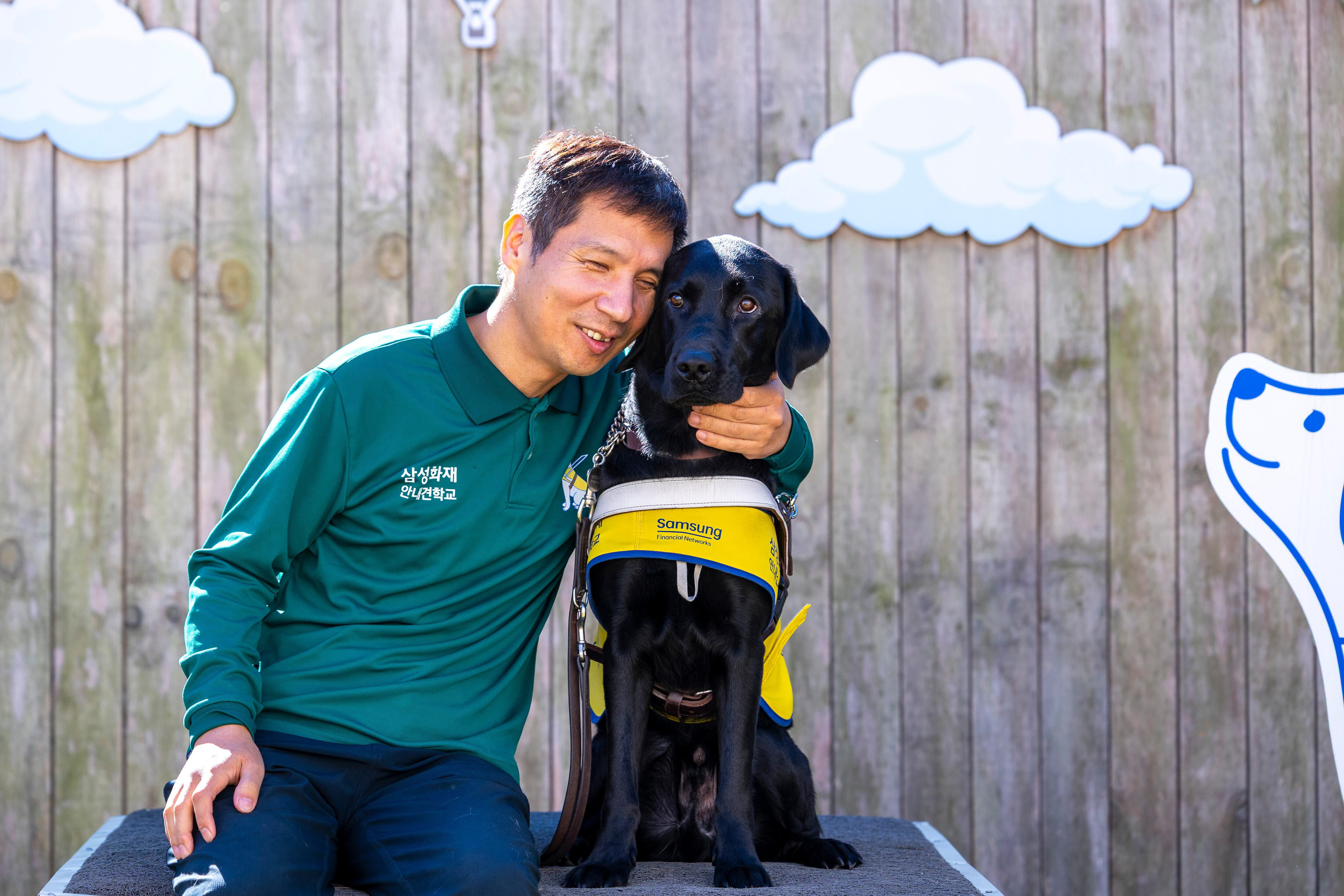
[Samsung Fire & Marine Insurance Guide Dog School]
“The driver who didn’t stop probably didn’t recognize the guide dog. The one who knew me had built trust through conversation and understood guide dogs. Actual interactions and relationships between disabled and non-disabled people change perceptions. I think society needs more opportunities to naturally encounter and understand disabilities.”
Celebrating its 33rd anniversary this year, Samsung Fire & Marine Insurance Guide Dog School is Korea’s first guide dog training institution. It was established in June 1993 by the late Chairman Lee Kun-hee shortly after his ‘New Management Declaration,’ with the aim of changing societal perceptions of the disabled. It is the world’s first and only guide dog school operated by a single corporation. In 1999, it became a full member of the International Guide Dog Federation and hosted the federation’s general assembly in 2002. That same year, Chairman Lee received the federation’s Merit Award for contributions to improving perceptions of the disabled.
- 월 5900원 멤버십, 신문 독자에게는 2900원, 조선멤버십
- 55000원 상당의 신문-잡지 8종 마음껏 보기, 조선멤버십
- 현금처럼 쓸 7000포인트 받아 알뜰한 쇼핑, 조선멤버십

Related posts:

Kenyan pilot allegedly left with nothing after dispute with wife shares update on family, new job

Hong Kong touts key advantages over London in bid to become global gold hub

‘Thai people already poor’: Developing nations protest IMF’s austerity call

Teacher, 25, killed in Oregon shooting is identified as family say it was her dream job

Melissa Gilbert quotes Willy Wonka after child sex charges against Timothy Busfield are dismissed