The Persistence of Genocide Ideology in the Great Lakes Region
Genocide ideology remains a significant threat to peace and stability in the Great Lakes region, particularly in Rwanda. A growing body of historical and contemporary evidence highlights that this ideology has not only persisted but evolved over time. Its endurance can be partly attributed to networks and actors who fled Rwanda in 1994 following the genocide against the Tutsi. These groups have continued to propagate divisive narratives through political rhetoric, mobilization, and, in some cases, organized violence, contributing to the persistence and evolution of genocide-linked ideologies across the region.
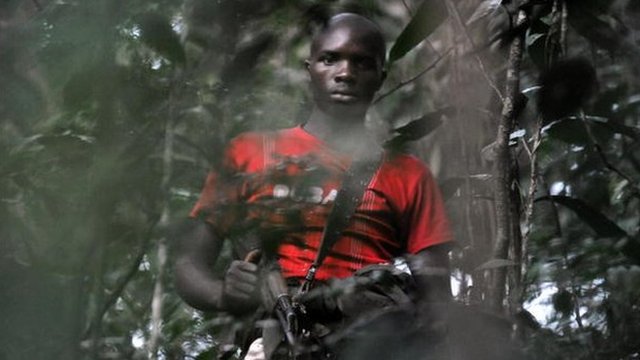
Among these groups is the Forces démocratiques de libération du Rwanda (FDLR), an armed group composed largely of former soldiers and Hutu militias. Alex Mvuka Ntung, a researcher and analyst on the Great Lakes region, links the continued existence of the FDLR to the reception that genocidal forces received when they fled to the Democratic Republic of the Congo (DR Congo) in 1994. He explains that nearly 80% of those who fled Rwanda after the genocide crossed into the DR Congo with the support of French troops. However, beyond this immediate trigger, Ntung emphasizes that the DR Congo provided a particularly hospitable environment for these groups, most of whom had committed the genocide. “They entered a context that was, in many ways, ideologically and psychologically similar to what they had left behind in Rwanda. Local populations were already deeply connected to the events unfolding in Rwanda, which facilitated this transition,” he says.
Historical Roots and Political Support
A second critical factor, according to Ntung, was the failure to dismantle both the genocidal ideology and the armed structures. This ideology, described as a “weapon of mass destruction,” remained intact alongside significant military capacity. “As a result, these groups were able to reorganize and continue operating much as they had before, at one point mobilizing thousands of fighters in Goma. They also succeeded in recruiting additional members,” he explains. Ntung also highlights the enabling role of the political environment in the DR Congo, which, at various levels, provided implicit or explicit support, allowing these groups to expand their influence and sustain their operations over time.
The researcher further traces the historical roots of this dynamic, noting that the then former President Juvénal Habyarimana had long operated within North Kivu, where there was a significant population of Kinyarwanda-speaking Hutu communities. “Through networks and organizations such as MAGRIVI and propaganda platforms like Kangura, ideological narratives were actively cultivated and disseminated across borders,” he says. MAGRIVI (an acronym for Mutuelle Agricole des Virunga or Mutuelle des Agriculteurs des Virunga—Farmers Mutual Society of Virunga) was a Congolese Hutu political association formed in the 1980s by the support of Habyarimana aimed at bolstering the Hutu population’s position against Tutsis and indigenous communities such as the Hunde and Nande in eastern Zaire.
State Support and Continued Operations
At the state level, former Zairian President Mobutu Sese Seko supported Habyarimana, not purely through diplomatic channels but in what Ntung describes as a form of “brotherhood.” Mobutu even deployed troops to assist in fighting the RPF, although these efforts ultimately failed. According to Bojana Coulibaly, a researcher on conflict discourse, when the genocidaires and their family members fled to eastern DR Congo, they continued to receive state support. “The FDLR had been pushed out of DRC into countries like Congo Brazzaville. Once Laurent-Désiré Kabila (the then Congolese president) turned against Rwanda and Uganda, he had no army so he had to bring them back. He created, organized, funded, and trained them,” she says.
This has been confirmed by many former FDLR members who were captured and sent back to Rwanda to be reintegrated or tried by official courts. One of them is former FDLR deputy president Straton Musoni, who, in 2023, told The New Times in an exclusive interview, that FDLR was formed in May 2000 with the support of president Laurent-Désiré Kabila. “Kabila was behind the establishment of FDLR. The government of Congo supported it. The [Congolese] military supported it because the soldiers in the forces spéciales were paid by Kabila’s army,” he confirmed, further explaining that forces spéciales [special forces] was a name that had been given to ex-FAR members who had been integrated in the official army of the DR Congo.
International Sanctions and Ongoing Challenges
Kinshasa’s support towards the FDLR continued over the years. This support has recently been documented in many reports. For instance, Human Rights Watch (HRW) reported that between May and August 2022, the Congolese army fought M23 “with a coalition of Congolese militia as well as the FDLR.” HRW also documented a May 8–9, 2022 meeting in Pinga attended by Congolese army officers and, reportedly, two senior FDLR commanders, where armed groups formed a coalition to fight M23. The EU later used this same episode in July 2023 in sanctioning Col. Simon Tokolonga, saying his presence revealed cooperation between FARDC members and that coalition.
Rise in Genocide Ideology and International Response
The continued presence of FDLR in the region has led to a noticeable rise in hate speech and genocide ideology. This has mainly been amplified by social media platforms, which have accelerated both its spread and normalization. Some officials in the DR Congo, including Minister of Communication Patrick Muyaya and former Justice Minister Constant Mutamba, have been criticized by analysts and observers for rhetoric that, at times, blurs the line between political messaging and inflammatory discourse. This escalation has been accompanied by extreme forms of violence, including lynching and acts of cannibalism.
Ntung maintains that there is a growing internationalization of this ideology. Its narratives and networks are no longer confined to the region but are increasingly visible within diaspora communities in countries such as Germany, the Netherlands, France, and Belgium. “What is unfolding in South and North Kivu, including the systematic burning of villages, churches, and livestock, alongside acts of extreme violence, strongly reflects an intent that goes beyond conflict and points toward the destruction of a people’s existence and humanity.”
Economic Networks and the Need for Global Action
Behind the violence, insecurity, and spread of genocide ideology, FDLR leaders have also built extensive economic networks that sustain their operations. These include illicit mining, mineral smuggling, and expansion into other sectors. Coulibaly, who is currently writing a book that is partly examining the group’s financial structures, argues that many senior FDLR figures have accumulated significant wealth through the charcoal trade. According to her research, some leaders have acquired large tracts of land and real estate in Goma using proceeds from these illegal activities, increasing both their economic and political influence.
Despite numerous resolutions, the international community has failed to fully implement existing measures aimed at dismantling the FDLR and addressing the persistence of genocide ideology. The United Nations Security Council sanctioned the FDLR in 2005 over its armed activity in eastern DR Congo, violations of the arms embargo, and role in regional instability, a designation that remains in place today. The U.S. Department of State followed by designating the group as a terrorist organization in 2008, criminalizing material and financial support. Similarly, the European Union has imposed sanctions on several FDLR leaders. However, these measures have done little to dismantle the group’s operations or curb the persistence of genocide denial and ideology in the region.
In 1945, the UN instituted a charter to prevent genocide, and in 1948 adopted the Convention on its prevention and punishment. Yet, prevention remains problematic. The international community must step up and stop using genocide denial, ideology, and conspiracy theories.