
The Rise of Synthetic Realities in South Korea
A viral “baseball goddess,” a wolf that never was, and a deepfake epidemic. Generative AI is reshaping South Korea’s reality in ways that challenge the boundaries between the real and the imagined.
The young woman in the stands simply sighed, turned her head, and sat there, looking impossibly composed, while 15 million strangers fell briefly in love with someone who had never existed. She was, according to the caption accompanying one of many posts, “the average Korean woman.” Her admirers quickly crowned her a “baseball goddess,” analysing her every feature with the forensic enthusiasm reserved for internet obsessions, as the five-second clip went viral across South Korea’s online communities.
Then someone noticed the scoreboard. The broadcast graphic in the top left of the picture showed a current Hanwha Eagles pitcher facing a retired Doosan Bears batter in a match-up that could not have occurred. The goddess was a fiction—assembled by an algorithm and indistinguishable, to millions of viewers, from the real thing.
Within days, copycat clips had started flooding social feeds. Users inserted themselves beside BTS star Jungkook in stadium seats and transplanted invented spectators into Formula One paddocks and NBA arenas, manufacturing presence where there had been none before.
In South Korea, where generative AI has rapidly transformed from a novelty into an everyday tool, such clips are testing how quickly synthetic content can pass as reality—and how easily entertainment can slide into misinformation, reputational harm, political manipulation, and public confusion.
A Wolf That Never Was
The widening gulf between synthetic image and lived reality was laid bare in April, with the citywide hunt for Neukgu, a two-year-old wolf that had escaped its enclosure at O-World theme park and zoo in central Daejeon, triggering a nine-day search.
As authorities combed the region, an office worker in his forties used an AI image generator to fake a photograph of a light-brown wolf casually crossing a real intersection near a school.
The image was convincing enough to deceive Daejeon’s own emergency management officials, who incorporated it into public alerts urging residents to stay indoors, and even displayed it at a televised press briefing. Digital investigators and wire service fact-checkers eventually identified telltale inconsistencies in the image. Police arrested the creator on charges of obstructing official duties. But the damage had already been done: a fabricated wolf had briefly become the face of a genuine public emergency.
“Viewed lightly, this could simply be seen as entertainment or a hobby,” Kim Myuhng-joo, executive director of the Korea Artificial Intelligence Safety Institute, told This Week in Asia. “But if this behaviour becomes excessive or prolonged, the gap between fantasy and reality can widen. Excessive immersion in AI can deepen dissatisfaction, encourage escapism and create a vicious cycle in which overall life satisfaction declines further.”
Escaping Reality
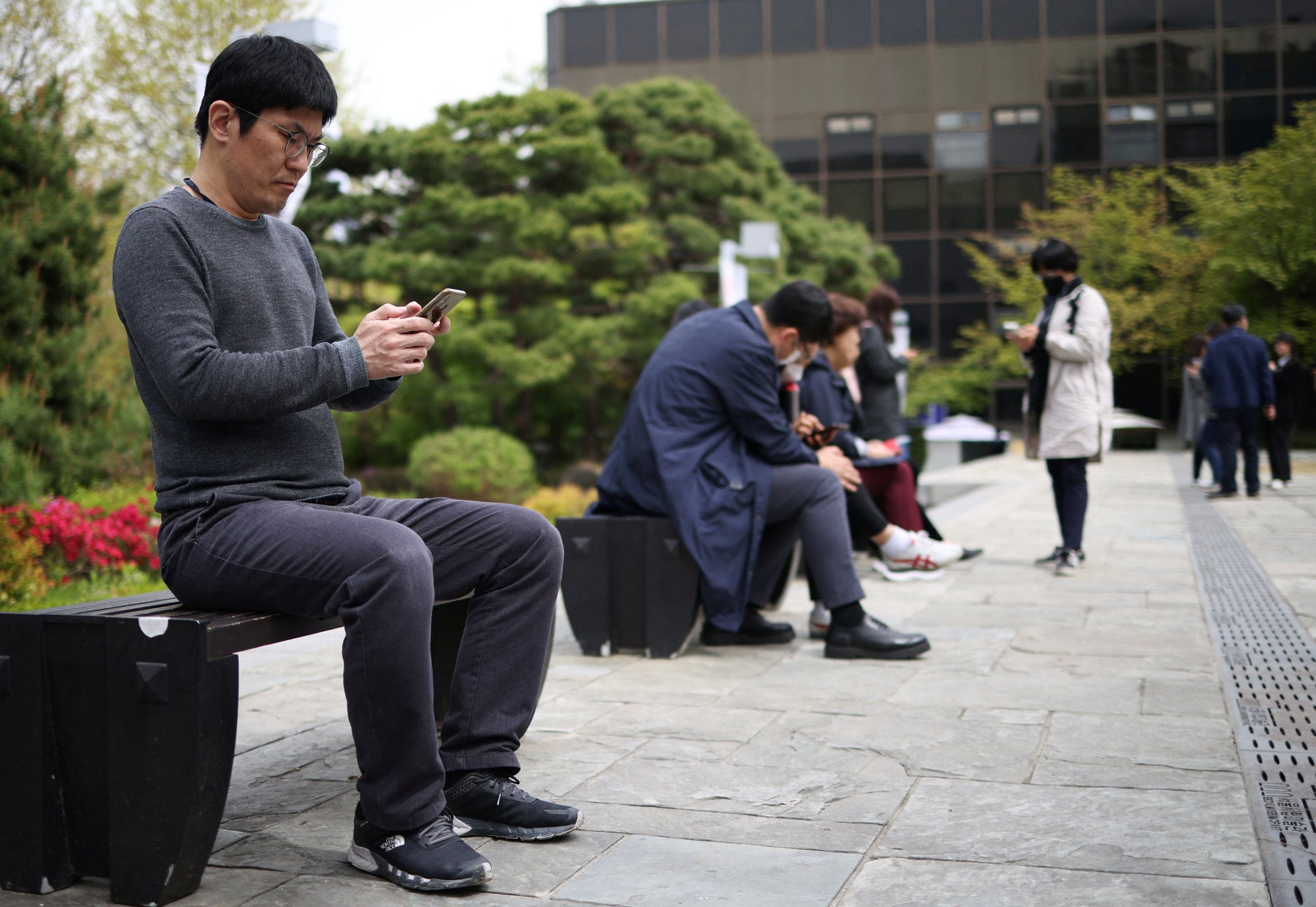
South Korea has embraced generative AI with lightning speed. Nearly half the population—44.5 per cent in 2025—have used such tools, according to a recent government survey: a penetration rate that reflects both the country’s world-class digital infrastructure and a cultural appetite for technological novelty that precedes the current AI moment by decades.
South Koreans also consume more “AI slop”—low-quality, algorithmically optimised content engineered for clicks—than any other population on Earth, according to a 2025 report from video-editing platform Kapwing.
The same generative tools that produce viral baseball goddesses are being used to converse with elderly residents through AI-powered companion dolls, to flood e-book markets with machine-written titles—One US publisher, Luminary Books, reportedly produces up to 9,000 AI-assisted e-books annually—and to churn out “news” content at a pace that human editorial judgment cannot match.
In a country sometimes nicknamed the “plastic surgery republic” for its acute cultural emphasis on appearance and image, AI has found fertile ground as what Kim calls “a tool that provides vicarious satisfaction for suppressed desires and frustrations”: a digital mirror calibrated to reflect something better than the original.
President Lee Jae Myung has repeatedly sought to position AI as a cornerstone of South Korea’s economic future. In January, the country enacted a comprehensive AI law intended to balance innovation with ethical safeguards across high-impact sectors such as healthcare, transport and finance.
Critics, however, note that its penalties fall well short of those imposed under the European Union’s AI Act: a gap that may prove consequential as the technology’s harms become harder to ignore.
The Deepfake Epidemic
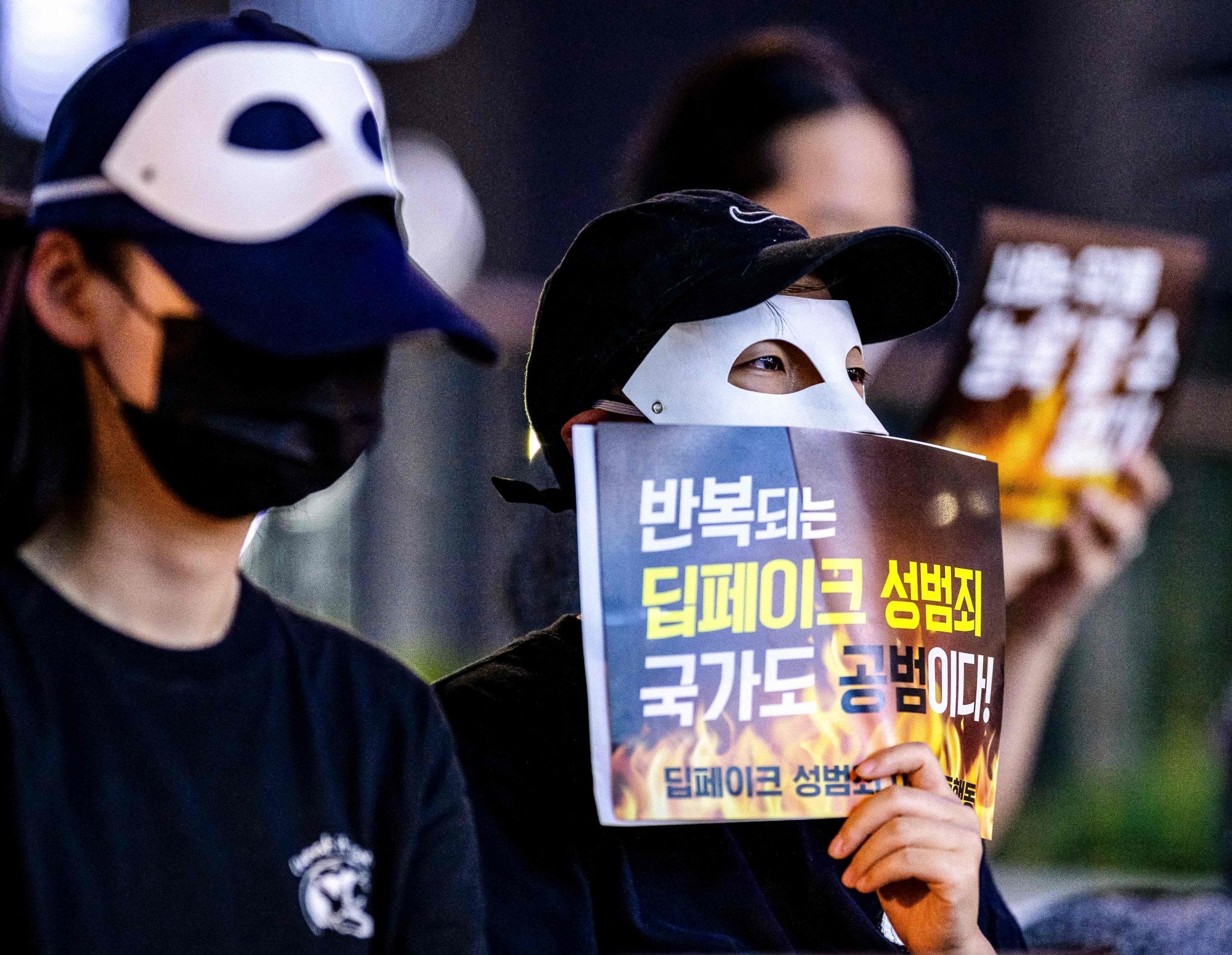
South Korea has already experienced some of those harms in their most visceral form. In 2024, the country was shaken by a deepfake pornography epidemic, with the mass creation and circulation of sexually explicit AI-generated imagery targeting women and minors, distributed largely through encrypted Telegram chat rooms. Many victims were schoolgirls whose images had been manipulated by classmates.
AI has since become an equally potent political weapon. Fabricated television reports falsely placed a mayoral candidate on Time magazine’s list of rising political leaders. AI-generated K-pop songs were deployed to praise politicians and mock their opponents ahead of elections.
Authorities say they have mobilised hundreds of personnel to monitor manipulated content ahead of next month’s local polls.
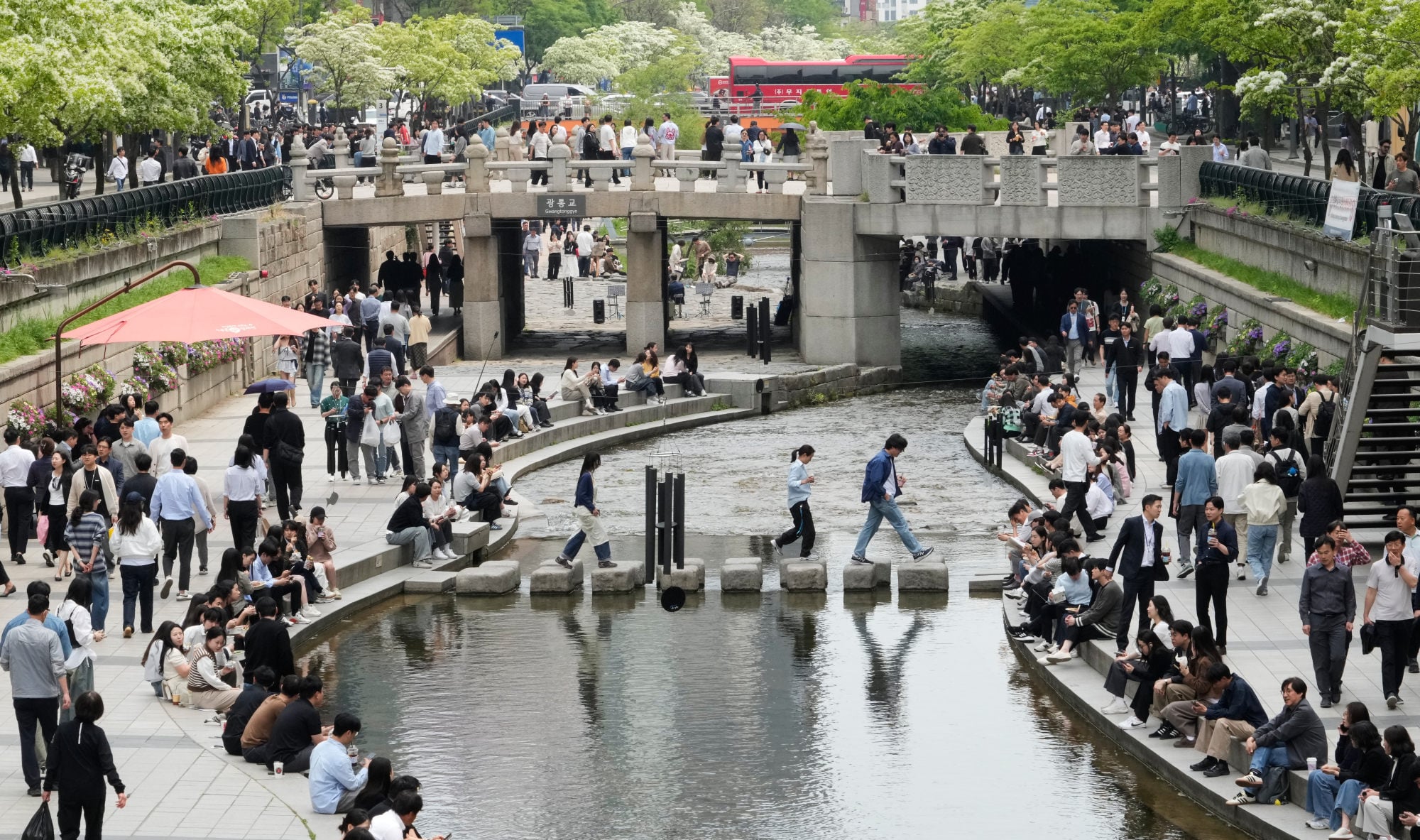
The economic consequences are also starting to be felt. Nearly 98 per cent of the country’s 211,000 youth job losses between July 2022 and July 2025 occurred in industries with high exposure to AI automation, according to South Korean news agency AJP, citing Bank of Korea data.
Employment in the professional, scientific and technical services sector fell by 105,000 in February from a year earlier—the steepest decline since the current industrial classification system was introduced in 2013.
In education, students at Seoul National University were caught using AI to cheat during final exams last December, resulting in cancelled grades. Yonsei University and Korea University have issued similar crackdowns on what students now openly call “AI cheating.”
A government-backed roll-out of AI-generated textbooks in primary and secondary schools, meanwhile, drew widespread criticism after teachers reported pervasive factual errors and complained of the added burden of fact-checking and screening classroom tablets before every lesson.
‘Healthy and Humane’?
Despite releasing its first AI ethical guidelines as far back as 2020, South Korea has consistently prioritised development over values, according to Jeon Chang-bae, board chairman of the International Association for AI and Ethics.
“A major reason is that AI-related ethical crises have not yet emerged on the same visible scale seen in countries like the US or China, but government agencies, academics, companies and citizens all need to begin discussing and researching solutions before larger problems emerge,” he said.
“Given the scale of AI’s influence, society needs to begin studying the problems that could arise from widespread AI use now, and prepare solutions proactively … AI should not simply be treated like any ordinary technology. Its harmful consequences could affect human beings far more deeply than many previous technologies.”
Some degree of AI misuse and overdependence may ultimately prove unavoidable, according to Kim, who argued that instead of fixating on pathologising such behaviours, societies should ask the more fundamental question of what constitutes a fulfilling human life in an age of synthetic experience.
“Society may eventually conclude that rejecting certain forms of AI-driven behaviour is actually more conducive to a healthy and humane life,” he said. “If a broad social consensus emerges around that idea, new forms of civic education and public awareness could follow. That may ultimately become a solution to mitigate these problems.”
For now, though, the baseball goddess will stay sat in her seat—calm, luminous and entirely imaginary. And the crowd will keep on watching.

Related posts:
From Madina Old Road to the marketing boardroom: This is Dinah Asabea Darko

My 33-Year Battle with Idumota Marketers: The Unfiltered Journey of Queen Oluwa

What Governments Must Do Before Transitioning to the 12-Year Compulsory Education Model – Analysts


Beyond the Bill: Can Nigeria’s States Forge Effective Police Forces?