The Challenges of Breastfeeding in Hong Kong
For Hongkonger Annyee Chan, the decision to stop breastfeeding her son at eight months was a pragmatic response to a city that often feels at odds with the needs of nursing mothers. Returning to work just one month after childbirth, the self-employed wealth management professional faced a gruelling logistical challenge, navigating a city with sparse nursing facilities while lugging heavy pumps, bottles and coolers on her daily commute.
“I managed to breastfeed my child quite well, and I persisted because I knew this was good for both mother and baby … but things got challenging when I returned to work and needed to meet clients,” she recalled. “What I did was pump milk in the staff rooms of my friends’ restaurants, leave it in a cooler bag, store it there and retrieve it after I finished work.”
The logistical hassle was constant, as she sometimes forgot equipment or left milk behind while struggling to find a clean, unoccupied nursing room. These recurring obstacles nearly led her to stop breastfeeding in the third month, but she pushed herself to continue until eight months for the benefit of her now one-year-old son, Branley.
“Hong Kong’s environment is quite discouraging for breastfeeding,” she said. “I hope there will be more nursing facilities and education to normalise breastfeeding in public. We see infant formula advertisements everywhere, but not high-profile ads promoting breastfeeding.”
Rising Trend Reverses
Hong Kong’s breastfeeding rate upon hospital discharge increased from 64.2 per cent in 2005 to a peak of 88.4 per cent in 2015, according to the Baby Friendly Hospital Initiative Hong Kong Association. However, it has since fluctuated, dropping to 80.9 per cent in 2024, with only one in 10 infants being exclusively breastfed.
Alarmingly, the rate is not only declining but also bucking a global upwards trend. While the government promotes breastfeeding as the gold standard, many mothers remain trapped in a pervasive “formula culture” that undermines their efforts, alongside inadequate infrastructure and workplace protections.
Advocates warn that without a fundamental societal shift in mentality, stronger legal mandates and proactive measures to combat digital misinformation, reversing the city’s declining breastfeeding rates will remain a steep uphill battle.
According to the World Health Organization (WHO) and Unicef, exclusive breastfeeding for the first six months of an infant’s life has the single largest potential impact on child mortality of any preventive intervention. It provides essential, irreplaceable nutrition for a child’s growth and development, as well as protection from respiratory infections, diarrheal disease and other potentially life-threatening ailments.
Exclusive breastfeeding also has a protective effect against obesity and certain non-communicable diseases later in life. The two organisations recommend initiating breastfeeding within the first hour of birth and exclusive breastfeeding for the first six months. Infants should be fed on demand – day and night – without the use of bottles, teats or pacifiers.
The organisations have set a target of having 60 per cent of infants under six months exclusively breastfed by 2030. According to the Global Breastfeeding Collective, the global percentage of babies under six months and exclusively breastfed increased from 39 in 2020 to 47 in 2025.
In Hong Kong, the latest official data showed that only 18.2 per cent of babies were exclusively breastfed at six months in 2022, and 42.3 per cent had received breast milk and formula. These figures are a significant drop from the highs of 2016, when the rates were 27.9 per cent and 47 per cent, respectively.
Do We Have Enough Nursing Rooms?
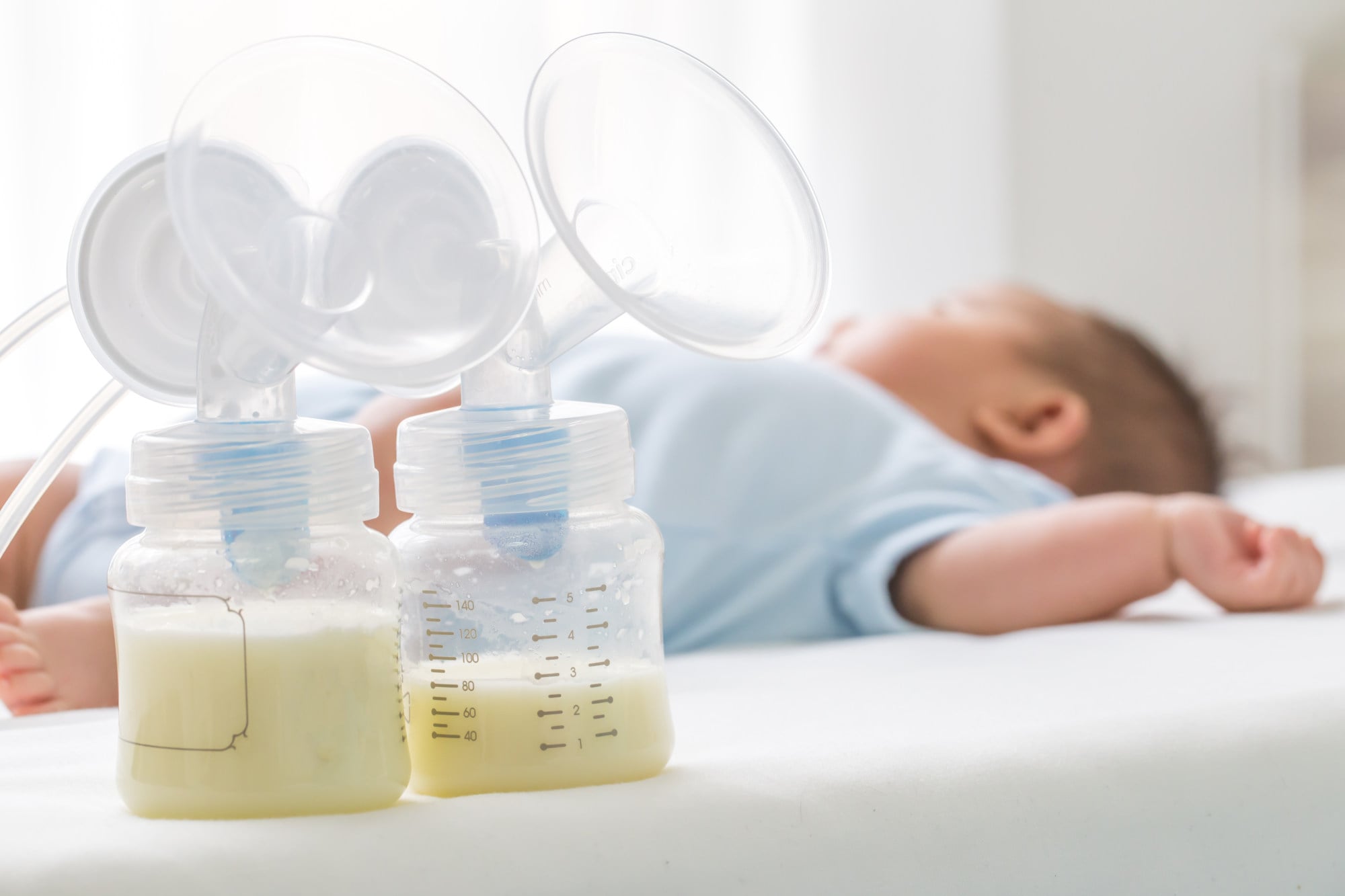
That the absolute number of nursing facilities has increased is undeniable. The city is estimated to have more than 750 nursing rooms at about 600 venues this year, up from 660 at 500 sites in 2020, according to bfGPS, a mobile app developed by the University of Hong Kong. But more than 70 per cent of these facilities are concentrated in shopping malls, recreation and community centres, leaving a dearth of options in public transport hubs and restaurants, among other locations.
Quality also remains a significant issue. Only 67 nursing rooms met all seven criteria set by researchers – such as lockable doors and power sockets – with bottle warmers the most frequently missing item. The frustration is reflected in a 2024 study by the Equal Opportunities Commission (EOC), which found that more than 80 per cent of mothers considered public breastfeeding facilities insufficient.
Interviewees reported long queues, poor sanitary conditions and facilities located inside disabled toilets or misused by workers for naps. Dr Leung Wing-cheong, an obstetrician and vice-chairman of the Baby Friendly Hospital Initiative Hong Kong Association, said he believed the necessary “hardware” to promote breastfeeding was largely in place, compared with a decade ago.
He attributed the recent decline in rates partly to the lingering impact of the Covid-19 pandemic. “We’re seeing better support for breastfeeding across both public and private hospitals through lactation consultants … plus, there’s been a real boost in workplace support,” he said. “Although the pandemic is over, the very strict infection control measures at the time had negative impacts on breastfeeding, a key success factor of which is skin-to-skin contact, and that [practice] takes time to recover.”
Leung also pointed to claims on social media that healthcare staff were too pushy, leading more pregnant women to state explicitly that they would use formula exclusively. “While there’s no doubt that breast milk is best, the struggle is real. It can be challenging when mothers are exhausted from childbirth, though it is absolutely worth it,” he said. He suggested that providing reliable information through social media influencers would be more effective than traditional methods.

A Tale of Two Systems
Dr Yennie Pang Lap-lan, a paediatrics specialist and a mother of two, said the type of delivery and ward arrangements could affect breastfeeding outcomes. “Public hospitals strongly promote breastfeeding, placing babies next to mothers to enable on-demand feeding, but some mothers find this exhausting after childbirth,” she said. “Private hospitals offer a different setting, as mothers who undergo C-sections may be required to stay in bed for 24 hours for wound management, preventing them from breastfeeding at the nursery during that critical initial period.”
While some private hospitals allow direct latching sooner, it also depends on the mother’s physical condition and pain levels. In Hong Kong, two out of every five babies are delivered by caesarean section. Meanwhile, some mothers choose formula because they find breastfeeding restrictive, particularly those with demanding jobs or active social lives.
Others switch out of concern that they lack sufficient milk, that the baby is not full, or that jaundice is not improving. Pang reassured mothers that breast milk was the best option because its composition changes to match every stage of a baby’s growth. “It is the most tailor-made option. In terms of nutrition, there is absolutely nothing to worry about,” she said. “The hardest period is the first few weeks when the baby has not stopped night feeding. After that, it’s much easier.”
She noted that while breastfeeding was only discouraged in cases of specific illnesses, there was no need to insist on exclusive breastfeeding if the supply was very low and the mother was struggling very badly.

The War on Misinformation
Pang said it was crucial to provide specialised community support during the 14-week maternity leave to help new mothers establish a routine. Currently, mothers can call Hospital Authority hotlines or visit maternal and child health centres, but Pang said in-home lactation services were ideal, as many Hong Kong mothers followed the tradition of staying home for a full month to recover and were reluctant to go out to seek help.
She also cautioned against relying on “Dr Google”, noting that people often only shared information online when things went wrong. To better support breastfeeding mothers, the NGO Natural Parenting Network launched a peer support programme 10 years ago in collaboration with the Department of Health. Each mother is matched with an experienced volunteer who provides emotional support and answers questions.
Jamie Lau Tsz-man, project manager of the NGO, said the “baby formula culture” had gained such traction that many mothers gave up before they even started. “Advertising campaigns often claim formula is comparable to breast milk or suggest products boost antibody levels,” she said. To counter this, the government launched a Hong Kong code of marketing for formula milk in 2017 to promote good practices and protect breastfeeding. But the code, which is voluntary, has had a limited impact.
Lau noted that misinformation on social media frequently misled mothers into believing they were “unsuitable” for breastfeeding. Common myths include the need for strict dieting or using formula to clear newborn jaundice. Incorrect practices, such as waiting until the baby cries to feed, can cause aggressive latching and disrupt milk production. Consequently, mothers worry about not having “enough milk” and are pressured to switch to formula.
Policy Support
Another pain point was the lack of a statutory requirement for employers to implement breastfeeding-friendly policies, Lau said. Existing guidelines recommend two lactation breaks – each about 30 minutes and for at least a year after childbirth – a private space, and refrigeration facilities for employees in need.
“For some mothers, if they know they will not be able to breastfeed one day, they are more likely to give up earlier,” she said. “Although such a right is protected by the Sex Discrimination Ordinance, and more facilities are now baby-friendly, some mothers are still asked to do that in private.”
Under the ordinance, amended in 2021, it is unlawful to discriminate against or harass people for breastfeeding or expressing milk. The EOC said it had received 26 complaints related to breastfeeding discrimination and harassment since the legal change.
Addressing the recent decline in breastfeeding rates, the Department of Health said it would maintain a multipronged strategy focused on early hospital support and long-term community measures. It said a dedicated working group was reinforcing practices in hospitals, prioritising early feeding within the first hour of birth, skin-to-skin contact, and rooming-in to support natural milk production. Post-discharge, the department also provides counselling and skills coaching.
It did not respond to questions on whether the city was on track to reach the WHO goal or whether the code would be made mandatory to counter the impact of formula advertising.
Judy Chen Qing, chairman of the Hong Kong Committee for Unicef, which launched a breastfeeding campaign in 2015 targeting workplaces and public venue operators, said the city had made significant progress over the past decade, but more needed to be done to reverse the declining trend.
“Real breastfeeding support includes not only facilities such as more lactation rooms and baby-friendly amenities in public spaces … but also family-friendly policies,” Chen said. “When policies and the public mindset are truly child-friendly and focused on children’s welfare, all sectors of society will naturally come together to support breastfeeding.”
It Takes a Village to Breastfeed a Child
Cindy Lau Wan-yee, a mother of three, was determined to breastfeed her children until they weaned naturally. “Because both my husband and I were physically weak, we wished to give our children more antibodies,” she said. Upon returning to work as a lecturer, she maintained her milk supply by pumping in her office cubicle and nursing in public under a cover, which she found more convenient than carrying sanitised bottles.
Because of her commitment, her eldest son was nursed until the age of 4 1/2 and her daughter until she was nearly two. But the journey was not without difficulty. Lau struggled with blocked milk ducts and pressure from healthcare workers who suggested formula when her third child was labelled “underweight” and threatened hospitalisation.
“Formula became the quick fix when the baby’s weight did not meet the standard, even though the mother was feeding well,” she said. “It was disheartening because we didn’t want to be separated from the baby.”
Fortunately, she had learned to express milk by hand through a peer support group and managed to increase the infant’s intake and weight in a short period of time, using formula only as a temporary supplement.
Lau’s ability to care for three children – at one point nursing two simultaneously – relied heavily on a support network. Her husband handled all the housework, changed diapers, bathed the babies and distracted the older child to manage any feelings of jealousy when Lau was feeding the second child.
The peer support group, which Lau joined when her first child was five months old, taught her the necessary skills and knowledge, such as managing nursing pain and the reasons behind frequent feeding. Now a volunteer, she answers questions in group chats and shares her experiences in postnatal wards.
“Breastfeeding is not as exhausting as people imagine, and we should not be shy about discussing it,” she said. “Can we start replacing bottles with a mother’s breast in pop culture, films and picture books? We need to do more to promote breastfeeding when formula companies are giving mothers so many gifts through childcare talks and clinics.”