
Plan to discuss US$14 billion arms package with island’s leader would anger Beijing and raise questions about US policy, analysts say
Donald Trump’s blunt warning that he was not looking to have “somebody go independent” after his summit with Chinese leader Xi Jinping has reignited debate in Taiwan over whether Washington is hardening its message on the island.
For many in Taipei, the US president’s remarks evoked memories of the George W. Bush administration, when Washington publicly checked Taiwan over moves seen as edging towards formal independence.
But just as analysts were debating whether Trump had delivered the sharpest US warning to the island since Bush publicly rebuked then Taiwanese leader Chen Shui-bian in 2003, a new twist complicated the picture.
Do you have questions about the biggest topics and trends from around the world? Get the answers with SCMP Knowledge, our new platform of curated content with explainers, FAQs, analyses and infographics brought to you by our award-winning team.
Trump now says he plans to speak directly with Taiwanese leader William Lai Ching-te over a pending US$14 billion arms package.
If realised, the move would be unprecedented between sitting US and Taiwan leaders since Washington switched diplomatic recognition from Taipei to Beijing in 1979.
It would almost certainly anger Beijing and raise fresh questions over whether Trump was restraining Taipei or recalibrating US policy in a more unpredictable direction.
Beijing sees Taiwan as part of China to be reunited by force if necessary. Most countries, including the United States, do not recognise Taiwan as an independent state, but Washington is opposed to any attempt to take the self-ruled island by force and is committed to supplying it with weapons.
Taiwan on Thursday said Lai would be happy to speak with Trump after the US president confirmed for a second time in a week that he intended to talk to “the people currently governing Taiwan”.
“I will speak to him. I speak to everybody,” Trump said on Wednesday.
No timing for such a conversation has been announced.
The development came days after Trump’s sharper remarks following his May 13-15 visit to Beijing during which he held a summit with Xi.
Speaking to Fox News and to reporters aboard Air Force One following his Beijing trip, Trump said: “I’m not looking to have somebody go independent.”
He added: “We’re not looking to have somebody say, ‘Let’s go independent because the United States is backing us’.”
Trump also said he did not want the US to travel “9,500 miles (about 15,300km) away” to fight a war.
That rhetoric immediately revived comparisons with the Bush-Chen era.
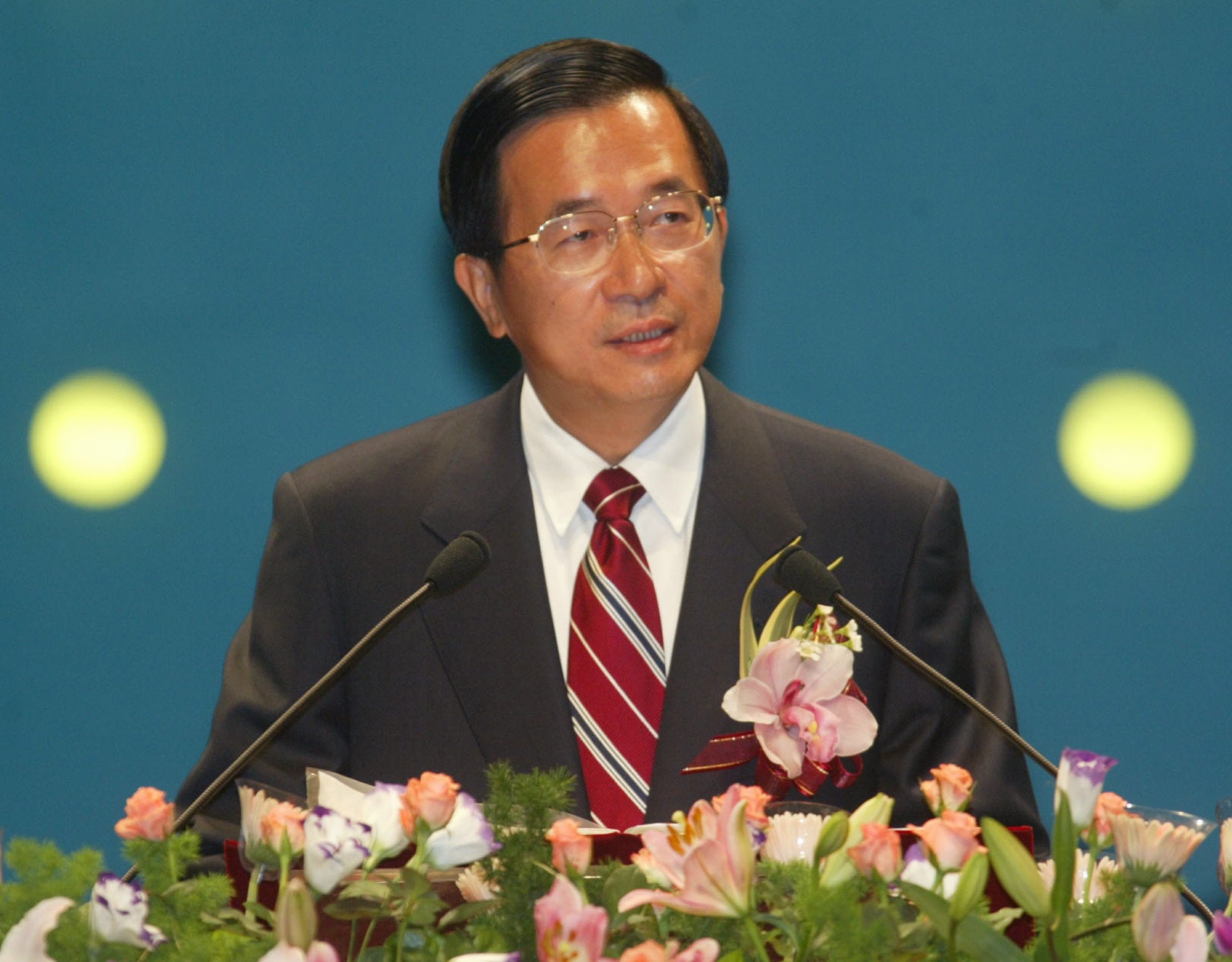
In December 2003, Bush stood beside visiting Chinese premier Wen Jiabao and publicly criticised Chen.
The Taiwanese leader had alarmed Washington by pushing a so-called defensive referendum and floating a new constitution that critics feared could edge towards de jure independence.
The moves angered Beijing and unsettled the Bush administration, which feared Taipei could trigger a cross-strait crisis.
“We oppose any unilateral decision by either China or Taiwan to change the status quo,” Bush said.
The US president added that Chen’s comments and actions suggested he “may be willing to make decisions unilaterally”.
That remains widely seen as the strongest public warning from a US president to Taipei in recent memory.
But analysts said Trump’s recent remarks differed from Bush’s in both tone and context.
Bush was reacting to what Washington saw as Chen’s specific pro-independence push. Trump’s language appeared more transactional, framed around war costs, leverage and broader US-China bargaining.
This is where views diverge sharply.
Max Lo, executive director of the Taiwan International Strategic Study Society, a think tank in Taipei, argued that Trump’s warning could be viewed as harsher than Bush’s.
He said Bush’s frustration with Chen came after Taipei was seen as openly defying Washington’s opposition to unilateral moves towards independence.
“Lai, by contrast, has largely aligned with US strategic expectations,” Lo added.
That includes raising defence spending, buying more US weapons, backing deeper economic commitments to Washington and supporting larger Taiwanese investment in the US, including chip giant Taiwan Semiconductor Manufacturing Company‘s growing manufacturing footprint there.
“Chen was seen as defiant and difficult to control. Lai has largely been compliant,” Lo said.
“If Trump were still to use such heavy language under those conditions, then politically it would appear even harsher.”
Lo said Trump had historically shown limited personal interest in Taiwan.
But his long talks last week with Xi “may have reinforced the view that the Taiwan issue could drag the US into a costly conflict”.
This, he said, might explain why Trump tied Taiwan to war costs and openly treated arms sales as a strategic bargaining lever.
In his Fox News interview, Trump described arms sales to Taiwan as “a very good negotiating chip”.
Lo said Trump’s proposed direct contact with Lai would now become a “key test”, as it could show whether Trump’s remarks were “only rhetorical or whether they might eventually shape policy”.
“If realised, the talk may not be limited to arms sales,” Lo said.
“It could also touch on Taiwan’s commitment not to alter the cross-strait status quo by moving towards independence.”
Other observers strongly disagreed.
Lin Tzu-li, director of the China Studies Research Centre at Tunghai University in Taichung, said Xi repeatedly raised Taiwan during the summit but that Trump made “no public concessions” to Beijing.
“That suggests no substantive policy breakthrough for China,” he said.
According to Tsai Jung-hsiang, a political scientist at National Chung Cheng University in Chiayi, some pro-Beijing commentators had overstated Trump’s comment that he was “not looking to have somebody go independent”.
Tsai said “somebody” remained “strategically ambiguous” and could also apply to unilateral escalation by either side.
Trump also told both sides to “cool it”, suggesting continuity rather than a doctrinal shift, he added.
Chang Yuan-hsiang, a professor of political science at Soochow University in Taipei, took a harder view.
He said Trump’s blunt remarks would “create enormous pressure” on Taiwan’s ruling independence-leaning Democratic Progressive Party, forcing “greater restraint in both local governance and cross-strait policy”.
But he doubted Trump’s warning would substantially alter Lai’s course.
“With elections approaching, Lai will not easily back down,” Chang said, referring to the island’s local government elections in November.
Lai could continue pursuing a harder Taiwan-centred agenda through the end of his term in 2028, he added.
“That means he may move from walking a tightrope to walking on a knife’s edge.”
More Articles from SCMP
How China and the US can coexist peacefully while locked in strategic stalemate
HK Electric customers set for steeper bills in June over volatile oil prices
China removes hukou hurdle for migrant workers in social insurance shake-up
Chinese orchids bring a message of hope to Chelsea Flower Show
This article originally appeared on the South China Morning Post (www.scmp.com), the leading news media reporting on China and Asia.
Copyright (c) 2026. South China Morning Post Publishers Ltd. All rights reserved.


