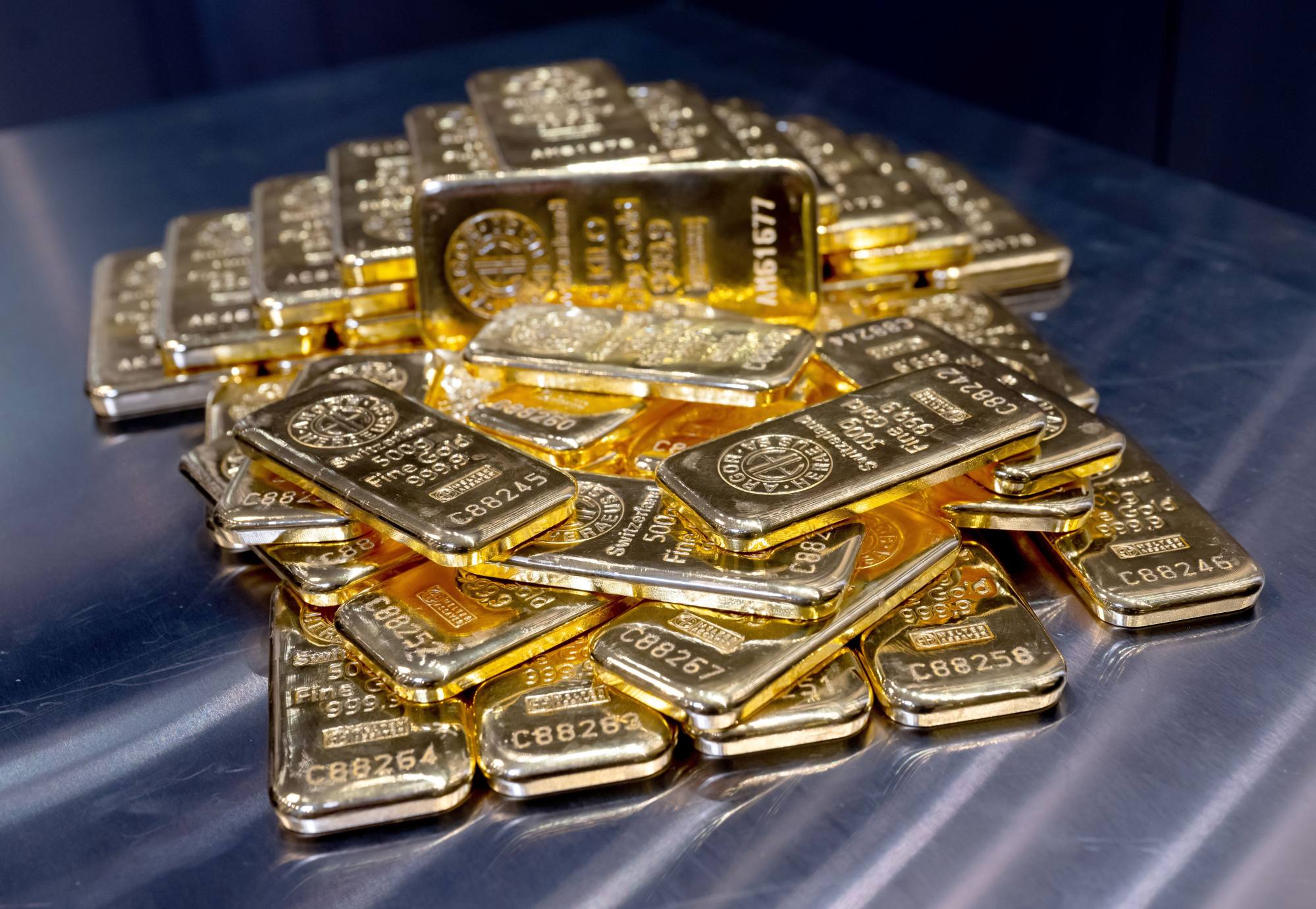
Financial services minister Christopher Hui says government backing, integrated settlement and Shanghai ties will distinguish city’s gold trading ecosystem
Distinctive features will set Hong Kong apart from London, a major bullion hub, as the city accelerates efforts to develop an international gold and precious metals trading ecosystem covering the entire value chain, a minister has told the South China Morning Post.
In an exclusive interview on Thursday, Secretary for Financial Services and the Treasury Christopher Hui Ching-yu said the city would officially launch a central gold clearing platform in the first quarter of next year. It would handle both physical delivery and payments, with the latter linked to the real-time gross settlement system.
Hui said the ultimate aim was to connect regional liquidity with international market standards, giving participants a venue in the Asian time zone for trading, storage, clearing, refining and risk management.
Do you have questions about the biggest topics and trends from around the world? Get the answers with SCMP Knowledge, our new platform of curated content with explainers, FAQs, analyses and infographics brought to you by our award-winning team.
“We are confident [of] achieving [this] because in the Asia time zone, we see Hong Kong as uniquely positioned to do that,” he said.
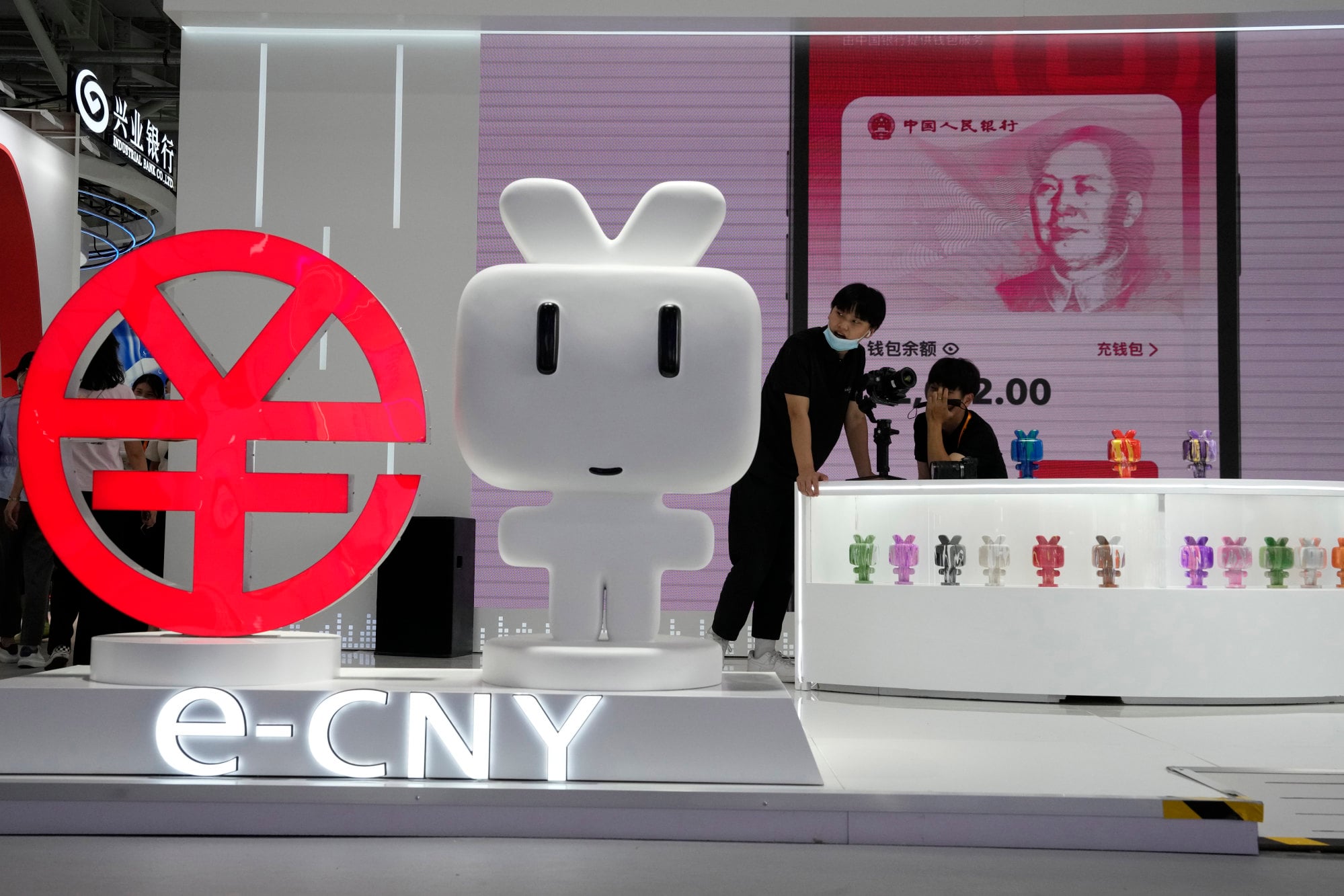
In the wide-ranging interview, Hui also discussed the city’s efforts to promote the international use of the yuan, the development of China’s digital currency, the e-CNY, and next week’s Apec Finance Ministers’ Meeting in Hong Kong.
Asked about the Saudi Central Bank’s departure from mBridge – a China-led multilateral central bank digital currency platform seen as an alternative to the traditional US dollar-dominated payments system – Hui said the project would still press ahead.
The Saudi Central Bank, a key participant, confirmed last month that it had left the project after completing what it described as a limited proof-of-concept trial in May last year.
“Fundamentally, what we try to do is, through Hong Kong, at the same time through these measures, to engage different players across the industry in such a way that they can work on some live cases or new cases to test out this technology,” Hui said.
“So technology as it is, people still see the benefit. At the same time, what Hong Kong should do is continue contributing our expertise and also our relevance here.”
Hong Kong is a founding member and co-developer of mBridge.
The city is also accelerating the development of its gold trading ecosystem as a key part of its first five-year plan, which runs to 2030. The initiative is intended to support the development of mainland China’s gold economy, which boasts the world’s largest domestic production and consumption of the precious metal.
Hui said that government ownership and backing, integrated delivery-versus-payment settlement and cooperation with Shanghai would distinguish Hong Kong’s offering. The cross-border cooperation would allow eligible gold stored in the city to be used to settle trades in both markets.
Asked about competition with Singapore as a regional gold trading hub, Hui said Hong Kong was focused on improving its own performance.
“What Hong Kong tries to do is always to compete against ourselves, because fundamentally we have to focus on areas that are within our control,” he said.
The minister expressed confidence in Hong Kong’s competitive advantages.
“What sets a global commodities market [apart] from the other markets is that it is really a market that is not just about financials but also close to the real economy,” he said.
“It has to be about also storage, about logistics, and also, at the same time, about trading, of course. And also when it comes to disputes, there could also be some legal issues.
“So actually, it’s a whole value chain in terms of the potential composition of this industry association to be set up before the end of this year.”
Hui added that following a trial in July, the system with integrated delivery-versus-payment settlement service was due to launch officially in the first quarter of next year.
“The clearing system now in the UK is run by the London Bullion Market Association, which is an industry association,” he said. “But the clearing house in Hong Kong is owned and run by the government. So I think this government backing sets us apart in terms of credibility.
“Another thing that is different between Hong Kong and London in that context is the fact that our current system will not just do physical delivery but also money settlement.”
Hui said 11 banks were already taking part in the payment settlement arrangements and others had expressed strong interest in joining, adding that the city would discuss cooperation on delivery standards with the London association.
Hui, who chairs the board overseeing the clearing facility, said a representative of the Shanghai bourse served as deputy chair. Under the cross-border delivery connect arrangement, physical gold stored in certified Hong Kong vaults can be used to settle contracts traded in the local market and on Shanghai’s international board.
“If there is gold that is going to satisfy both the settlement in the Hong Kong contract and the Shanghai contract, they can use the vaults in Hong Kong, catering for both the Hong Kong market and the Shanghai market to do that,” he said. “It is an area that is uniquely Hong Kong.”
He added that the government was aiming to increase Hong Kong’s gold storage capacity to more than 2,000 tonnes within three years, with half at the airport and the remainder expected to come from the private sector.
Some gold refineries have also been established in the city.
Asked how Hong Kong could help the mainland gain greater influence over gold pricing, Hui said this would come once the city had attracted enough market participants and built sufficient liquidity.
“I see pricing more as an outcome, in the sense that once we build up a sufficient liquidity, [and] at the same time a quantum of gold here … it will eventually come,” he said, stressing the importance of creating a critical mass of market participants.
On products, Hui highlighted the relaunch of a US dollar-denominated gold futures contract and said details of a yuan-denominated contract would be announced before the end of this year.
With this work under way, Hui hoped to share the latest developments in Hong Kong’s gold trading ecosystem when the city hosted the London Bullion Market Association Asia Forum in April next year.
Reflecting on this month’s conference in Sorrento, Italy, which he attended, he said industry stakeholders had responded positively to Hong Kong’s plans.
“First of all, they are quite impressed in terms of the timeliness of this project, in a sense that in this world of changing geopolitics,” he said, adding that they were also impressed with the city’s ecosystem approach, its “concrete” plans and “Hong Kong speed”.
Hui said the initiative had progressed rapidly since its announcement in the October 2024 policy address.
More Articles from SCMP
Coming up roses? How Trump planted a new seed for Chinese gift diplomacy
Man arrested for alleged HK$450,000 theft of wife’s Chanel and Hermes bags, Rolex
Strangers and railway staff help Chinese couple bring quintuplets home by train
Landmark China trial gets 84% efficacy in treating cancer with cue from waste water tech
This article originally appeared on the South China Morning Post (www.scmp.com), the leading news media reporting on China and Asia.
Copyright (c) 2026. South China Morning Post Publishers Ltd. All rights reserved.

Related posts:

Yu Seokjong: 20 Years Bridging Visually Impaired with Guide Dogs
Kenyan pilot allegedly left with nothing after dispute with wife shares update on family, new job
‘Thai people already poor’: Developing nations protest IMF’s austerity call

Teacher, 25, killed in Oregon shooting is identified as family say it was her dream job

Melissa Gilbert quotes Willy Wonka after child sex charges against Timothy Busfield are dismissed