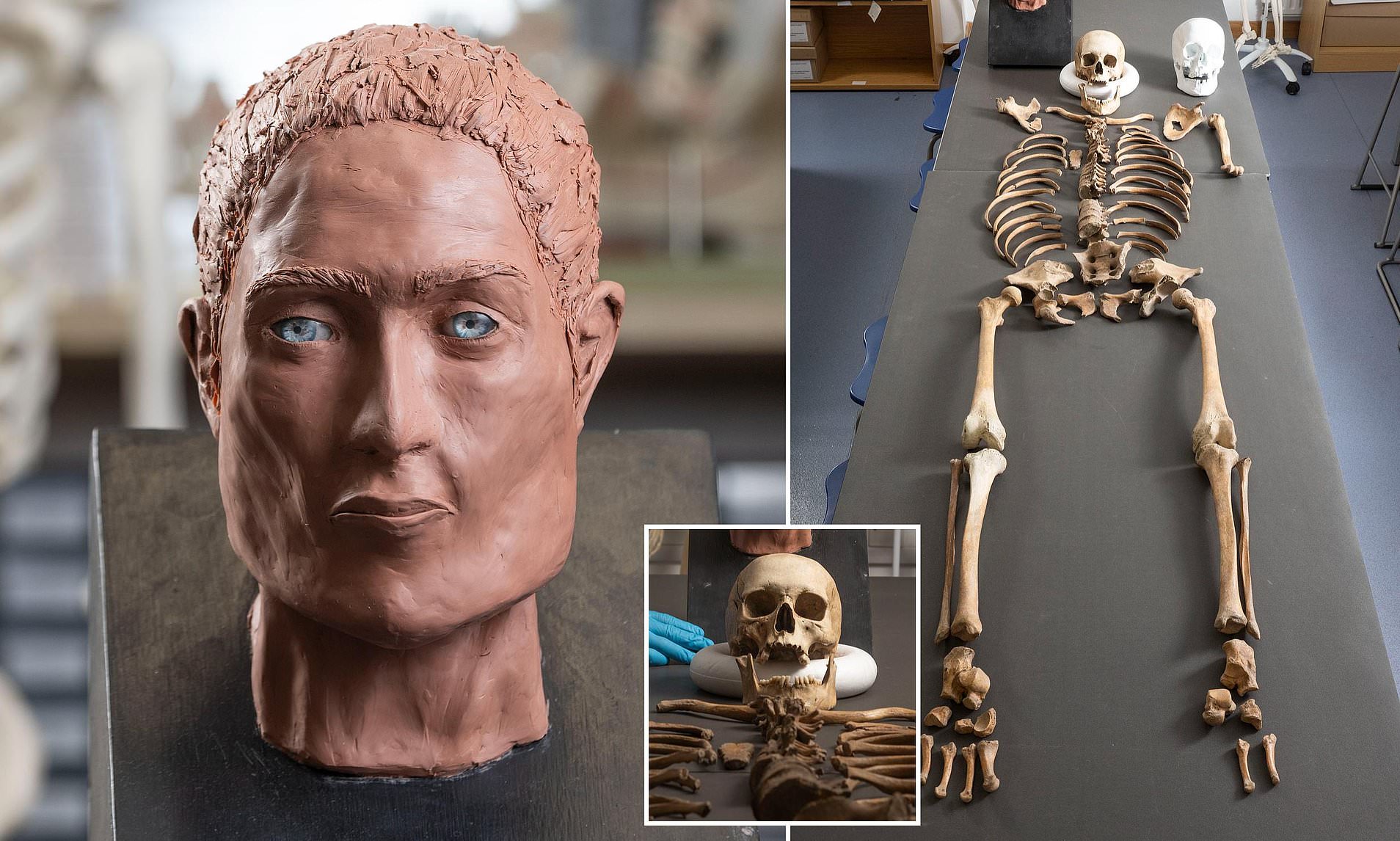
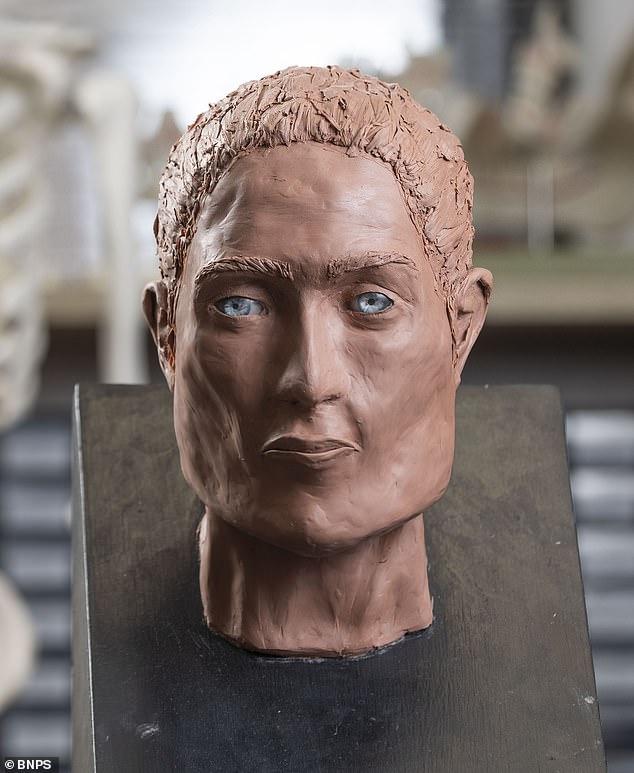
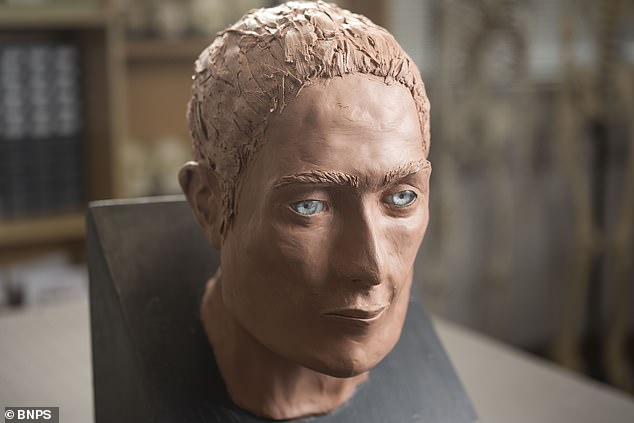
The face of an Iron Age woman has been recreated after her skeleton was discovered in a cliff fall 2,000 years later.
Archaeology student Amber Manning has used modern technology to reconstruct ‘Kimmeridge Woman’.
It is thought she was part of the Durotriges tribe that lived in what is now Dorset and was buried at Kimmeridge on the Isle of Purbeck.
Her almost complete skeleton fell out of the cliff due to erosion and has been stored by Bournemouth University.
Research confirmed the bones dated from the first century AD.
Ms Manning, a bioarchaeology masters student at Bournemouth University, has now revealed what the woman would have looked like by reconstructing her exact face as part of her degree.
She used radiocarbon dating, a technique called photogrammetry, 3D printing and facial reconstruction methods to produce the head of ‘Kimmeridge Woman’.
It is believed that she was aged in her 20s or 30s when she died, was 5ft 2ins tall and had recently given birth.
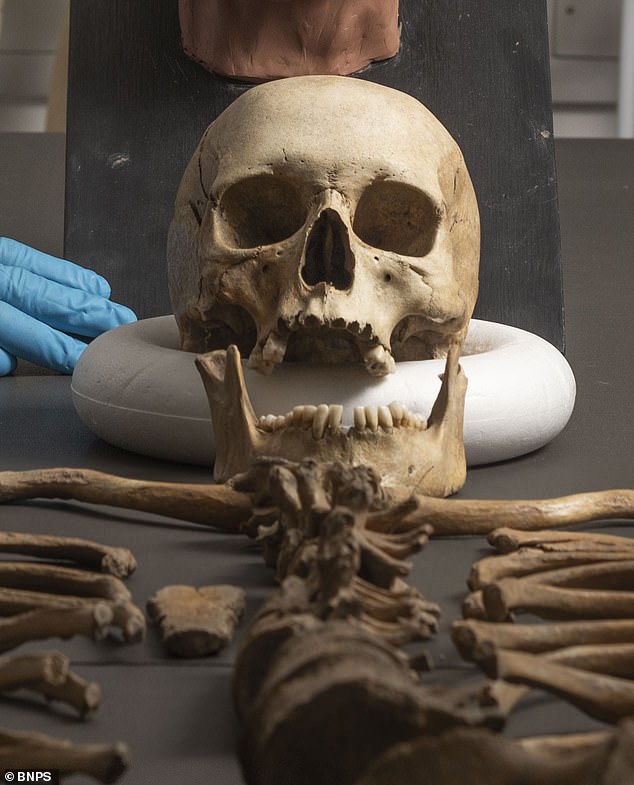
Small bones found alongside the woman indicate a baby who had survived birth but died within its first six months, although the relationship between the baby and the woman remains unclear.
The woman’s wisdom teeth never developed and while her teeth show signs of wear, there is no evidence of decay.
There was also wear and tear on her spine, indicating early stages of arthritis and issues related to a ruptured disc, suggesting a life with hard physical labour.
Ms Manning said: ‘I really wanted to work on ordinary women for my masters’ project and this was a great opportunity.
‘Her skeleton was beautifully preserved.
‘Making a reconstruction I usually think that we are looking into their world.
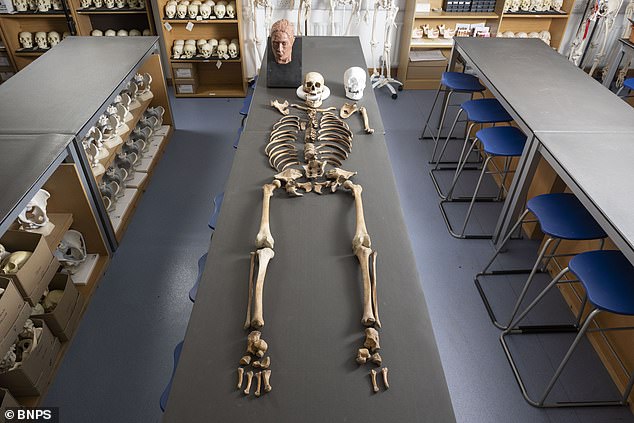
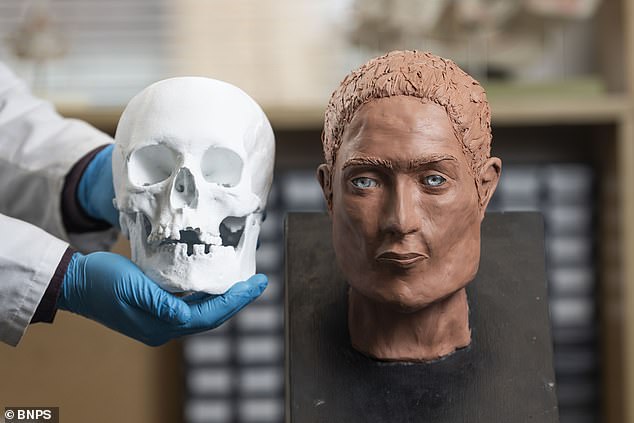
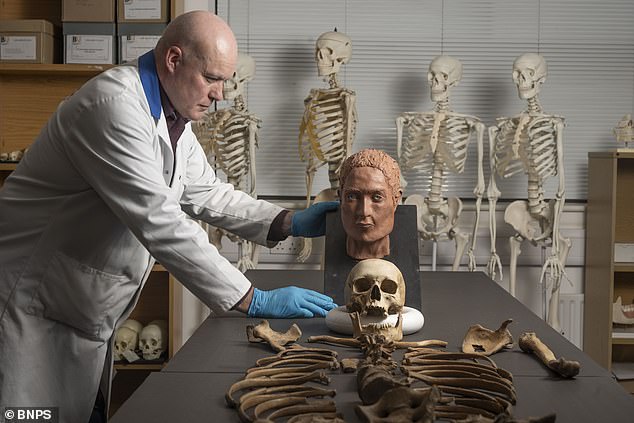
‘For the reconstruction a 3D virtual model of her skull was created using photogrammetry, a method where large numbers of photographs taken from different angles are used to calculate the shape of an object.
‘This was then 3D printed.
‘I then took her age, sex, weight and ethnicity into account, as these factors help determine tissue thickness. So, in this case: a woman, about 20-30 years of age, with signs of undernourishment in a period of her life.
‘I was very proud of the mark that I got and the way that my research came out.’
Ms Manning worked with university supervisor Dr Martin Smith on the project. He said: ‘We are so happy to display and share some of our findings.
‘The past belongs to everyone and everyone should have an opportunity to engage with the lives that we can reconstruct sometimes.
‘I think it’s very much the case that Kimmeridge Woman would recognise the landscape that we still live in – you could take her to Kimmeridge now or other parts of Dorset and she would recognise where she was, and the place that we still live in.
‘Recent research projects by Bournemouth University have uncovered a variety of striking and important finds that are helping us to build an ever more detailed and engaging picture of life during this period.’
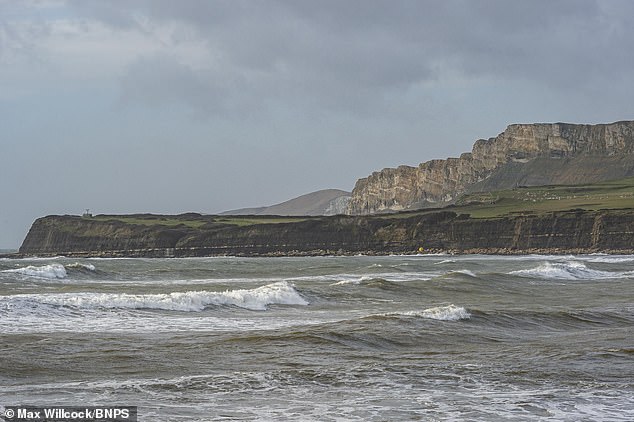
Kimmeridge Bay is a notable hunting ground for geologists, due to its diverse array of Jurassic epoch fossils.
It was an industrial centre for salt production and shale extraction during the Roman period.
It is also a protected Site of Specific Scientific Interest (SSSI).
Amber won the prize for top research project at Bournemouth University in 2023, the year that she graduated.
The 3D model of the head will be going on display at Wareham Town Museum from April 5.
Read more


