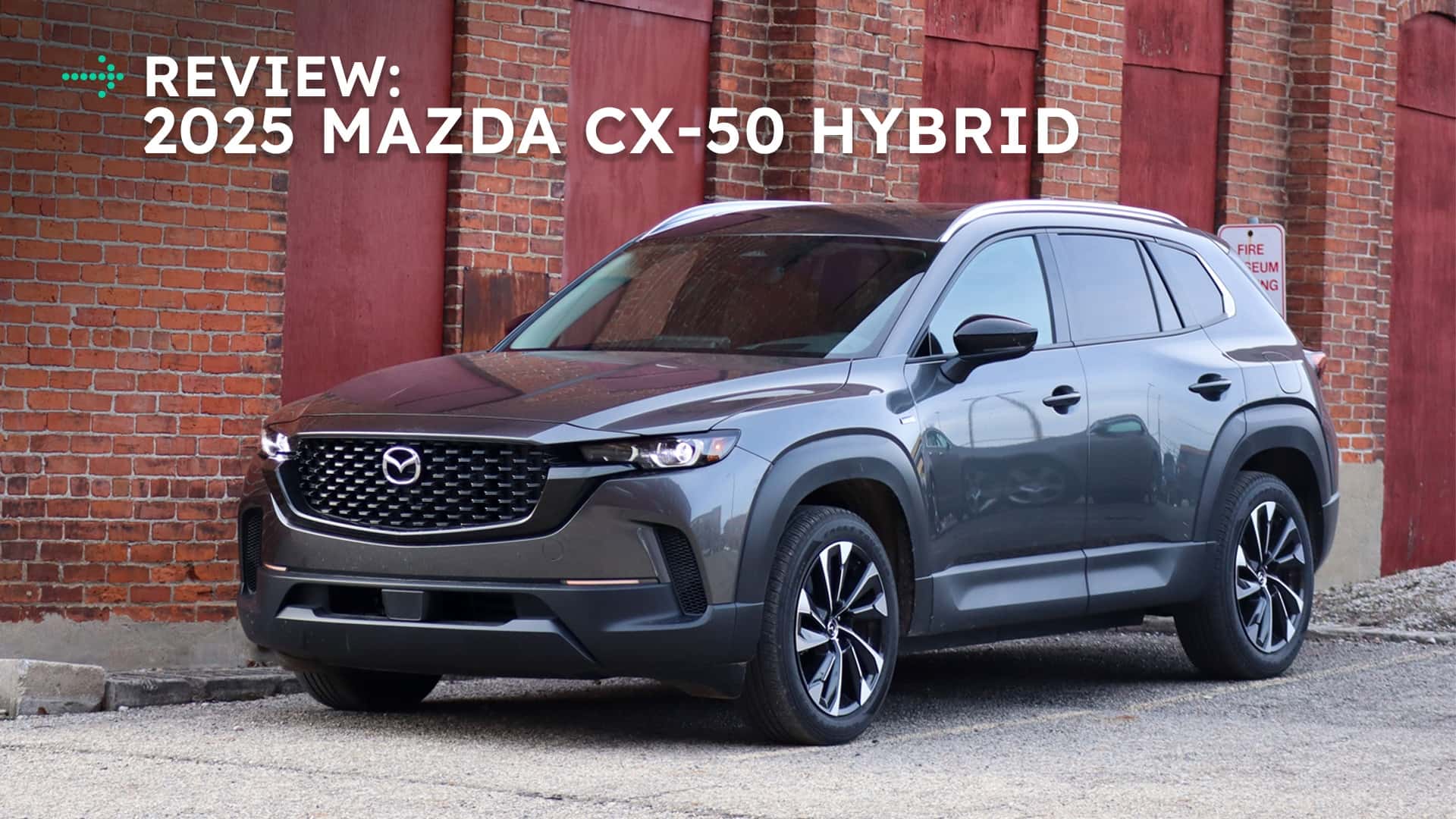
The crossover from Mazda draws its power from Toyota, yet driving it doesn’t make you think of aToyota.
Throughout my career in car literature, Mazda has often played the role of an underdog contrasted with industry leaders like Toyota. If you look through any discussion thread related to Toyota vehicles (particularly hybrids) from 2003 up until today, it doesn’t take long to come across someone criticizing them.
sheeple
by choosing a Prius instead of a manual Mazda 6 hatchback.
In reality, things haven’t been quite as intense as you might think; I assure you this. Mazda hasn’t always received the recognition it deserved in many aspects. Their automobiles, pickups, and SUVs are known for their reliability and attractive design, offering an engaging driving experience. They deserve credit for sustaining the production of the Miata despite considerable challenges. However, they’ve also fallen short in certain areas. The advancement of their engines and transmissions could use some improvement. Significant investments were made into developing a large rear-wheel-drive architecture along with an inline six-cylinder gasoline engine and reviving rotary technology, but these efforts seem to not have yielded significant benefits.
Mazda’s initiatives in electric vehicles (EV), plug-in hybrid electric vehicles (PHEV), and hybrids have fallen short. Following the discontinuation of the Ford-based Mazda Tribute Hybrid in 2011, the company did not offer any electrified models until the
The MX-30 was launched (and subsequently discontinued) in 2023.
In the current landscape, Mazda will have to adopt some form of electrification to remain competitive. This task is particularly challenging for a smaller, standalone business when competing with giants like Tesla, BYD, and Toyota.
I believe the Mazda CX-50 hybrid represents a comeback for the brand. Rather than creating its own hybrid technology entirely from scratch or forcefully integrating one,
The RWD-based setup of the CX-90 and CX-70
Mazda chose to use the front-wheel-drive, transversely mounted CX-50 platform and essentially asked for help from its corporate ally, akin to borrowing a cup of sugar.
However, Mazda guarantees that the borrowed cup of sugar will go into an entirely different dish. The company emphasizes that their reputation among enthusiasts remains intact, subtly reinforcing Mazda’s underappreciated antihero image for those who would purchase almost anything but a Toyota.
I had it for a week, and during this period, I also test-drove a RAV4 Hybrid. Was it as distinct as Mazda claimed? In my opinion, is it actually decent? For the most part, yes.
What does the CX-50 Hybrid entail?
The Mazda CX-50 falls into the category of a compact crossover without any fancy marketing lingo. Positioned next to the Mazda CX-5—a vehicle considered somewhat outdated, intended to be superseded by the CX-50—it continues to sell well enough for Mazda to retain it in their lineup. The CX-50 carries a slightly higher price tag compared to its sibling, yet remains firmly within the competitive compact crossover market. Currently, the CX-50 serves as something of a temporary solution.
Since a CX-5 hybrid is set to arrive in a few years, featuring an advanced in-house hybrid system.
Typically, the CX-50 features either naturally aspirated or turbocharged variants of Mazda’s 2.5-liter four-cylinder engine. However, for its hybrid version, the CX-50 relies on technology from Toyota instead. Interestingly enough, this hybrid model is produced alongside another vehicle at Mazda’s manufacturing plant in Huntsville, Alabama.
Toyota Corolla Cross,
However, they employ various hybrid systems.
The CX-50 borrows the entire hybrid setup directly from the RAV4 Hybrid. This indicates that it utilizes the identical 2.5-liter four-cylinder engine sourced from Toyota (which has no relation to Mazda’s own similarly sized engine). It also features the same eCVT transmission equipped with three electric motors—one positioned at the rear axle for electronic All-Wheel Drive—and a 1.6 kWh nickel-metal hydride battery pack that powers everything. Altogether, the CX-50 hybrid produces 219 horsepower along with 163 lb-ft of torque.
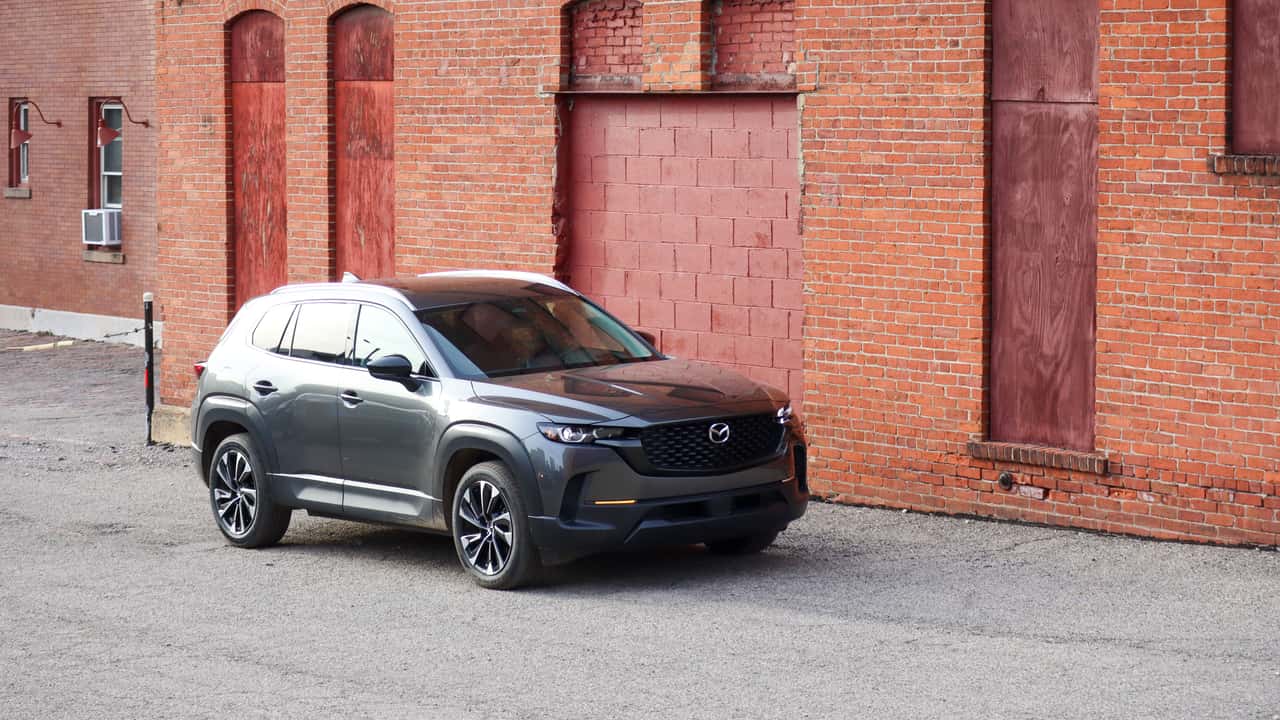
The engineering team at Mazda mentioned that they made significant distinctions between the two vehicles. Certainly, the Mazda CX-50 shares a platform and suspension system similar to those found in the smaller Mazda 3, unlike the RAV4 which aligns closely with Toyota models. The CX-50 Hybrid comes equipped with identical interior amenities and external design elements compared to its gasoline counterpart, except for distinct hybrid-specific rims and a small blue emblem indicating its hybrid nature. According to Mazda’s engineers, considerable effort was put into ensuring that the integration of the hybrid technology felt true to what customers expect from a Mazda vehicle.
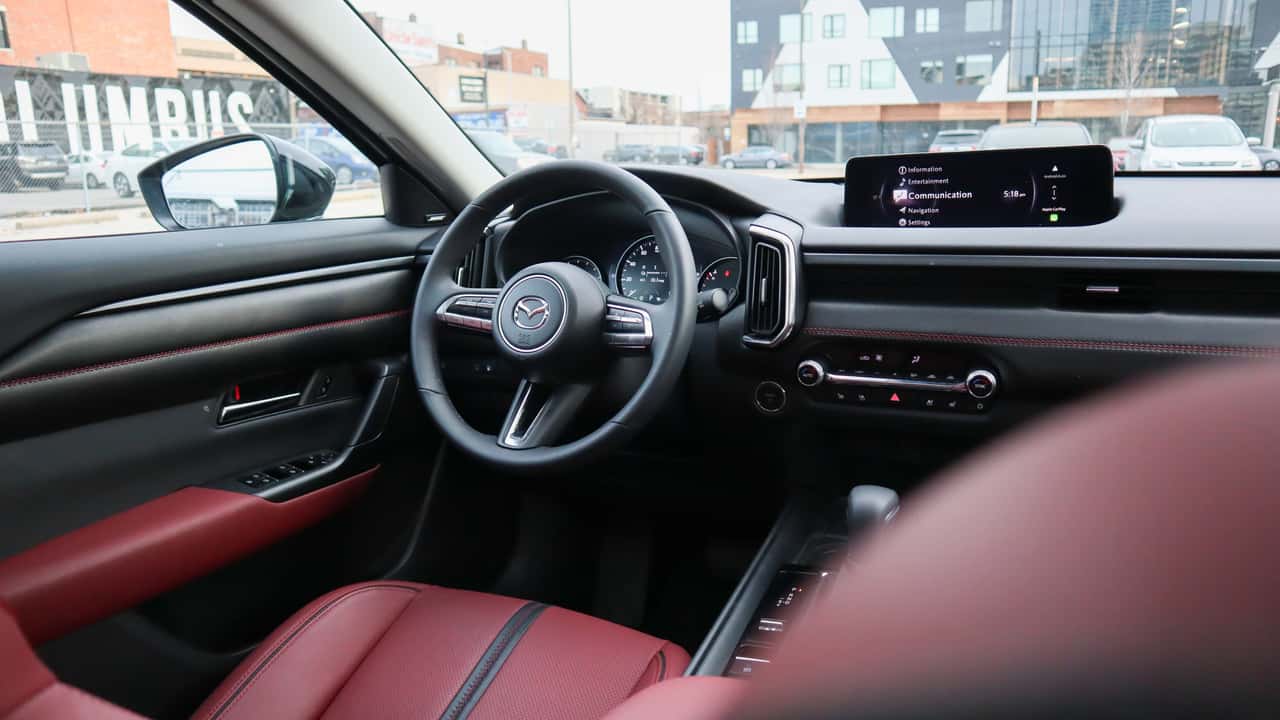
To achieve greater uniformity across the CX-50 lineup—comprising the 2.5 S, Hybrid, and 2.5 Turbo models—we focused primarily on refining noise, vibration, and harshness (NVH). This was done to align the experience of driving the [Toyota Hybrid System] closer to those of the 2.5 S and 2.5 Turbo versions, ensuring a cohesive feel for consumers who might consider switching between these variants,” explained Mazda spokesperson Jake Stumph. Additionally, he mentioned that selecting the optional Bose sound system further aids in reducing the intrinsic noises associated with Toyota’s configuration.
Driving the CX-50 Hybrid
In a Toyota hybrid system, the relationship between pedal input and engine workload isn’t directly proportionate because the vehicle’s electronic control systems manage these elements independently to optimize both power delivery and fuel efficiency. This coordination leads to an experience where accelerating feels akin to blending a shake that occasionally encounters unblended chunks; overall silky, yet with unexpected irregularities.
However, this may well be one of the most seamless executions I have experienced so far. Certainly, during aggressive acceleration, the CX-50 maintains a consistent engine sound and continuous humming similar to typical eCVTs; nonetheless, the connection between throttle input and vehicle response seemed quite intuitive and impressively immediate. It isn’t common for a Toyota hybrid to exhibit such responsiveness.
save perhaps for the new Prius Prime.

Stumph stated that this approach was deliberate. “Mazda put significant work into calibrating the CX-50 Hybrid to ensure it retains its distinctive Mazda character. One notable element is how the accelerator pedal responds; it offers a notably smooth and accurate ‘tip-in’ feel, making it simpler to drive at lower speeds while maintaining electric-only operation. For instance, this fine-tuning affects the car’s overall propulsion system dynamics,” as he explained.
Include the CX-50’s impressively nimble and unexpectedly surefooted handling characteristics, along with its responsive steering, and it could very well become the most enjoyable hybrid crossover within its current pricing segment.
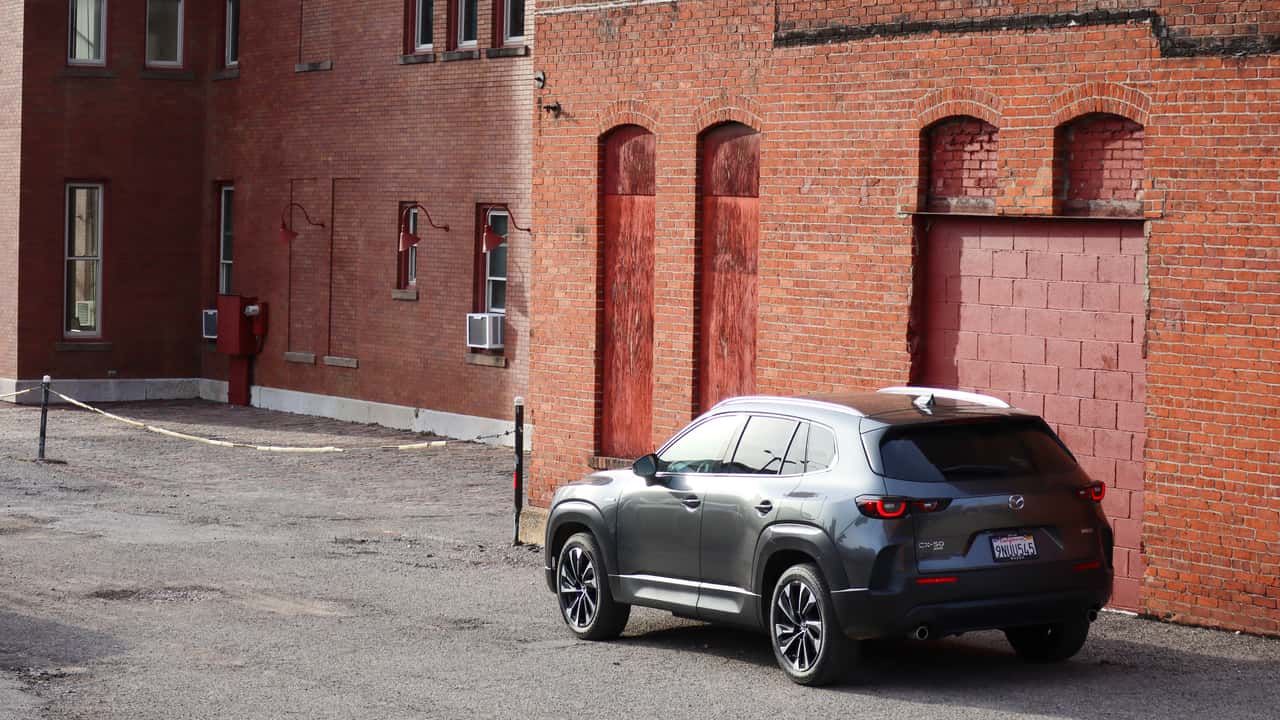
Regrettably, the CX-50 hybrid managed an average fuel efficiency just above 30 MPG under cold weather conditions, which falls short of its EPA-rated estimate of 38 MPG combined. In comparison, the RAV4 Hybrid boasts a higher combined mileage at 39 MPG according to official ratings. Despite this, the CX-50 hybrid remains expected to consume less fuel and produce lower emissions compared to its gasoline-only counterparts; emitting around 233 grams of CO2 per mile versus the pure gasoline model’s emission rate of 335 grams of CO2 per mile.
Verdict
As we mainly focus on electric vehicles and technological advancements, with only occasional coverage of hybrid models, I see little reason to promote hybrids when our aim should be to move away from gasoline completely. That’s just not something I’d support. However, I believe the CX-50 holds significance for various compelling reasons.
Initially, this model serves as an olive branch for long-time Mazda enthusiasts looking for a compact hybrid crossover without breaking the bank. Strategically, Mazda positioned the Hybrid variant between their conventional models, with pricing just above the base 2.5-liter engine version yet below the more powerful turbocharged option. Should you desire a fully loaded CX-50 Hybrid Premium Plus similar to mine, be prepared to shell out $42,065 after accounting for the delivery charge. Considering current market conditions, that price point seems quite reasonable.
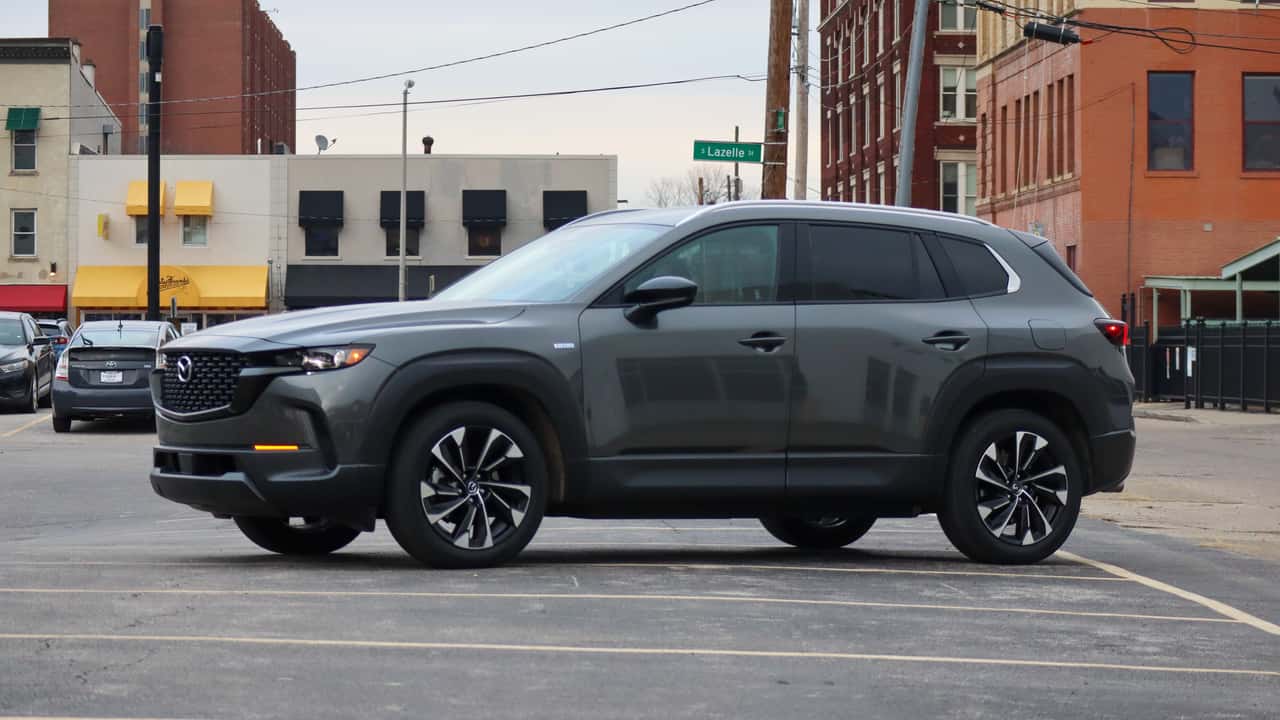
Secondly, this counters the argument that sharing powertrains or components will make cars indistinguishable from one another. As we move towards greater electrification globally, I anticipate that elements such as batteries, electric motors, and eventually internal combustion engines (as they phase out) might become more uniform. However, the true challenge lies in finding ways to distinguish models between different manufacturers and within their own ranges when these vehicles use similar fundamental components.
Interestingly enough, I found myself driving a 2025 Toyota RAV4 Hybrid right after the CX-50. Despite using the same fundamental engine system, these vehicles have quite distinct characteristics. It takes someone well versed in automotive details to recognize that both models actually utilize the same propulsion setup.
That’s beneficial, particularly for Mazda.
Contact the author:
Kevin.Williams@InsideEVs.com
More Car Reviews
- The 2025 Honda Civic Hybrid Offers an Eco-Friendly Option That’s Hard to Top
- The Tesla Model 3 Performance Remains the Top Contender to Overtake
- I took the Volkswagen ID. Buzz on a road trip, and it performed admirably.
- The Polestar 2 remains a top choice for those looking for a viable alternative to Tesla, provided you have the budget.
| As-Tested Price | $42,065 |
| Base Price | $33,970 |
| Drive Type | AWD |
| Output | 219 hp |
| Seating Capacity | 5 |
| Efficiency | 39 city / 37 highway / 38 combined (30 mpg actual) |
| Transmission | eCVT |


