A Call for Unity and Reflection
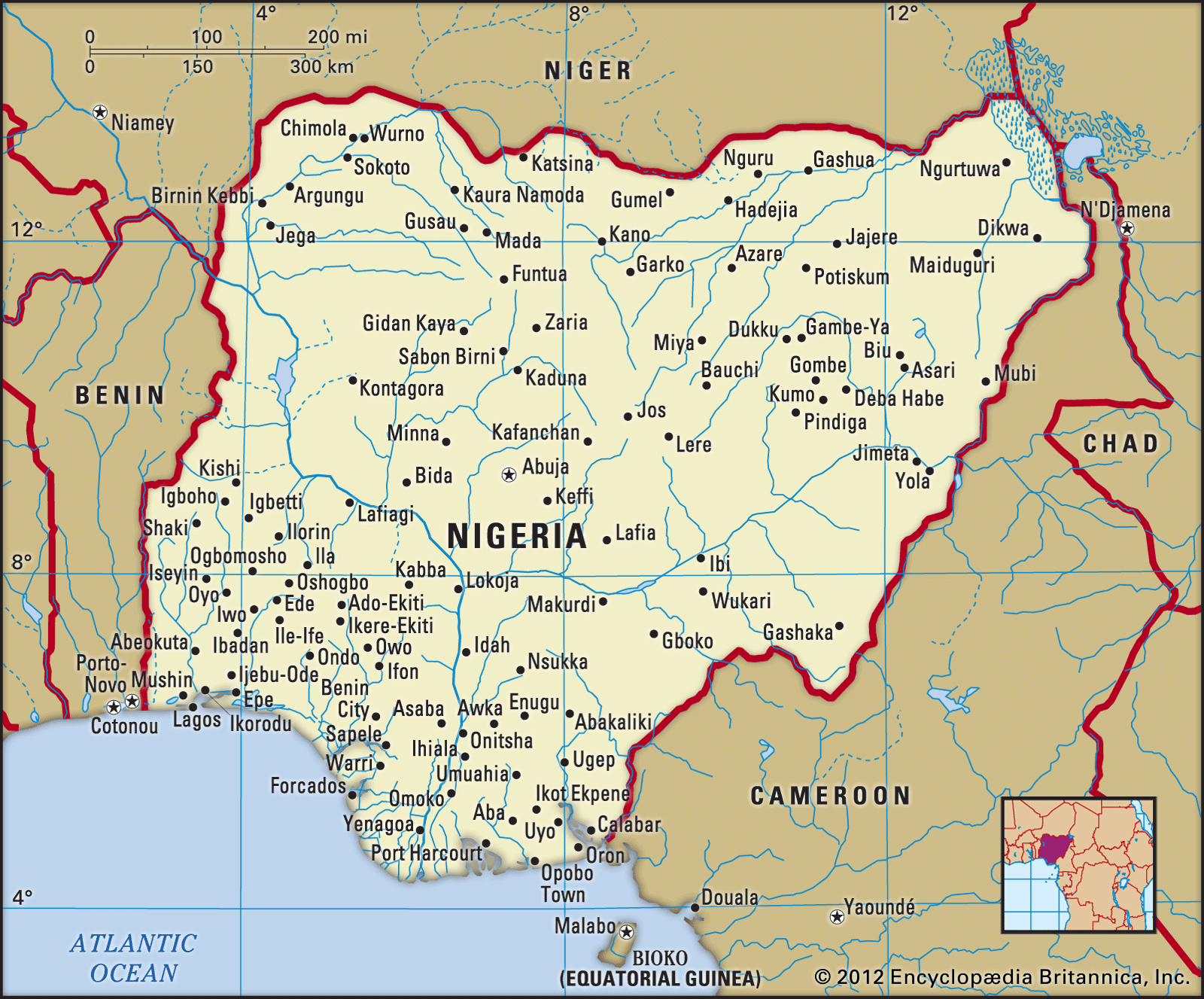
The Serving Overseer of the Citadel Global Community Church, Pastor Tunde Bakare, has highlighted the importance of collaboration between the northern and southern regions of Nigeria to foster a more progressive nation. His message came during a service in Lagos, where he reflected on the legacies of two prominent figures—former President Muhammadu Buhari and Oba Sikiru Adetona, the Awujale of Ijebu-Ode.
Both leaders passed away on July 13, 2025, with Buhari passing in London at the age of 82 and Adetona in Ijebu Ode, Ogun State, at the age of 91. Their deaths occurred on the same day, prompting a moment of deep reflection for Nigerians.
Legacy and Lessons from Two Great Leaders
Bakare emphasized that Buhari and Adetona left behind a nation filled with both promise and challenges. He called on all Nigerians, especially the political class, to reflect on how to build a better future based on their legacies. “Now is not the time to blame past leaders for what they did or failed to do,” he said. “It’s the time to recommit ourselves to building the Nigeria that these men wished had emerged in their lifetime.”
He urged unity across the North and South, stating that the current generation must work together to create a stronger, more inclusive nation. The cleric noted that the unity shown by Nigerian leaders in honoring the late president was a sign of what is possible. “With the passing of these elder statesmen, now is the time to build upon their foundations,” he added.
Political Influence and Progressive Legacies
Bakare drew parallels between Buhari and the late Chief Obafemi Awolowo, highlighting their respective roles in shaping Nigeria’s political landscape. Both leaders represented the progressive wing of the country’s sociopolitical scene, with Buhari influencing the North and Awolowo the South. He also pointed out the significant role that Buhari and Adetona played in the formation of the All Progressives Congress (APC).
Had Buhari stepped back from politics after the 2011 elections, the APC may not have existed. Similarly, if Adetona had not mediated key discussions, Nigeria might have faced a one-party state. Bakare stressed that the influence of these leaders was not just about their electoral success but the values they stood for.
Beyond Votes: Understanding Values
Instead of focusing solely on the 12 million votes that Buhari consistently commanded, Bakare urged people to consider the values that shaped his leadership. “What were those values that produced the man who consistently attracted those 12 million votes?” he asked. “What attributes made him a hero of the poor and a symbol of hope?”
This approach, he argued, should guide the political discourse rather than jumping to conclusions about who will inherit Buhari’s support. “These are the questions that must be asked amid the politicking already taking place,” he said.
Building a Nation That Works for Everyone
Bakare emphasized that the legacy of Buhari and Adetona is clear: “The giant of Africa cannot stand on one leg.” He warned against building a one-party state and stressed the importance of a strong opposition to ensure good governance. “We can only build on their legacy by ensuring that both the ruling party and the opposition are strong enough to guarantee good governance in the interest of the ordinary Nigerian.”
He also highlighted the need for inclusivity and religious tolerance. Buhari, despite being labeled as a religious fundamentalist, was known for his fairness and openness to Christian leaders in politics. “Where we have been divided as a nation, let us remember the religious tolerance of a man who, for years, was wrongly labelled with the toga of religious fundamentalism when indeed, he was one of the most tolerant and fair-minded Muslims to walk this earth,” Bakare said.
A Path Forward
In conclusion, Bakare called for a renewed commitment to national unity, progress, and inclusivity. He urged Nigerians to learn from the legacies of Buhari and Adetona, using their examples to build a stronger, more prosperous nation. As the country moves forward, the lessons from these two leaders remain vital in shaping its future.