ECOWAS Unveils Ambitious Plan to Counter Terrorism
The Economic Community of West African States (ECOWAS) has announced a significant initiative to combat terrorism in the region. The plan involves activating a 260,000-strong rapid deployment counter-terrorism brigade, with an annual funding requirement of $2.5 billion. This move comes as part of a broader strategy to address contemporary threats to regional peace and security.
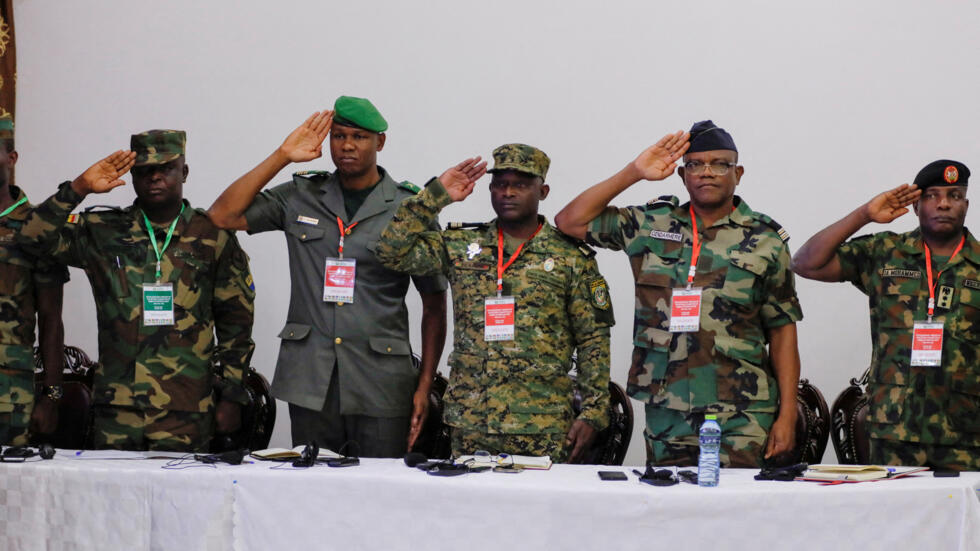
At the 2025 African Chiefs of Defence Staff Summit in Abuja, President of the Commission, Omar Touray, emphasized the urgency of this initiative. The summit’s theme, “Combating Contemporary Threats to Regional Peace and Security in Africa: The Role of Strategic Defence Collaboration,” highlighted the need for coordinated efforts among African nations.
Touray, represented by ECOWAS Commissioner for Political Affairs, Peace and Security, Ambassador Abdel-Fatau Musah, explained that the funds would be used to activate the brigade, provide logistics, and offer financial support to frontline states battling terrorism. He noted that the Sahel had become the epicenter of global terrorism, accounting for 51% of related deaths worldwide in 2024. This alarming statistic underscores the necessity for a robust and unified response.
Touray stated, “There is no gainsaying that West Africa, in particular the Sahel sub-region, has emerged as the epicentre of global terrorism.” He added that the activation of the rapid deployment force has become a necessity given the asymmetric security dynamics in the region. To achieve this, ECOWAS will host a meeting of the Ministers of Finance and Defence to agree on the country’s funding modalities to raise an annual budget of $2.5 billion for the activation of the regional counter-terrorism force.
The ministers are scheduled to meet this coming Friday in Abuja to finalize the modalities on how to raise the funds. Touray also called on bilateral and multilateral partners to complement this regional initiative, urging the African Union to send a clarion call to the United Nations to fulfill its pledge under United Nations Security Council Resolution 2719 of December 2023 to fund 75% of African-led peace support operations.
Beyond counter-terrorism, ECOWAS is working to operationalize its integrated maritime security strategy. This includes three regional maritime centers, an international coordinating hub in Abuja, and measures to counter transnational organized crime.
Addressing the Growing Threats
Former Minister of External Affairs, Prof. Ibrahim Gambari, spoke at the summit about the challenges facing Africa. He highlighted that the continent is currently contending with more than 1,000 insurgent groups. Gambari urged regional blocs to build homegrown defense industries and technologies to confront rising insecurity. According to some research, there are now over 1,000 insurgency groups in Africa, with the number continuing to rise.
Gambari emphasized that African nations must first secure their own countries before addressing regional and continental security. He called for strengthening defense industries and owning technologies to address threats effectively. Additionally, he urged the design and building of a security architecture that guarantees human security.
Gambari expressed hope that Africa’s collective security can be enhanced through active, practical, and proactive collaboration at regional and continental levels. He stressed the importance of synergy in military cooperation, promotion of common training, sharing of intelligence, interoperability of armaments, and capacity building, particularly in air lifting.
Modernizing African Armed Forces
Nigeria’s Chief of Defence Staff, General Christopher Musa, called on African nations to forge stronger defense collaborations to confront the continent’s growing and complex security threats. He noted that Africa is on the edge of unprecedented opportunity, driven by its youthful population, vast resources, and innovation potential.
However, Musa warned that these prospects are being undermined by violent extremism, terrorism, transnational organized crime, piracy, and the effects of climate change on conflict. These challenges recognize no borders and demand a response that is dynamic, unified, and strategic.
Musa pointed out that the nature of warfare has changed, with threats extending beyond conventional battlefields into cyberspace and digital domains. He urged African militaries to modernize through investments in cyber defense, artificial intelligence, and indigenous military technology.
“Without such investments, it will be difficult to achieve the security we desire,” he cautioned. Musa called for unity, shared intelligence, joint training, and coordinated action to ensure that Africa’s armed forces remain symbols of stability, professionalism, and pride.
He concluded with a powerful message: “Let us rise above division and embrace unity. Let us build a continent where our people can live free from fear.”


