The UK Faces a Potential ‘Quin-Demic’ of Winter Viruses
The United Kingdom is on high alert as experts warn of a potential ‘quin-demic’—a combination of five winter viruses, including Covid, flu, RSV, rhinovirus, and norovirus—that could place extreme pressure on the NHS. This scenario has raised concerns among health officials, who are already seeing early signs of a surge in infections.
Rising Cases and Hospital Admissions
Two new variants of the virus, Stratus and Nimbus, are contributing to a sharp increase in cases. Since August, the number of infections has doubled, with hospital admissions also on the rise. According to the UK Health Security Agency (UKHSA), the positivity rate for Covid tests has increased from 7.6% to 8.4% in just one week, while hospitalisations have jumped from 2.0 to 2.7 per 100,000 people.
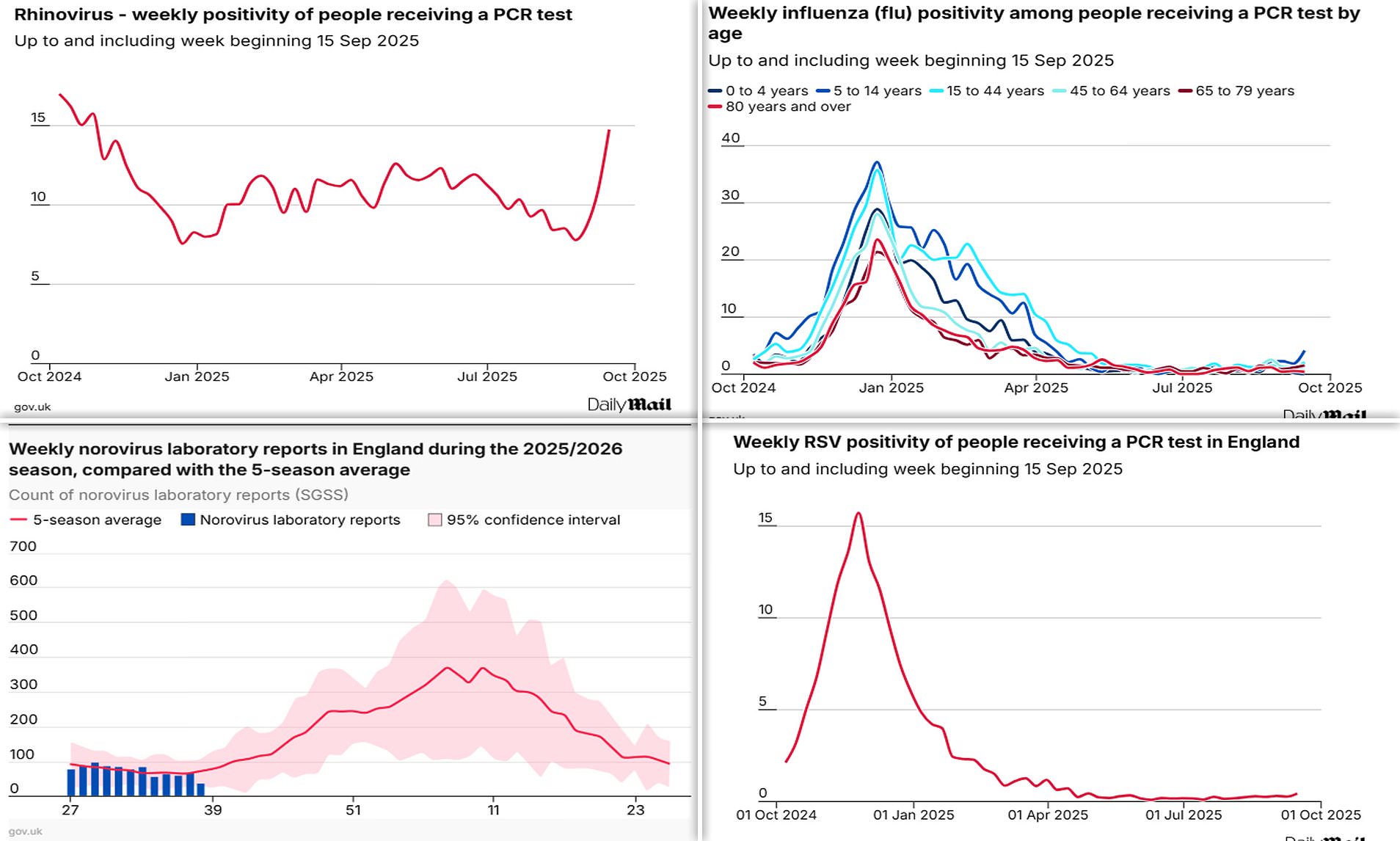
Flu is also showing an earlier-than-expected spike, particularly among children aged five to 14. Positive flu test rates more than doubled in a single week, rising from 1.9 to 4.1 per 100,000. This trend is likely linked to the return of students to school after the summer holidays.

RSV, rhinovirus, and norovirus are also circulating, with rhinovirus cases nearly doubling since late summer. This convergence of viruses has led experts to warn of a ‘quin-demic’ this winter, similar to the ‘perfect storm’ of infections seen last year that overwhelmed hospitals and disrupted routine care.
The Risk of Overwhelmed Services
Last year’s situation saw record levels of flu and RSV pushing hospitals to their limits, resulting in thousands of operations being cancelled. Doctors fear a repeat this year could worsen delays in treatment and further strain an NHS already struggling with record waiting lists.
Professor Lawrence Young, a virologist at Warwick University, highlighted the growing concern: “The rise in cases and hospitalisations is worrying so early in the autumn. If flu takes off soon, and people don’t come forward for their Covid or flu jabs, then we could be in some trouble.”
He added that Australia’s severe flu season this year suggests the UK will face a similar challenge. “A combination of flu and Covid could put more pressure on already stretched NHS services,” he said.
Symptoms and Warning Signs
Each of these viruses presents different symptoms, but they often overlap, making it difficult to distinguish between them. Common symptoms include fever, muscle aches, fatigue, cough, headaches, nausea, and loss of appetite. In children, ear pain and unusual tiredness are also common.
Respiratory syncytial virus (RSV) is particularly concerning for young children, with cases increasing from 0.27 to 0.44 per 100,000 in mid-September. While RSV is usually no worse than a heavy cold for most, it can be dangerous for babies under six months, the over-75s, smokers, and those with lung or heart conditions.
Rhinovirus, the most common cause of the everyday cold, is also spreading rapidly. Cases rose from 8.5 to 14.8 per 100,000 between August and September. Though most people recover quickly, the virus can trigger asthma attacks or more serious illness in vulnerable groups.
Norovirus, which causes sudden vomiting, watery diarrhoea, and cramps, remains low for now but could flare up again after last winter’s surge left hospital wards closed and thousands off work.
When to Seek Medical Help
The NHS advises seeking medical help if symptoms worsen, drag on beyond 10 days, or are accompanied by chest pain, severe breathlessness, confusion, or, in children, difficulty feeding.
For those suffering from a common cold, recovery is typically quick, but certain situations require medical attention:
- You have a high temperature for more than 3 days
- Your cold symptoms get worse
- Your temperature is very high or you feel hot and shivery
- You feel short of breath or have chest pain
- You’re worried about your child’s cold symptoms
- Your cold symptoms do not get better after 10 days
- You have a cough for more than 3 weeks
- You get cold symptoms and you have a long-term medical condition (for example, diabetes, or a heart, lung or kidney condition)
- You get cold symptoms and you have a weakened immune system (for example, because you’re having chemotherapy)
Vaccination Campaign and Public Advice
Health officials have launched a winter vaccination campaign, urging millions to come forward for flu and Covid jabs. Over-75s, care home residents, pregnant women, and those with weakened immune systems are eligible for boosters. Children are also being offered nasal spray flu vaccines, with toddlers now able to receive them at community pharmacies.
Professor Young emphasized the importance of vaccination: “The risk is that without high uptake, we will see waves of both Covid and flu at the same time. That’s when the NHS comes under immense strain, operations are cancelled and waiting lists grow even longer.”
NHS leaders have warned that this winter could be one of the most challenging in recent memory, with record waiting lists, staff shortages, and the possibility of strike action still looming.
“Stay home, rest, and avoid passing it on. These small steps can make the difference between a service coping, and a service in crisis,” Professor Young concluded.


