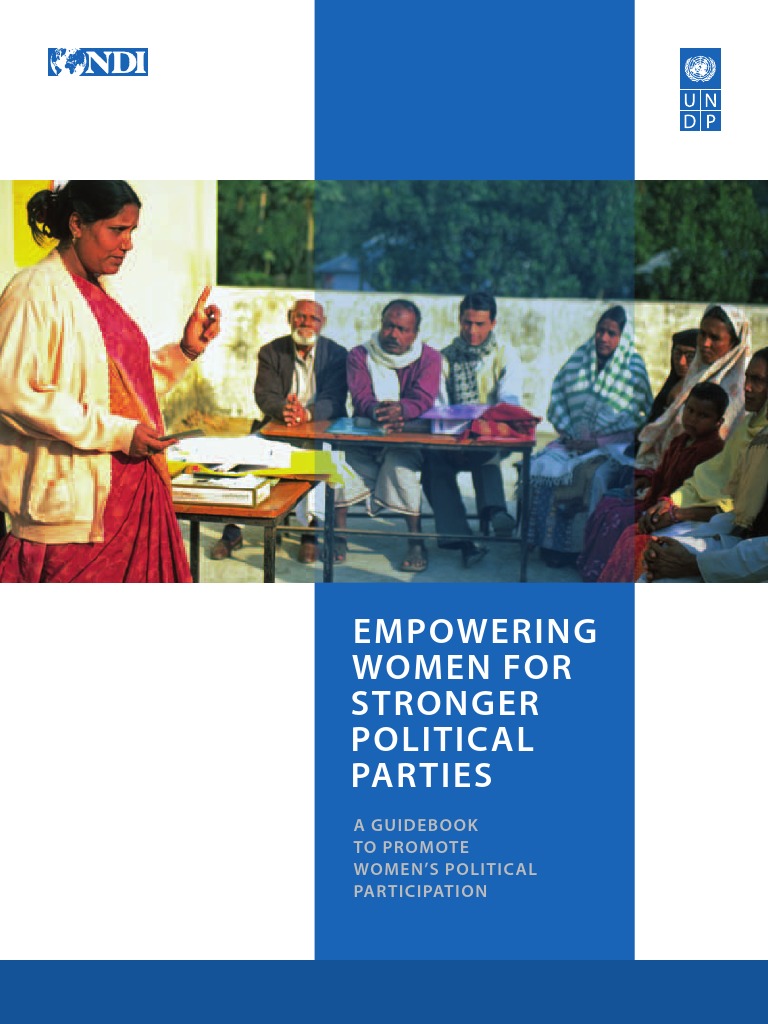
The Growing Momentum for Women’s Political Empowerment in Nigeria
The push for women to play a more active role in Nigeria’s politics and governance is gaining renewed attention, especially as the nation prepares for the 2027 general elections. This issue has been a central theme in recent nationwide public consultations on constitutional reform, where women and other stakeholders have voiced strong demands for more inclusive democratic processes. Despite these efforts, the challenge of gender imbalance in Nigerian electoral politics remains unresolved.
Historically, attempts to address this issue have often fallen short. While successive governments have introduced policies aimed at increasing women’s representation in public decision-making, these initiatives have largely failed. One notable example is the repeated failure to pass a gender equality bill that would have included a 35% quota for women in political positions. As a result, women continue to be sidelined in Nigeria’s political landscape, with limited access to leadership roles and decision-making structures.
Nigeria’s 1999 Constitution (as amended) explicitly guarantees the right of every citizen, including women, to participate fully in the country’s political life. Section 40 of the Constitution states:
“Every person shall be entitled to assemble freely and associate with other persons, and in particular, he may form or belong to any political party, trade union or any other association for the protection of his interests.”
Despite this clear mandate, women remain underrepresented in political leadership at both national and sub-national levels. There is currently no substantive, legally binding affirmative action policy to ensure fair gender representation in politics. A review of demographic data reveals a persistent pattern of exclusion and marginalization.
Globally, there is broad recognition that women’s participation in all spheres of society contributes to sustainable development. Conversely, evidence suggests that excluding women from governance and decision-making hinders social progress. Many countries have implemented quotas to increase female representation in their parliaments. According to a recent United Nations report, in 2020, approximately 20% of heads of state or government were women, while 25% of parliamentary seats were held by women. Similarly, 22% of cabinet ministerial positions were occupied by women, and they constituted 20% of presidents or speakers of parliament.
In contrast, Nigeria lags significantly behind in this regard. Data from the National Assembly shows that during the 7th Assembly (2011-2015), only 7.3% of Senate seats were held by women, and 6.9% of House of Representatives seats. These percentages remained low in subsequent assemblies, with the current 10th Assembly (2023-2027) showing even worse figures: 4.2% of the combined 469-seat National Assembly. No woman has ever served as president, and only one woman has briefly served as a state governor.
According to the Inter-Parliamentary Union (IPU), as of July 2025, only 3.9% of the 360 seats in the House of Representatives and 2.8% of the 109 Senate seats were occupied by women. This has placed Nigeria at a low IPU ranking of 177 out of 181 countries. These statistics highlight a troubling decline in women’s political participation in Nigeria.
Interestingly, several African countries have achieved high levels of female parliamentary representation. Rwanda leads with 61.3%, followed by Senegal (41.2%), South Africa (44.6%), Namibia (32.6%), and Mozambique (39.2%). Rwanda holds the global record for the highest percentage of women in parliament.
The Path Forward
For Nigeria to achieve meaningful progress, it must address the structural and systemic barriers that hinder women’s political participation. This includes enacting affirmative action laws that guarantee a certain number of seats for women in parliament and other governance bodies. While the exact percentage may be negotiable, a target of 30-35% is reasonable.
Empowerment through quotas is just the beginning. Other critical interventions include removing economic barriers such as limited access to campaign financing, addressing cultural impediments, combating gender-based violence, and building women’s capacity through mentorship and political literacy programs.
An innovative approach could involve establishing support networks for women aspiring to political office, funded by both private and public resources. These networks can provide essential training, resources, and advocacy to help women navigate the political landscape.
Nigeria stands at a pivotal moment in its history. To realize its potential as a successful and thriving nation, women must be given equal opportunities to participate in politics and public decision-making. This requires not just symbolic gestures but real, transformative change.
It is time for the national parliament and relevant stakeholders to act urgently. Enacting laws that promote women’s greater participation in politics and democratic governance is essential for equity, fairness, and national unity. It is a patriotic step toward a more inclusive and prosperous future for all.


