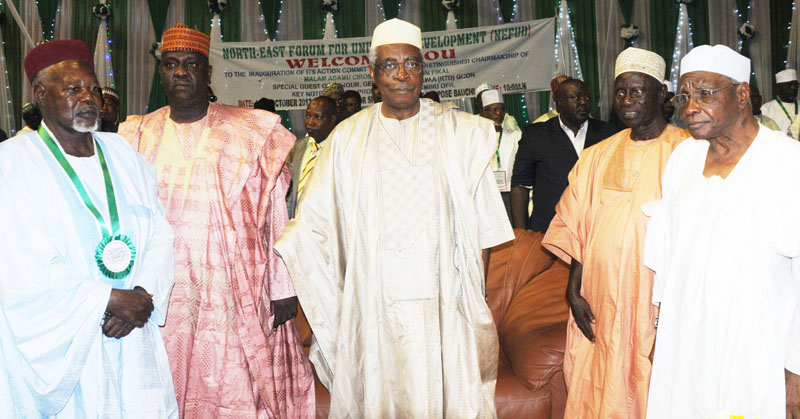
The Legacy of Northern Elders and Their Influence on Nigerian Politics
The emergence and role of northern elders in Nigeria are not rooted in nostalgia or regional irredentism but rather serve as a reflection on the past with the aim of learning from history to address contemporary challenges in the region. Conflicts and crises often arise when governments, societies, or systems fail. At the heart of these issues lies the human factor, making elite consensus essential for conflict resolution.
From the 1950s to 1998, when Chief Olusegun Obasanjo became president, a powerful informal group of elites emerged in Northern Nigeria. These individuals were feared, respected, and referred to as the Kaduna Mafia due to their influence and capacity to defend the interests of the North without undermining national unity and progress. They believed that the interests of the North and Nigeria were not mutually exclusive.
Three key factors contributed to their emergence: the old boys’ network, the regional and federal civil service, and moral authority based on character and learning. These leaders were looked up to as northern figures. However, with their decline over time, the question arises: who are the contemporary northern leaders? The previous generation of leaders wielded power even outside public office, operating quietly without regional associations, conferences, or press releases. They focused on making things happen without public knowledge of who did it and how. In fact, they shunned publicity. When asked about one of them, an AI response described him as “known for his integrity, humility, and commitment to public service. Despite his influential position, he maintained a low profile and shuns government appointments, except for a part-time assignment.”
Their legacy created a mystery and paradox of power that largely defined northern identity in Nigeria. According to Dr. Ibrahim Tahir in his book Makers of Northern Nigeria, “Kaduna, the powerhouse of northern politics, is no more. And with it has gone the political estate it represented, the old North.” This estate was seen as a significant force in maintaining Nigeria’s unity.
The Role of Education and Identity in Shaping Leadership
Education played a crucial role in shaping the leadership of the North. Katsina College, later renamed Barewa College Zaria, was the primary public school in Northern Nigeria. It produced a substantial number of educated elites up to the late 1960s. The schools fostered a sense of Northern identity and solidarity, integrating students from diverse backgrounds into the emerging social and political culture.
In his book Selected Speeches and Writings, Chief Sunday Awoniyi shared his experience at Barewa College: “I attended Barewa College, Zaria, where out of a student population of 360, only 26 of us were Christians. General Yakubu Gowon, a Christian Angas from Plateau Province was a House Captain; I, a Christian Yoruba from Kabba Province, was a House Captain out of a total of six houses. Nobody looked at your religion; nobody looked at your tribe… Ladies and Gentlemen, we ended up accepting, without qualms, One North, One People, One Destiny.”
Katsina College and its successors produced notable politicians, civil servants, soldiers, and professionals. Among them were Sir Kashim Ibrahim, Malam Yahaya Ilorin, Alhaji Aliyu Makaman Bida, and Sir Ahmadu Bello Sardauna. Kaduna College also produced soldiers, renowned businessmen, and other professionals, including Alhaji Nuhu Bamalli, Sultan Ibrahim Dasuki, and General Hassan Katsina.
Barewa College, too, has been a cradle for nation builders across all sectors. Its alumni include Mr Joseph Adetoro, Professor Iya Abubakar, and General Yakubu Gowon. The Provincial Secondary Schools, established in 1954, also contributed significantly to the development of leaders in both civilian and military spheres.
The Impact of Elite Consensus and Moral Authority
The former northern leaders operated with a strong sense of moral authority, shaped by their education and character. They were not driven by ego, material acquisition, or obsession with public office. Instead, they valued power as influence, not necessarily tied to public office. Many of them resigned from exalted positions on principle.
However, over time, the moral authority of leaders in the North began to decline as they became more defined by wealth and public office. While people may follow such leaders, their influence may be limited due to a lack of moral authority. Former leaders like Generals Gowon and Hassan Katsina retained respect and influence even after retirement, despite not accumulating wealth during their tenure.
Religious leaders, too, are often respected and called leaders due to their moral authority, even if they are not rich or hold public office. Figures like Professor Ali Pantami and Bishop Matthew Kukah exemplify this phenomenon.
Conclusion
The legacy of northern elders and their contributions to Nigerian politics remains significant. Their emphasis on unity, moral authority, and collective identity shaped the region’s development. While the era of the Kaduna Mafia has passed, the lessons learned from their leadership continue to resonate today. As Nigeria moves forward, the importance of elite consensus and moral authority in governance cannot be overstated.


