Reimagining the Future Through Indigenous Wisdom
As an Indigenous scholar, I view Indigenous Peoples’ Day (October 12) not merely as a date on the calendar but as a moment to reflect on the profound possibilities that lie within Indigenous knowledge systems. In a world marked by geopolitical instability and climate change, these ancient ways of knowing offer fresh perspectives on how we can address modern challenges. Indigenous knowledge is more than a tool for solving environmental crises; it is a way of being that is deeply rooted in local ecosystems and communities. This approach emphasizes care, connection, and responsibility—values that are essential for our collective future.
For centuries, Indigenous peoples have been misrepresented, often labeled as “noble savages” or “uncivilized.” These stereotypes were used to justify their marginalization and the maintenance of hierarchical power structures. However, their worldviews, which emphasize relationality and interconnectedness, are now gaining recognition. As Indigenous communities around the world connect and share experiences, a new understanding of Trans-Indigenous perspectives is emerging. These views see humans, other species, and spirits as part of a sacred web, where existence is not isolated but deeply connected. This perspective calls for a shift from domination to connection, from ownership to relationship, with bonds forming the very fabric of life.
The stories, rituals, and ceremonies that emerge from these relationships are not relics of the past but living expressions of a deeper truth: all life is intertwined. In Limbu cosmology, for instance, human well-being is inseparable from the mendhamang, the unseen spirit, and the mennimang, the formless spirit. These relationships are not symbolic but sacred, reminding us that balance and respect sustain all life. Such traditions are not arbitrary; they are vessels of wisdom passed down through generations, teaching us how to live with reverence.
In an age of conflict and ecological strain, Indigenous thought offers a rare invitation to pause and reflect. It encourages us to reconsider our path—not through more inventions, but by listening to each other and the Earth. At its core, Indigenous wisdom teaches that we are not masters of nature but participants in a vast, interconnected web of life. It calls for balance, harmony, and collective responsibility, inviting us to transform ourselves and our systems of governance.
The Sacred Creed of Modern Life
The pursuit of progress and prosperity has long shaped our ways of being, knowing, and finding meaning. These ideals have become sacred convictions, passed down through generations. The belief that the future must always outshine the present, and that living better materially than those before us is a moral imperative, is a powerful force. Sociologist Andreas Reckwitz refers to this as the “sacred creed” of modern life—a guiding compass for societies worldwide. From households to nation-states, we labor under the assumption that material improvement is the key to success.
This narrow view of development breaks with how humans have understood themselves and their place in the world for millennia. While faith in perpetual material betterment has brought us far—making us wealthier and surrounded by once unimaginable technologies—it has also led to deepening divisions, widening inequality, and a growing disconnection from joy and meaning. Progress, in many ways, has become hollow.
A 2021 report reveals a stark truth: half of the world’s population owns just 2% of the wealth, while the top 10% control 76% of total household wealth and 52% of global resources. In Nepal, the World Bank highlights a similar divide, with the wealthiest 10% three times richer than the poorest 40%. Relentless accumulation of material growth comes at a devastating cost: environmental destruction, deepening inequality, and escalating violence.
Three Pillars of Indigenous Thought
How does Indigenous thought encourage reorienting our ways of being, knowing, and acting in response to today’s challenges? Let me highlight three key points:
First, Indigenous thought centers on balance—ecological, spiritual, and material. It teaches that our actions must respect nature’s harmony. For example, before cutting a tree, the Limbu people honor tambhungna—the forest spirit—seeking permission and promising to plant a replacement. This ritual reflects a deep respect for nature, urging us to recognize that our survival depends on the well-being of all life. Practices like these move beyond mere intellectual recognition of interconnectivity and instead experientially reinforce our mutual bonds.
Second, Indigenous thought fosters reconciliation, tolerance, and reciprocity. Unlike modern punitive legal systems, Indigenous governance encourages wrongdoers to make amends. In the Limbu system, offenders would be asked to pay for a rooster, alcohol, and a small amount of money. This practice promoted collective reconciliation and restoration, steering the community toward forgiveness rather than vengeance.
Third, in Indigenous thought, true wellbeing is a collective achievement, not an individual pursuit. The self is part of a greater whole, with kinship extending beyond family and clan to include nature and spirits. This view prompts deep questions: What relationships have I unbalanced? What needs healing? What legacy am I shaping for future generations?
Embracing Indigenous Perspectives
Embracing Indigenous thought requires unlearning and freeing oneself from familiar concepts and assumptions. Instead of seeing Indigenous communities as angry or ignorant, we could ask: Why might they be upset? What meaning does alcohol hold in their culture? What knowledge do they possess rather than lack? How have they adapted their culture over time? What lies behind their collectivist culture and devotion to nature?
Indigenous thought, long suppressed by those in power, has always been woven into global communities. Scholars like Graeber and Wengrow have highlighted how Indigenous leaders engaged with and contested European Enlightenment ideas, offering alternative visions of social life based on cooperation, equality, and mutual aid.
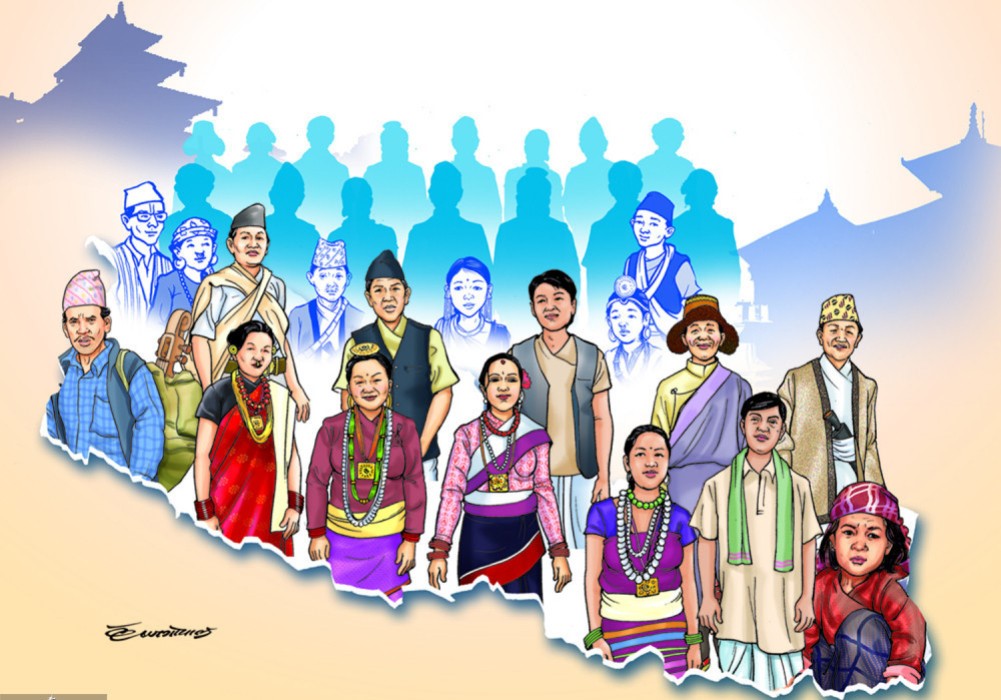
Nepal, too, is rich in this wisdom. What is crucial now is the courage to see Indigenous perspectives not as tools to fix problems, but as radical reorientations of living—open to all, embracing balance, harmony, and collective responsibility. Amid ecological, social, and spiritual crises, they beckon us to transform ourselves, requiring humility, unlearning, and a shift from material progress toward respect and balance. This path may be uncertain, but it is the road to healing for humans and other species, including the spirits.


