The Growing Concern Over Starlink Satellites and Their Impact on Earth
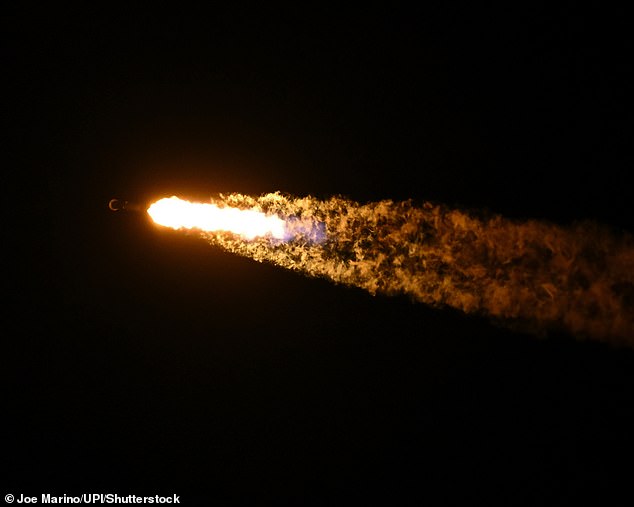
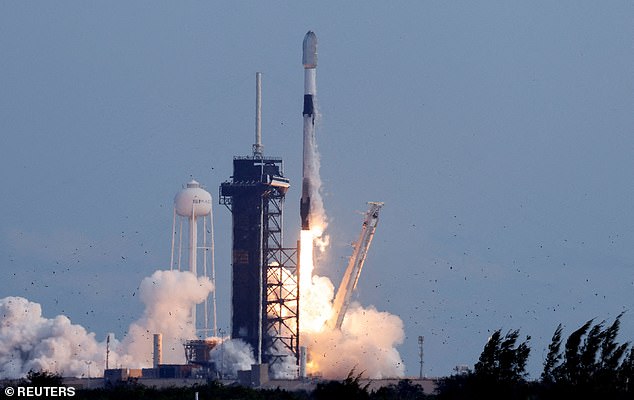
A respected astrophysicist has raised serious concerns about the potential consequences of Elon Musk’s Starlink satellites, which are currently deorbiting at a rate of one or two per day. These satellites, along with thousands more expected to be launched into space, could pose significant risks to the Earth’s stratosphere.
Jonathon McDowell, who spent 37 years at the Harvard-Smithsonian Center for Astrophysics, highlighted the dangers associated with the increasing number of satellites in orbit. He pointed out that over 25,000 pieces of orbital debris are already circling the planet. This debris includes dead satellites, spent rocket stages, and fragments from collisions. As more satellites are launched, the risk of damage to the stratosphere, particularly its ozone layer, becomes more pressing.
If the ozone layer is compromised, more harmful ultraviolet (UV) radiation could reach the Earth’s surface, leading to increased cases of skin cancer, cataracts, and eye damage in humans. The situation is exacerbated by the fact that SpaceX currently has around 8,000 satellites operating overhead, with more expected to follow from Musk and other companies.
The Risks of Space Debris and Reentries
The Federal Aviation Administration (FAA) warned in 2023 that Musk’s satellites could potentially injure or kill someone by 2035. A report from the FAA predicted that around 28,000 hazardous fragments from de-orbiting satellites could survive reentry over the next few years. However, Musk dismissed the analysis as “preposterous, unjustified and inaccurate,” while SpaceX’s principal engineer at the time, David Goldstein, called the report “deeply flawed.”
SpaceX maintains that its satellites are designed to fully demise during atmospheric reentry. However, in February of this year, the company acknowledged that not all satellites fully disintegrate upon reentry. This prompted the company to begin cycling out older satellites that were designed to orbit for five years. While this approach comes at the cost of losing effective satellites, SpaceX believes it is necessary for maintaining a safe and sustainable space environment.
The Threat of Kessler Syndrome
As more satellites fill the skies, McDowell explained that reentries will increase to five per day in the coming years. With the deployment of around 30,000 low-Earth orbit satellites and an additional 20,000 from Chinese systems, the risk of Kessler syndrome becomes more pronounced. Kessler syndrome is a theoretical scenario where a chain reaction of collisions leads to an exponential increase in space debris.
McDowell warned that if just one percent of Starlink satellites die on station, that could result in 300 satellites, which could tip low Earth orbit into Kessler syndrome. The region of space closest to succumbing to this phenomenon is between 600 to 1,000 kilometers, which is already filled with old Soviet rocket stages and other debris.
Environmental Impacts of Satellite Reentries
Beyond the risk of Kessler syndrome, there are growing concerns about the environmental impact of satellite reentries. Researchers like Daniel Murphy of the National Oceanic and Atmospheric Administration’s Chemical Sciences Laboratory have pointed out that almost no one is considering the effects of metal vapors released into the atmosphere as satellites burn up.
A study led by Murphy and colleagues found that satellites release metal vapors that condense into aerosol particles, some containing toxic metals such as aluminum, lithium, and copper. These particles can descend into the stratosphere, potentially affecting the ozone layer. Aluminum, in particular, could react with hydrogen chloride to produce aluminum chloride, which can destroy ozone.
Future Concerns and Long-Term Strategies
While the exact outcomes of these metal releases remain unclear, researchers are concerned about the unknown effects that could emerge in the coming years. Adam Mitchell, a materials engineer at the European Space Agency, emphasized the importance of a circular economy in space, advocating for refueling, repairing, recycling, and relaunching from space.
Pierre Lionnet, managing director of ASD Eurospace, questioned whether SpaceX is creating a major problem 30 years from now. McDowell, however, noted that it remains uncertain whether it is already too late to reverse the damage.