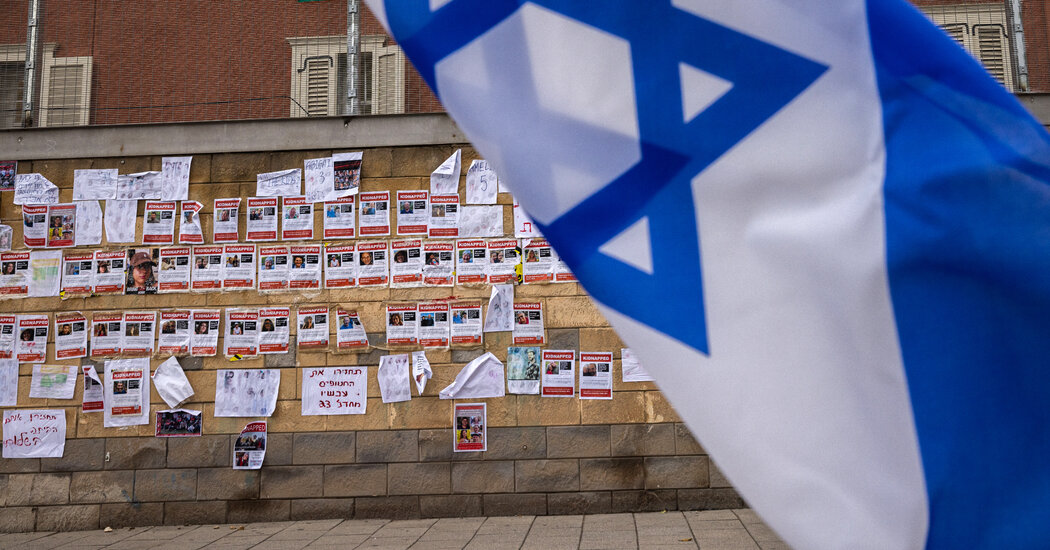
The Release of Hostages and Palestinian Detaines Marks a Major Step in the Gaza Accord
The release of hostages and Palestinian detainees was a pivotal moment in the first phase of the Gaza accord, which concluded last week in the Egyptian seaside resort of Sharm el-Sheikh. This development is expected to play a significant role in the upcoming summit on Monday, where world leaders will gather to discuss the future of the region.
The United States brokered a ceasefire deal that saw Hamas free the last 20 surviving Israeli hostages on Monday. This move is seen as a major step towards ending two years of intense conflict in Gaza. President Donald Trump, who addressed the Israeli parliament, urged Israel to turn military success into peace, stating, “The skies are calm, the guns are silent, the sirens are still and the sun rises on a Holy Land that is finally at peace.”
Thousands of people gathered at “Hostage Square” in Tel Aviv, expressing joy and relief as they welcomed the released hostages. The Israeli military confirmed that all hostages who were alive had been transferred from Gaza by the Red Cross, leading to emotional scenes of families reuniting and celebrating.
Palestinian prisoners and detainees freed by Israel under the agreement arrived in the Gaza Strip and the Israeli-occupied West Bank. These releases are part of a broader effort to bring stability to the region and pave the way for long-term peace.
Trump’s Vision for Peace
During his address to the Knesset, Trump outlined his vision for peace in the Middle East, emphasizing the need to translate military victories against terrorists into lasting peace and prosperity for the entire region. He presented a 20-point blueprint for peace, which includes plans for the future of Gaza and the broader Israeli-Palestinian conflict.
Over 20 world leaders will attend the summit in Egypt to discuss next steps under Trump’s plan. The summit follows the October 7, 2023 cross-border Hamas assault, which resulted in the deaths of 1,200 people and the taking of 251 hostages—the deadliest day for Jews since the Holocaust. Since then, Israeli airstrikes, bombardments, and ground offensives have led to the deaths of over 67,000 Palestinians, according to Gaza’s health officials. Much of the enclave has been destroyed, with many residents displaced and facing severe humanitarian crises.
The war has also reshaped the Middle East through spillover conflicts involving Iran, Lebanon’s Hezbollah, and Yemen’s Houthis. Under the ceasefire plan, aid supplies are expected to flow more freely. U.N. aid chief Tom Fletcher emphasized the importance of getting shelter and fuel to those in desperate need, as well as scaling up food and medicine deliveries.
Emotional Reunions and Hope for Peace
The release of the hostages brought immense relief and joy to their families. One freed hostage, waving an Israeli flag and forming a heart with his hands, was seen beaming with happiness as he traveled to an Israeli hospital. Families received phone messages from their loved ones, their faces lighting up with disbelief and hope after months of anguish.
In Gaza, a dozen masked gunmen from Hamas’ armed wing arrived at Nasser Hospital, where a stage and chairs were set up to welcome the returning Palestinian prisoners. Emad Abu Joudat, a Palestinian father of six from Gaza City, expressed hope that these images could mark the end of the war, highlighting the loss of friends, relatives, homes, and the city itself.
Challenges Ahead
Despite these positive developments, significant challenges remain. Washington mediated the agreement along with Egypt, Qatar, and Turkey, with the next phase calling for an international body known as the “Board of Peace,” led by Trump. However, much remains to be agreed upon, including how the densely populated coastal territory will be governed once fighting ends and the ultimate fate of Hamas.
Hamas’ presence with militants at Nasser Hospital underscores the difficulty of addressing Israeli concerns about the group’s continued control over Gaza, where it has ruled since 2007. Recent reports indicate that Hamas gunmen killed 32 members of what they called a “gang” in Gaza City during a security crackdown following the ceasefire.
Trump’s envoys met with Hamas negotiators in Sharm el-Sheikh before the ceasefire was agreed upon, but further sticking points may include Israel’s withdrawal from Gaza and the creation of a Palestinian state, an outcome many Israelis oppose.
A Rare Moment of Unity
Trump was greeted with a nearly unanimous standing ovation at the Knesset, a rare sign of unity among parties that are often at odds. Knesset speaker Amir Ohana announced that Israel would nominate Trump for the 2026 Nobel Peace Prize.
As the summit continues, the focus will be on ensuring the sustainability of the ceasefire and addressing the underlying issues that have plagued the region for decades. The release of bodies of some of the 26 confirmed dead hostages and others whose fate is unknown will also be a key topic, with a committee established to locate those likely lost in the wreckage of Gaza.
Buses carrying nearly 2,000 Palestinian detainees being freed from Israeli prisons arrived in Gaza. Most were detainees taken during the war, but the group included 250 prisoners convicted of involvement in deadly attacks or held under suspicion of such security offenses.


