The Legacy of Orson Welles and the “War of the Worlds” Broadcast
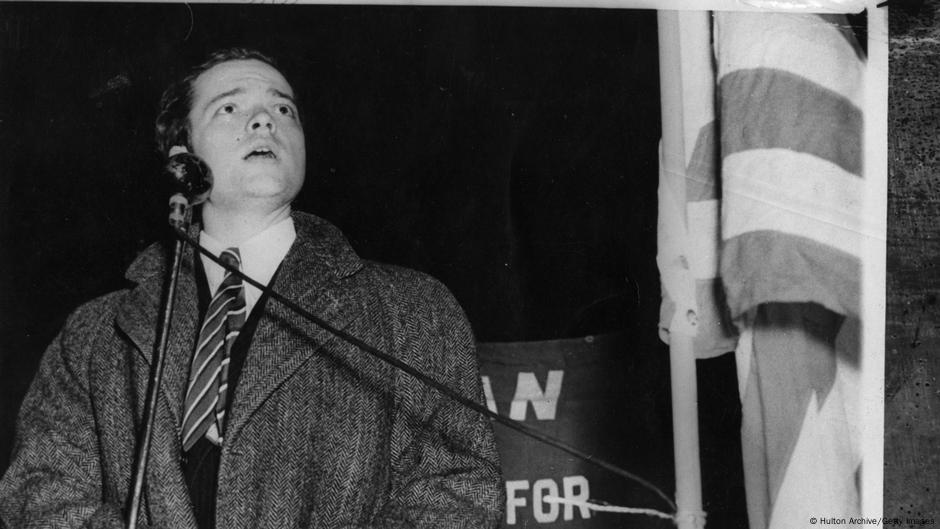
Before Orson Welles became known for his groundbreaking film “Citizen Kane,” he gained fame for a radio adaptation that would become one of the most iconic moments in media history. In 1938, at just 23 years old, Welles directed a radio broadcast of H.G. Wells’ novel “The War of the Worlds.” This event not only launched his career but also left a lasting impact on how the public perceives media.
On October 30, 1938, listeners tuning into the Columbia Broadcasting System (CBS) radio network were interrupted by a news flash during a dance music program. The broadcast reported unusual explosions observed on Mars and a mass of hydrogen gas moving toward Earth. After returning to the regular programming, another news update informed listeners of a strange object landing in a field in rural New Jersey.
This entire event was part of an installment of the radio series “Mercury Theatre on the Air,” where Welles reimagined H.G. Wells’ 1898 sci-fi novel. The live broadcast depicted a Martian invasion with vivid detail, using techniques such as interrupting programming with “special bulletins,” incorporating “experts” to add credibility, and providing emotional actuality from the scene of events.

The alien invaders seemed unstoppable, incinerating armies with heat rays and sending choking clouds of gas into New York City. The nationwide broadcast was reported to have caused mass panic in several cities. While Welles and his Mercury Theatre troupe intended to entertain, the context of the time—fear of war in Germany and gas mask drills in Britain—played a significant role in amplifying the response.
As the broadcast continued, people called the police, claiming they saw smoke from the battle with aliens. Some even reported seeing the Martians, with some speculating it was not Martians invading but Germans. However, the real “fake news” came the next day when newspapers exaggerated the panic, painting radio as unreliable.

According to Michael Socolow, associate professor of Communications and Journalism at the University of Maine, newspapers used this opportunity to discredit radio. Publications like the New York Times and Boston Daily Globe ran campaigns to portray the new medium as irresponsible. Despite research suggesting the panic was exaggerated, the myth has persisted.
Socolow explains that the story is compelling, almost like a conspiracy theory, and allows people to laugh at past audiences, thinking they were more naive. However, there are deeper reasons for its persistence.
The Power of a Hoax
If you thought the trick could only be pulled once, you’d be wrong. An episode of WNYC’s “Radiolab” marking the 75th anniversary of Welles’ broadcast revealed the hoax was repeated in Quito, Ecuador, in 1949. This time, the panic was real, with streets filled with screaming, praying people. The army roared through the city in trucks and tanks, increasing the chaos. When the show ended, fear turned to anger, leading to crowds storming the radio station, throwing rocks, breaking windows, and setting fire to the building. Six people were killed.
In the late 1960s, the trick was repeated in Buffalo, New York, with panicked people calling the police and reports of Canada deploying troops to secure a bridge. Socolow notes that while radio was new in 1938, it lacked the trust of established printed media. However, this doesn’t explain why the hoax could be repeated multiple times.
Socolow explains that hoaxes and fake news tap into our emotional buttons. The internet and social media now serve as ideal vehicles for spreading “fake news” due to their lack of credibility compared to traditional media.
The Evolution of Media Literacy
Welles’ broadcast sparked the first serious examinations of media credibility. It launched discussions about believing new media, even prompting Hitler to joke about little green men from Mars. Today, with AI-generated deepfakes, public trust in media and democratic institutions faces new challenges.
Socolow emphasizes the importance of constant awareness and critical thinking when evaluating sources of information. In an algorithmic universe, where social media platforms curate content, users must be more skeptical and engage in discussions about media literacy.
Welles, in a 1955 BBC interview, revealed his motives had been different than what he initially claimed. He wanted to challenge the credibility of radio, urging people to question what they hear. This lesson remains relevant today, especially with the rise of “fake news” and the need for media literacy.


