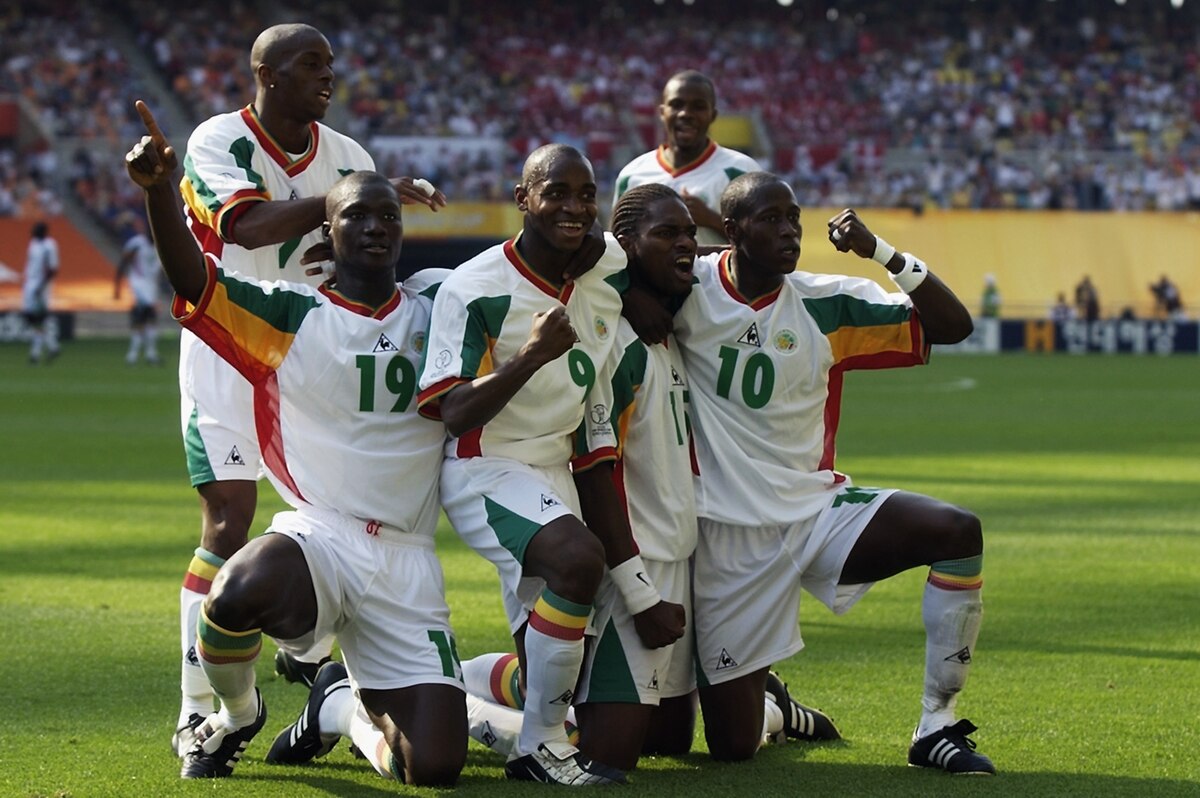
A Journey Marked by Triumph and Heartbreak
Africa’s journey to the 2026 FIFA World Cup has been a rollercoaster of drama, unforgettable stories, and moments that will be remembered for years. North Africa continued its dominance, with tiny nations rising to the occasion, and the long-awaited return of the vuvuzelas highlighted the continent at its most competitive and unpredictable.
This was the longest and most competitive qualification campaign in African history. Under the new format, 54 nations were drawn into nine groups, with each group winner booking a direct ticket to the World Cup. It was a marathon that tested endurance and demanded consistency from all teams involved.
Agonizingly Close
Once again, Uganda Cranes came within touching distance of World Cup qualification, only to be undone by a mixture of misfortune and a formidable North African opponent. On the road to Russia 2018, Uganda registered a memorable 1-0 victory over Egypt before succumbing to a Mohamed Salah-led onslaught in Cairo. Draws against Ghana at home and Congo away in Brazzaville ultimately dashed their hopes.
The journey to the USA, Canada, and Mexico has been a turbulent one, with bloated groups of six teams and nine-and-a-half slots at stake, up from the usual pools of four and five spots. In this campaign, Uganda had another shot at the playoffs but fell 2-1 to Algeria in Algiers, missing qualification by just three points. Early leads squandered and defeats to Guinea and Mozambique at neutral venues returned to haunt the team in the final reckoning.
Fairytale in Miniature
Now imagine this: Kampala sprawls across about 8,450 km² and hosts nearly 6.7 million people. Now look at Cape Verde, an archipelagic country of ten volcanic islands in the Atlantic covering just 4,033 km² with a population of barely 525,000. Yet while Uganda watched on, this island nation packed their bags for the 2026 World Cup in the USA, Mexico, and Canada.
The Blue Sharks sealed qualification with a 3-0 win over Eswatini in Praia, finishing ahead of giants Cameroon. Goals from Dailon Livramento, Willy Semedo, and veteran Stopira sparked wild celebrations at the 15,000-capacity National Stadium. Cape Verde now stand as the second-smallest nation ever to reach a World Cup, behind only Iceland in 2018.
Perfect, Chaotic Tunisia
Uganda Cranes’ eyes now turn to the future, with the nearest target being the 2025 Afcon in Morocco. Their first challenge will be the opening game against Tunisia on December 23. The Carthage Eagles’ World Cup qualifying run was near flawless with nine wins, one draw, 22 goals scored, and none conceded. But beneath that perfection lay constant chaos on the bench.
Tunisia began under Jalel Kadri, who was dismissed after a poor Afcon 2023. Caretakers Montassar Louhichi, Anis Boussaidi, Faouzi Benzarti, Kais Yaakoubi, and Sami Trabelsi all served within just two years but still guided Tunisia to a seventh World Cup and third consecutive finals appearance. Super-sub Mohamed Romdhane was their secret weapon, scoring four goals off the bench.
Despite their consistency, Tunisia now turns their attention to finally breaking the World Cup group-stage barrier, something they’ve never achieved.
Northern Wave, Cecafa Drought
Tunisia is part of a familiar pattern: the North African belt remains dominant. Besides Libya, four of the five Unaf members that include Morocco, Tunisia, Egypt, and Algeria qualified, all with a game to spare. By contrast, the Cecafa region had zero representation. Of the six Caf zones, West Africa zones A and B will be represented by two teams each, South Africa flies the Cosafa flag, and Central Africa will rely on Cameroon and DR Congo in the playoffs.
Bafana’s Chaotic Rise
South Africa’s return to the World Cup was anything but smooth. Their hopes suffered a major blow after they were sanctioned for fielding an ineligible player in Teboho Mokoena in the 2-0 win over Lesotho despite serving a suspension, resulting in a three-point deduction. But Hugo Broos’ side refused to crumble. A 3-0 win over Rwanda on the final day sealed qualification, allowing Bafana Bafana to edge out Benin and Nigeria in one of Africa’s tightest groups with just a point.
The qualification ends a 16-year World Cup drought, with the last appearance in 2010 when they hosted the tournament.
Spicy Qualifiers
Uganda Cranes were not alone in their last-day heartbreak. Benin, too, collapsed at the final hurdle, paving the way for Nigeria’s Super Eagles to reclaim a playoff slot. Despite a turbulent campaign with draws against Zimbabwe at home and away, a 2-1 loss in Benin, and consecutive 1-1 stalemates against Lesotho and South Africa in Uyo, Nigeria edged out Burkina Faso by a single goal to secure a place in the Caf play-offs semifinals where they will face either Cameroon, Gabon, or DR Congo in Morocco from November 16 to 19.
The overall winner will advance to the FIFA World Cup inter-confederation play-offs, set for March 2026 in North America, which will decide the final two spots.
Six teams, one each from Asia, Africa, South America, and Oceania, and two from North America, will compete in single-leg three-team groups where each of the respective teams will advance to the World Cup.
Qualified Teams from Africa
- Morocco
- Tunisia
- Egypt
- Algeria
- Ghana
- Cape Verde
- South Africa
- Senegal
- Ivory Coast
Teams for Caf Playoffs
- Nigeria
- Cameroon
- Gabon
- DR Congo
Total Goals Scored: 640
Matches Played: 256
Caf World Cup Playoffs
- Semifinal date: November 13
- Final: November 16
Top Scorers
- Mohamed Amoura (Algeria) – 10
- Mohamed Salah (Egypt) – 9
- Denis Bouanga (Gabon), Kamory Doumbia (Mali) – 8
Uganda Cranes Scorers
- Rogers Mato, Allan Okello – 3
- Muhammad Shaban, Jude Ssemugabi – 2
- Fahad Bayo, Elio Capradossi, Steven Mukwala, Travis Mutyaba


