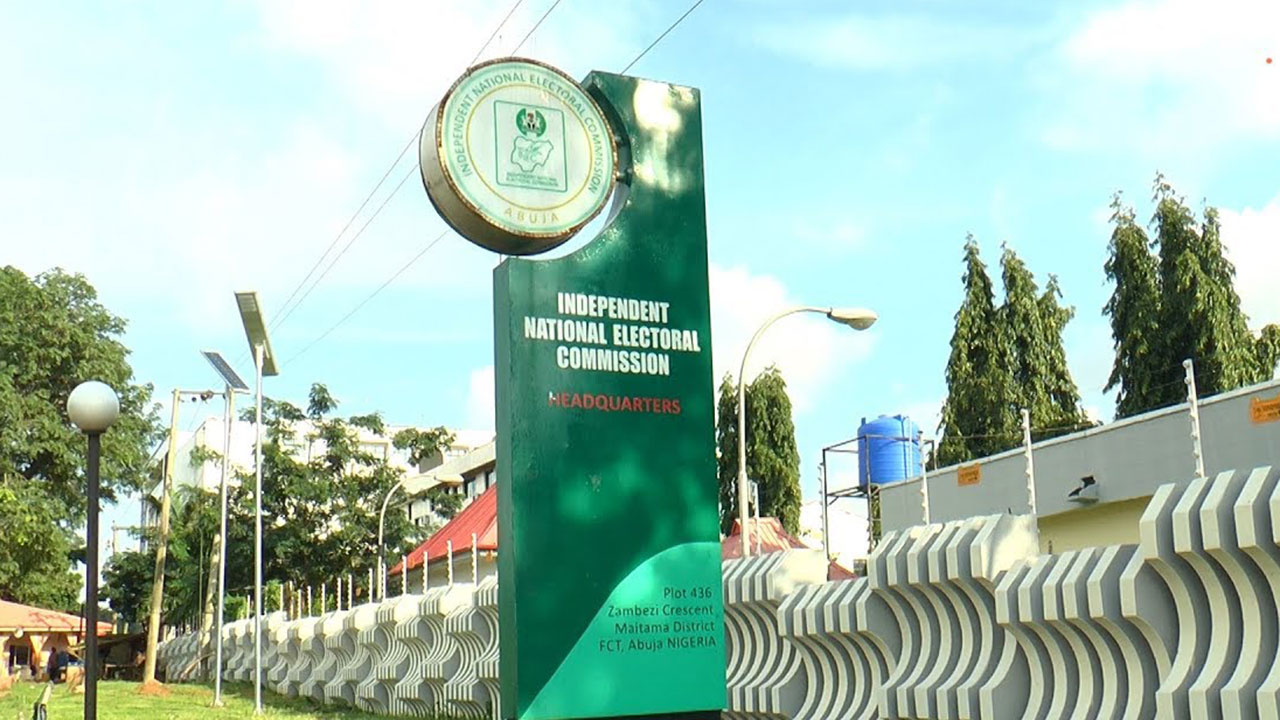
Proposed Electoral Reforms to Shift Election Dates
The National Assembly has proposed an amendment to the 2022 Electoral Act, aiming to change the timing of presidential and governorship elections. The amendment suggests conducting these elections six months before the expiration of the current incumbents’ tenure across the country. If passed and signed by President Bola Ahmed Tinubu, this could shift the next general elections from February and March 2027 to November 2026.
This proposal was outlined in the “Reviewed Highlights of the Amendment of the Electoral Act,” obtained during a public hearing in Abuja. The document specifies that elections for the president and governors must be held “not later than 185 days before the expiration of the term of office of the last holder of the office.” The hearing, organized by the National Assembly Joint Committees on Electoral Matters in collaboration with the Policy and Legal Advocacy Centre (PLAC), featured input from various stakeholders including lawmakers, political parties, civil society organizations (CSOs), and electoral experts.
The 10th National Assembly initiated this round of electoral reform following issues observed in the 2023 general elections and increasing pressure from political actors, CSOs, and other Nigerians to improve the integrity of the process ahead of 2027.
According to the draft, the provision also extends to elections into the National Assembly and state Houses of Assembly, which must now be held “not later than 185 days before the date on which each of the Houses stands dissolved.” Additionally, if a vacancy occurs in any of the Houses more than 90 days before the general elections, such vacancy must be filled within 30 days of its occurrence. The amendment also seeks to align the new electoral calendar with constitutional changes to Sections 76, 116, 132, and 178, which now delegate election timelines to the Electoral Act rather than the Constitution.
Criticism and Concerns
However, the Executive Director of the Civil Society Legislative Advocacy Centre (CISLAC), Auwal Musa Rafsanjani, criticized the proposal to hold elections six months before the expiration of tenure, calling it “unnecessary and potentially counterproductive.” He warned that the change could undermine the integrity of the process, allowing incumbents to use the extended transition period to frustrate successors. “If elections are held too early, incumbents might use the remaining months in office to pile up debts or make mass appointments. We’ve seen this happen in several states,” he said.
Rafsanjani added that a long gap between elections and inauguration could heighten political tension and policy confusion. “Having such a wide period creates room for manipulation. Nigerians already have deep mistrust in the system. Extending the calendar will only worsen it,” he warned. Drawing a comparison with the United States, he said, “In the U.S., elections are held in November and the new administration takes over in January – barely two months apart. That’s how to ensure a smooth and accountable transition. But in Nigeria, we always find ways to complicate simple processes.”
He urged the National Assembly to weigh the implications carefully and prioritize national interest over political expediency. While supporting the need to conclude litigations before swearing-in, he argued that such could be achieved within the current timeframe.
Key Highlights of the Proposed Electoral Bill 2025
The proposed law includes several key highlights. It recognizes voting rights for inmates and obligates INEC to register eligible prisoners. The bill introduces digital voter identification through electronically generated voter cards with QR codes and imposes tougher sanctions for electoral offences, including mandatory prison terms for falsifying results or obstructing election officials.
Other provisions include an expanded delegate framework for indirect primaries to standardize internal party representation, mandatory financial audits for INEC within six months of each financial year to promote transparency, and higher campaign spending and donation limits to reflect current economic realities.
The draft also provides for early voting for Nigerians whose official duties prevent them from voting on election day. Section 44(1) of the proposed Act stipulates that a date shall be set aside for early voting not later than 14 days before the main election. Security personnel, accredited journalists, INEC officials, domestic observers, and ad hoc staff are among those eligible.
In line with an existing court judgment mandating INEC to make provisions for prison voting, the bill further states that inmates shall be regarded as ordinary residents of the place where they are lawfully imprisoned or detained.
Another major amendment is in Section 65(2), which empowers INEC to review any declaration or return within seven days if it receives credible reports that such declaration was made under duress or contrary to established procedures.
Stakeholders Push for Electronic Transmission
Meanwhile, various stakeholders at the hearing reiterated calls for compulsory electronic transmission of results in the next general elections. Some participants also urged the National Assembly to adopt the recommendations of the Justice Mohammed Uwais 2008 Presidential Electoral Reform Committee.
However, Daily Trust observed that the proposed bill does not explicitly mandate electronic transmission, as the term ‘transmit’ is defined to include both manual and electronic means. The amendment states: “Presiding officers are to transmit polling unit results, including the total number of accredited voters, to the next level of collation. This replaces INEC’s discretion to decide how results are transferred with a fixed duty. However, since ‘transmit’ is defined broadly, it does not guarantee electronic transmission.”
Professor Abiodun Amuda-Kannike (SAN) insisted on “real-time transmission of results” to ensure credibility, adding that electronic voting should replace manual systems, while state electoral commissions should be scrapped. Similarly, Professor Abdullahi Seun called for the use of upgraded, legally bound technology in the next elections and advocated for holding all elections on the same day.
The Executive Director of the International Press Institute (IPI), Lanre Arogundade, called for electronic transmission of results directly from polling units to the INEC Result Viewing (IReV) portal, as well as diaspora voting. Representatives of the African Democratic Network and the National Human Rights Commission also echoed the same demand, stressing that electronic transmission was the desire of most Nigerians.
Representatives of civil society organisations also pressed for mandatory electronic transmission of results by INEC to enhance transparency. Speaking on behalf of the CSOs, Dr Akin Akingbulu said ambiguity around the current provisions must be eliminated to avoid future controversy. He proposed that INEC should be required by law to test-run the technology to be used in an election within a defined period before polling day. The CSOs also backed proposals seeking the conclusion of all election-related cases before the inauguration of winners.
Akpabio, Abbas Speak
Speaking at the hearing, Senate President Godswill Akpabio, represented by the Senate Chief Whip, Senator Tahir Monguno, said the amendment process was not a mere legislative routine but a vital part of Nigeria’s democratic evolution. Speaker of the House of Representatives, Tajudeen Abbas, represented by the House Majority Leader, Hon Julius Ihonvbere, said the public hearing would help strengthen legislation and provide a legal framework capable of standing the test of time. He assured that the National Assembly would complete work on the amendment early enough for presidential assent ahead of the next general elections.
Chairman of the Senate Committee on Electoral Matters, Senator Simon Lalong, in his welcome address, said the proposal was aimed at addressing the challenges experienced during the 2023 general and off-cycle elections. He added that the new Act was designed to serve the collective interest of Nigerians and not any political party. Lalong urged stakeholders to prioritize national interest over partisan considerations, saying the reforms were crucial to consolidating Nigeria’s democracy.
INEC Seeks Reforms for E-Voting, Diaspora Participation
Representative of INEC and National Commissioner, Professor Abdullahi Abdul Zuru, said the commission had made 75 observations and 142 recommendations from its post-election review of the 2023 polls. He said INEC was considering diaspora voting and early voting for Nigerians deployed on election duty, including security personnel and election officials. He added that the Commission had also proposed a review of Section 47(1) of the 2022 Act, which currently restricts voting to those with Permanent Voter Cards (PVCs).
“We think the PVCs are no longer necessary in their current form,” he said. “We are proposing electronically downloadable voter cards to make the process more accessible and remove barriers for eligible Nigerians.” Zuru emphasized that INEC’s proposals aim to make the electoral process more inclusive, transparent, and technologically aligned with global best practices. “These are things that work in other countries. Why not Nigeria?” he asked.
He commended the leadership of the National Assembly for initiating the amendment process, expressing optimism that the eventual reforms would strengthen Nigeria’s democracy and enhance public confidence in the process.
Delivering a goodwill message, the UK’s Foreign, Commonwealth and Development Office (FCDO) representative, Cynthia Roll, reaffirmed her country’s commitment to supporting Nigeria’s ongoing electoral reform process. She described it as a critical step toward a more transparent and credible democracy.
“Today’s hearing is a testament to Nigeria’s commitment to its democratic processes and institutions,” she said. “It reflects the progress made by the National Assembly in responding to citizens’ voices calling for a more transparent, inclusive, and credible framework.”
She praised the Joint Committee for providing a participatory platform for citizens and stakeholders to shape the nation’s electoral laws. “Public hearings give voice to citizens. They ensure reforms are designed not just for the people, but with the people,” she noted.
Roll commended Nigeria’s democratic resilience, adding that “each election and civic debate adds a layer of strength to the country’s democratic story.” Reflecting on the 2023 elections, she said the polls revealed both the strengths and lessons of Nigeria’s system, which the ongoing reforms aim to address.
“The decisions made here will have far-reaching implications for campaign financing, electoral offences, early voting, diaspora participation, and dispute resolution,” she said, urging lawmakers to ensure that credibility and inclusiveness remain at the core of the reforms.
She also pointed to the pending Senate confirmation of INEC’s leadership as another crucial step toward credible elections, describing the process as an opportunity for Nigeria to strengthen its institutions.
“Democracy is never finished; it is a continuous act of renewal. As your partner, the UK stands ready to walk this journey with Nigeria,” Roll concluded.


