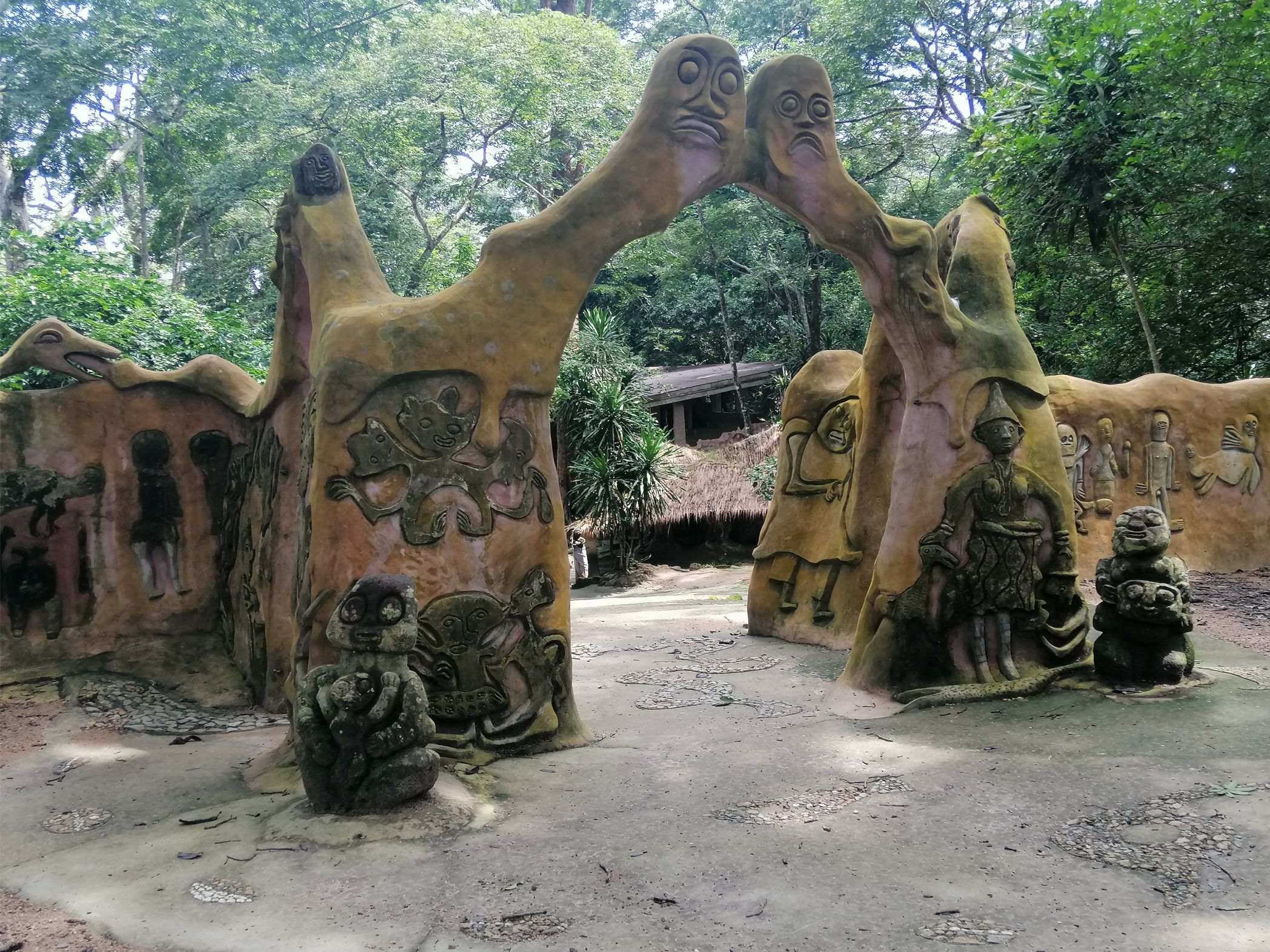
The Legacy of the Osogbo School
The works of the Osogbo artists, created without Western influence and celebrated globally, reflect a deep connection to their culture and environment. These pieces are not just art; they are vivid expressions of identity, tradition, and the natural world that surrounds them.
On Thursday, October 9, 2025, I had the privilege of meeting three remarkable figures from the Osogbo School at a hotel in Central London. Chiefs Jimoh Buraimoh and Muraina Oyelami, along with textile artist Chief (Mrs) Nike Okundaye, were in high spirits following the official opening of the ‘Nigerian Modernism’ exhibition at Tate Modern. This landmark event, running until May 2026, has brought together some of Nigeria’s most influential modern artists.
The Osogbo School, as described by writer and editor Molara Wood in her essay “The Art of Oshogbo,” was formed through workshops organized by the late German scholar Ulli Beier and his wife Georgina in 1963/1964. These workshops gave rise to a group of artists who would go on to shape the trajectory of Nigerian art. Among the notable members were Adebisi Fabunmi, Taiwo Olaniyi Osuntoki (Twins Seven-Seven), Rufus Ogundele, and Jacob Afolabi. The late Ashiru Olatunde also trained under the Beiers, while Mrs. Okundaye, once married to Twins Seven-Seven, participated in later workshops alongside Senabu Olatunde and Kikelomo Oladepo.
Another significant group within the Osogbo movement is the New Sacred Art Movement, which was mentored by Wenger. Artists such as Adebisi Akanji, Sangodare Ajala, Ajibike Ogunyemi, Buraimoh Gbadamosi, and Rabiu Abesu were part of this collective.
The trio had arrived in the UK on Sunday and were set to depart later that night. Although they missed the opening ceremony due to prior commitments, Chief Buraimoh was eager to share his impressions. “I was amazed by the turnout. It was a massive crowd that came to see our works, especially since they are old creations that most people don’t have access to,” he said. As a muralist and bead painter, Buraimoh first visited London in 1965 with Oyelami as part of the Duro Ladipo Theatre Group.
In the ‘Nigerian Modernism’ exhibition, the Osogbo artists’ works, which occupy two rooms, stand out for their unique features. These pieces, created without the influence of Western artists, are a testament to the artists’ deep connection with their culture and environment.
Buraimoh emphasized the originality of their work: “We are original artists who created works from our minds; no one influenced us. We are eight exhibitors, and none of our works resembles each other. I’m happy to be part of the exhibition. It’s historic and unfolding on the international stage, which certainly adds to its weight.”
Other Osogbo artists featured in the exhibition include Bisi Fabunmi, Sangodare Ajala, Twins Seven-Seven, Georgina Beier, and artworks by Wenger. Their exquisite works have already attracted reviews in major Western publications.
However, a common concern among art lovers is what will become of the Osogbo Art Movement after Buraimoh and Oyelami pass away. Buraimoh reassured that their eventual passing won’t be the end of Osogbo art. “Apart from two of my children following in my footsteps, I have trained over 60 other artists in textile and painting, and marketing their works on the internet. I received a grant from the American Embassy to train artists in 2019 and again last year. I don’t entertain any fear about the future of Osogbo art because I have trained about 70, 80 people who are in turn doing excellent work.”
Chief Oyelami, the Eesa of Iragbiji, also praised the ‘Nigerian Modernism’ exhibition. “It’s a positive development in further popularising Osogbo art, and I’m joyous to be part of it. The works being shown are those I made several years ago.” He expressed happiness with the hands-off approach to the 1960s workshop organized by the Beiers and their collaborators. According to him, they were not prescriptive but allowed the artists to express their creativity freely.
Mama Nike, as she is affectionately known, praised the organizers for putting on the show, hailing it as “most impressive” and an outstanding achievement for Nigeria. She was also wowed by the turnout, estimating the attendance at thousands. “This exhibition is a great achievement for Nigeria and all the featured artists. Nigeria has always made Africa proud when it comes to creativity, and we are doing the same with this exhibition.”
Like her male counterparts, the gallerist also does not joke with training. She has centers in Osogbo, where she trains 180 students in textile arts quarterly, and Kogi State. Reflecting on her journey, Mama Nike expressed gratitude to the Osun goddess for her blessings. “I never knew that art could feed me and earn revenue for the nation. This is a dream come true, and I am grateful to the Osun goddess whose images adorn my textile creations, including the one being shown in this exhibition.”
Printmaker, painter and sculptor, Professor Bruce Onobrakpeya, who also benefitted from the Osogbo workshops but is classified among the Zaria School, was also in London for the exhibition. His work, expectedly, was not included in Osogbo Art.
Described by Wood in a post after the opening as “walking histories, cultural touchstones, potent representatives of Yoruba culture and arts, great ambassadors of Nigeria,” the trio embody the enduring spirit of the Osogbo School. Meeting them again, just before their flight home, was an honour and a privilege.


