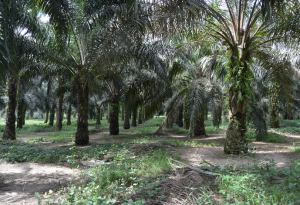
The Story of Ghana’s Oil Palm: A Tale of Unfulfilled Promise
Ghana’s oil palm industry once stood as a beacon of economic hope and self-sufficiency. However, over the years, it has been overshadowed by inefficiencies, low productivity, and a lack of investment. Once a thriving sector, it now struggles to meet domestic demand, with the country importing over 100,000 metric tons of crude palm oil annually (FAOSTAT, 2023). This situation is not due to a lack of potential but rather a lack of strategic direction and support.
The villages that once thrived on palm oil trade now face challenges in processing the fruit efficiently. Meanwhile, imported products from Asia and other regions fill supermarket shelves. Despite having fertile land, favorable rainfall, and a long tradition of cultivation, Ghana produces only a fraction of its potential. This has led to a heavy reliance on imports, which could be reduced through better management and investment in the sector.
Key Challenges in the Sector
Smallholders, who form the backbone of the oil palm industry, face several challenges. They often lack access to improved seedlings, finance, and modern milling technology. Many still use rudimentary presses, which result in significant oil loss due to inefficiency. Large-scale estates, once central to the sector, have declined due to policy inconsistencies and limited reinvestment.
Palm oil is an essential component of daily life, found in cooking oil, margarine, cosmetics, detergents, pharmaceuticals, and even biofuels. Yet, the oil palm, native to this region, was later exported to Southeast Asia, where countries like Malaysia and Indonesia transformed it into a multi-billion-dollar industry. Today, they dominate the global palm oil trade, while Ghana, the originator, lingers at the margins of the industry it helped create.
The Lost Promise of a Golden Crop
Currently, Ghana has over 350,000 hectares of oil palm under cultivation, producing an estimated 240,000 tons of palm oil annually (MOFA, Tree Crops Strategy Paper, 2022). Smallholders account for nearly 80 percent of the fresh fruit bunches (FFB) produced, yet achieve yields of only 4–6 tons per hectare, compared with potential yields of 15–22 tons per hectare under optimal management.
Four key factors explain this persistent yield gap:
- Aging farms and low replanting rates: Many plantations are over 25 years old—beyond their productive life—but replanting is rare due to high establishment costs.
- Limited input use and weak agronomy: Low adoption of improved varieties and best management practices (BMPs) continues to depress yields and overall sector productivity.
- Weak extension services: Most farmers receive little or no technical guidance on best management practices.
- Lack of long-term finance: Conventional credit facilities, designed for short-term crop cycles, do not suit the oil palm’s three-to-four-year gestation period.
Despite its enormous potential, Ghana’s oil palm sector remains undercapitalized and underperforming, limiting its contribution to job creation, import substitution, and rural prosperity.
Finance: The Missing Link
The biggest constraint facing oil palm farmers is not land or labor—it is finance. Most smallholders rely on informal savings groups, family resources, or sporadic support from processors. Commercial banks are hesitant to extend long-term credit due to the crop’s extended maturity period and price volatility.
Microfinance institutions, constrained by short-term deposits, lend at high interest rates unsuited to tree-crop investment. Without affordable capital, smallholders cannot replant, apply fertilizer, or adopt improved management practices—leading to declining yields and lost income opportunities.
As Solidaridad West Africa (2015) observed in its concept paper “Oil Palm Development Schemes through Smallholders”:
“The major constraint is the initial cost of rehabilitation, after which maintenance costs become significantly lower.”
This highlights a key truth about agrifinance: once the initial rehabilitation phase is financed, oil palm production becomes commercially viable and sustainable, capable of generating stable cash flows for loan repayment.
A Missed Industrial Opportunity
Oil palm is Ghana’s second most important tree crop after cocoa (Tree Crop Development Authority, 2023), supporting food processing, cosmetics, and emerging biofuel industries. It provides a vital source of rural income across the Western, Oti, Volta, Central, and Eastern Regions.
However, despite its importance, the sector has not benefited from the same level of structured financing and institutional coordination as cocoa or cashew. Initiatives such as the Presidential Special Initiative (PSI) on Oil Palm (2001–2008), the AFD-supported Outgrower Scheme, and the Oil Palm Master Plan Project raised awareness but lacked sustainable financing and long-term institutional ownership.
As a result, farmers and processors continue to operate in silos—without a unified framework to coordinate policy, finance, and technical support.
The Role of the Tree Crop Development Authority (TCDA)
Establishing the Tree Crop Development Authority (TCDA) marks a pivotal opportunity to address this fragmentation. With a mandate to regulate and promote six priority tree crops—oil palm, cashew, coconut, rubber, mango, and shea—the TCDA is well positioned to serve as the central coordinating and investment-facilitation body for Ghana’s tree-crop subsectors.
To revive the oil palm industry, the TCDA in collaboration with the Oil Palm Development Association of Ghana (OPDAG) should strengthen five strategic functions:
- Sector Coordination: Strengthen OPDAG—which I helped establish—to serve as the unified platform for processors, financiers, farmers, and partners under one strategic framework, with members paying dues to sustain its activities
- Investment Facilitation: To attract private capital, develop and standardize financing instruments—particularly blended finance models.
- Certification and Market Regulation: Oversee sustainability certification and traceability systems to access premium regional and international markets.
- Capital Mobilization: Design a Tree Crop Investment Fund to leverage concessional finance, climate funds, and impact investment.
- Data and Monitoring: In collaboration with partners like GIRSAL, establish a digital farm registry and loan-performance dashboard to enhance planning, transparency, and investor confidence.
According to the TCDA (2023 Annual Report), the Authority “aims to transform Ghana’s tree-crop subsectors into globally competitive industries through coordinated investment and market-driven governance.” This vision, if backed by appropriate financing mechanisms, could reposition oil palm as a national growth engine once again.
A Model for Sustainable Finance: The Operation Complete Fruit Recovery (OCFR) Approach
A promising model for achieving this transformation is the Operation Complete Fruit Recovery (OCFR) initiative, developed at Solidaridad West Africa (SWA) under the Sustainable West Africa Palm Oil Programme (SWAPP).
The OCFR model integrates three critical pillars:
- Finance: Structured loans linked to production outcomes and repaid through value-chain contracts.
- Technical Assistance: Supervision by Oil Palm Estates and Technical Operators (TOs) such as Benso Oil Palm Plantation (BOPP), Twifo Oil Palm Plantation (TOPP), Norpalm Ghana Ltd, and Juaben Oil Mills.
- Market Linkages: Guaranteed off-take agreements that ensure price stability and predictable cash flow.
Funds are disbursed directly to accredited service providers—responsible for pruning, fertilizer application, and drainage rehabilitation—eliminating fund diversion and ensuring that every cedi corresponds to tangible fieldwork.
Risk Management and Accountability
OCFR employs a robust, multi-layered risk management framework:
- Performance Risk: Minimized through strict adherence to Best Management Practices (BMPs) developed and tested by Solidaridad West Africa.
- Market Risk: Reduced via long-term off-take contracts and bulk input purchase agreements with suppliers such as OCP Ghana, Callighana, Yara, and Chemico.
- Diversion Risk: Eliminated through cashless disbursement and direct value-chain payments.
- Collateral Risk: Managed via farm registration, group guarantees, and assignment of crop proceeds.
Impact Potential
If scaled nationally, the OCFR model could deliver transformational results:
- Yields could triple from 4 to 15 tons per hectare (SWAPP Midterm Evaluation, 2021).
- Thousands of hectares of abandoned plantations could be rehabilitated.
- Local CPO production could rise substantially, reducing Ghana’s import bill by over US$150 million annually (MOFA, 2023).
- Rural employment would expand through youth-led service enterprises.
- Foreign exchange savings would strengthen Ghana’s balance of payments.
As Solidaridad (2020) noted:
“Oil palm has the potential to reduce poverty by providing jobs and livelihood opportunities if developed sustainably with the participation of host communities.”
Beyond Palm Oil: A Blueprint for Tree Crop Finance
The OCFR model offers lessons beyond oil palm. Its value-chain-based finance architecture—anchored on technical operators, transparent loan recovery, and shared accountability—can be adapted for cocoa rehabilitation, cashew expansion, rubber replanting, and coconut processing.
With the TCDA as the coordinating authority, Ghana can institutionalize a Tree Crop Agrifinance Framework linking blended finance, technical services, and market access across all six priority crops. This approach aligns with Ghana’s 24-Hour Economy and Food Security Agenda, emphasizing inclusive, job-rich, and climate-resilient agribusiness development.
Conclusion: From Potential to Prosperity
Reviving Ghana’s oil palm sector is not merely an agricultural ambition—it is an economic and institutional necessity. The combination of structured finance, strong technical supervision, and effective regulation under the TCDA can turn the sector into a cornerstone of industrial and rural transformation.
As the FAO (2022) observed, “Africa holds the climate advantage for oil palm but lacks the institutional and financial architecture to unlock its potential.” Ghana now has both the policy framework and the institutional vehicle—through the TCDA—to change this narrative.
Harnessing the model of Operation Complete Fruit Recovery (OCFR), coupled with coordinated investment and value-chain financing, Ghana can transform its oil palm industry from a fragmented, low-yielding sector into a globally competitive and financially inclusive powerhouse.


