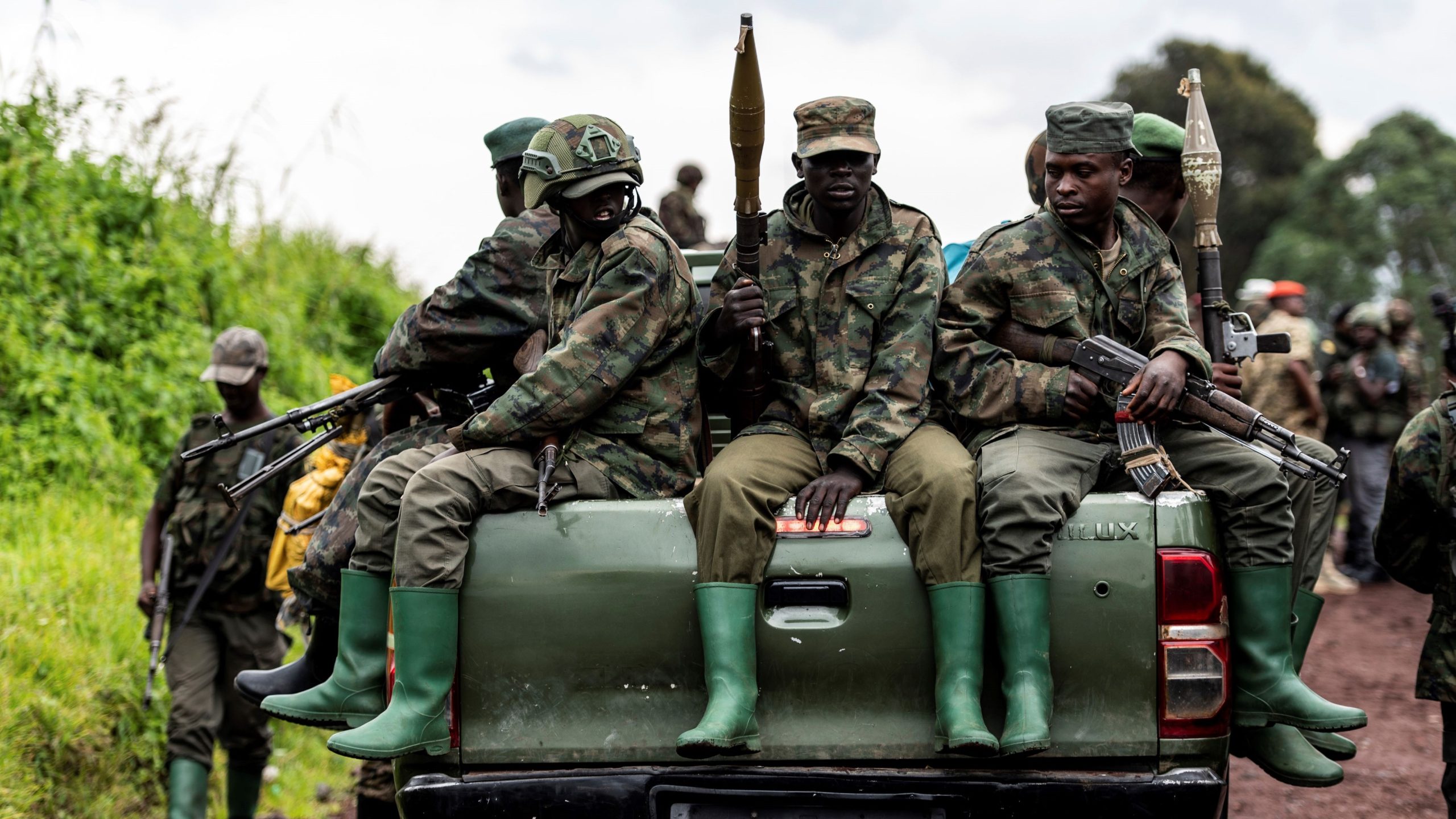
Escalating Conflict in Eastern DRC Fuels Trade Growth in Rwanda and Uganda
Despite the ongoing conflict in the eastern region of the Democratic Republic of Congo (DRC), traders in Rwanda and Uganda are experiencing significant economic gains. The situation has created a unique trade dynamic, as rebel-controlled territories increasingly rely on these neighboring countries for essential supplies.
The DRC, particularly its eastern provinces, has been marked by heightened security tensions since the beginning of the year. The transition of power and the emergence of the M23 rebel group have further complicated the region’s stability. However, despite this uncertainty, business continues to thrive, driven by the urgent need for goods in areas under M23 control.
Data from Kigali indicates that Rwanda’s exports to the DRC have seen a remarkable increase in the first half of 2025. This surge is primarily attributed to the demand from the eastern regions, where M23 rebels have established control. These territories require essential supplies such as construction materials, consumer goods, and other necessities for their civilian populations.
According to the National Bank of Rwanda, exports to the DRC rose by 72.9 percent during this period, making it the main contributor to a 30 percent overall growth in Rwanda’s exports to the East African region. While officially recorded as exports to the DRC, much of this trade bypasses Kinshasa-controlled areas, instead flowing through border crossings and corridors under M23 control.
Rwanda’s formal exports to the East African Community increased significantly by 30.4 percent in the first half of 2025, reaching $155.1 million compared to $118.9 million in the same period in 2024. This growth was largely driven by higher exports to the DRC, which saw a 72.9 percent increase, and to Uganda, which experienced a 26.4 percent rise.
Uganda has also witnessed a boom in trade with the eastern regions of the DRC. According to data from the Bank of Uganda, exports to the DRC surpassed the $1 billion mark, showcasing the resilience and adaptability of traders and transporters on both sides of the border.
New trade dynamics have emerged as Uganda Airlines resumed flights to the DRC’s capital and largest city, Kinshasa, home to an estimated 17.8 million people. Due to insecurity and banking shutdowns ordered by the Congolese government, many Congolese traders relocated their businesses to Kampala. This shift kept trade routes active and created alternative channels for goods to flow westward.
According to BoU data, much of this recovery was driven by informal trade, facilitated by cross-border networks of traders who quickly adapted to the crisis. Rwanda has increased shipments of locally produced goods, including construction materials like cement, steel products, processed foods, sanitary products, and beverages to the DRC. Reports indicate that these products are almost entirely destined for M23-controlled parts.
All major Rwanda-DRC border crossings used for these exports—such as the Grande Barrière, Petite Barrière, and Rusizi 1 & 2—are under M23 rebel control, as well as Walikale, Rubaya, Nyamibwe, and the entire Lake Kivu corridor. This may explain the ease in the flow of these goods into the Kivus, as well as parts of Ituri. M23 has had easier political ties with Kigali than Kinshasa.
Furthermore, there are no significant overland or air trade routes from Rwanda that reach Kinshasa-controlled areas such as Lubumbashi, Kisangani, and other areas without going through M23 zones. The once lucrative Kigali-Kinshasa route operated by RwandAir, which had quickly turned into a business link between the two countries, was the first to be suspended by the DRC government after it concluded that Rwanda was backing M23 rebels, an accusation Kigali denies. Kinshasa further banned all Rwanda-registered aircraft from its airspace.
Cimerwa, Rwanda’s oldest cement maker—now owned by the Devki Group—was hemorrhaging money at the height of the war, especially after Goma and Bukavu fell to the rebels, as many of its major DRC customers fled, some were looted, and trucks stolen, while construction works came to a standstill. Local banks were cut off by the Congolese government, making it hard to access dollars, and many traders feared the government would punish companies that do business under the M23.
“We have managed to stabilize the DRC market once again, customers have returned,” Davis Twahirwa, head of sales and marketing at Cimerwa, told The EastAfrican. “We are holding up to 90 percent of the cement market share as we speak. There is a lot of construction work going on in M23-controlled territories and with this came a lot of demand.”
“In order to serve this demand, we have dedicated the Bugarama factory in Rwanda to the DRC market due to the surge in demand and its proximity to Bukavu—we are using water transport to serve Bukavu,” Twahirwa added.
Ugandan traders, using different routes, have also re-penetrated the North and South Kivu markets, supplying goods ranging from foodstuffs, building materials, sanitary products, beverages, and machinery to other essential consumer goods the people need.
However, Goma airport and many commercial banks are still closed in the captured territories, posing a headache for traders. The only functioning financial outfit, Cadeco, which the new administration hijacked, is used for tax collection and other local financial transactions. It was reopened on April 7, 2025, and currently handles deposits, withdrawals, and local transfers.
The AFC/M23 financial arm, Arefa (Agence de Régulation et de Financement de l’Afrique), oversees banking. As of mid-October 2025, Arefa reported stabilizing exchange rates and expecting “full monetary stability” by the end of October.
The new rebel administration has outsourced a plethora of goods and services mostly from Rwanda, Uganda, and beyond. From police and prisoner uniforms, food, printing services, as well as other goods and services needed for the proper functioning of their captured territories, and this has been a boon for Rwandan traders and those from other countries in the region.
The unrest in February rattled Uganda’s economy, costing the country trillions of shillings in lost revenue, jobs, and businesses. Trucks laden with merchandise destined for the DRC were stuck in Kampala for weeks, while others were held at Bunagana and other border posts.
Today, in Kampala’s central business district, Congolese buyers continue to place orders for refined vegetable oil, sugar, soap, plastic products, and steel, which are then consolidated and transported to Goma and Bukavu. “The situation in eastern DRC may be unstable, but trade has found its own way,” said Amon Muzoora, a Congolese cargo consolidator based at Usafi Market in Kampala. “Many Congolese businesses moved here to protect their money and keep supply lines open.”
When Kinshasa ordered the closure of banks in rebel-controlled territories earlier this year, business operations across eastern DRC were paralyzed. However, traders adapted by shifting their operations to Uganda, ensuring that cash flow—and trade—continued.
Read: Congo rebels muddy minerals market with illegal Rwanda exports, says UN report
The M23 rebels’ decision to reopen the General Savings Bank of Congo later restored limited liquidity in Goma and Bukavu, helping trade slowly resume. “Before the conflict, it took a day to fill a truck,” Muzoora explained. “Now, it can take up to a week, but goods are still moving.”
To overcome security challenges, cargo operators rerouted shipments through safer corridors such as the Cyanika–Gisenyi–Goma route via Rwanda, considered the safest option, while older trucks were deployed along the more difficult Bunagana–Goma road.
Demand for Ugandan goods in the DRC remains strong. Uganda continues to export a diverse range of manufactured and agricultural products, fuel, electricity, animal and vegetable oils, consumer goods, and processed foods.


