The Shug Monkey: A Terrifying Tale from British Folklore
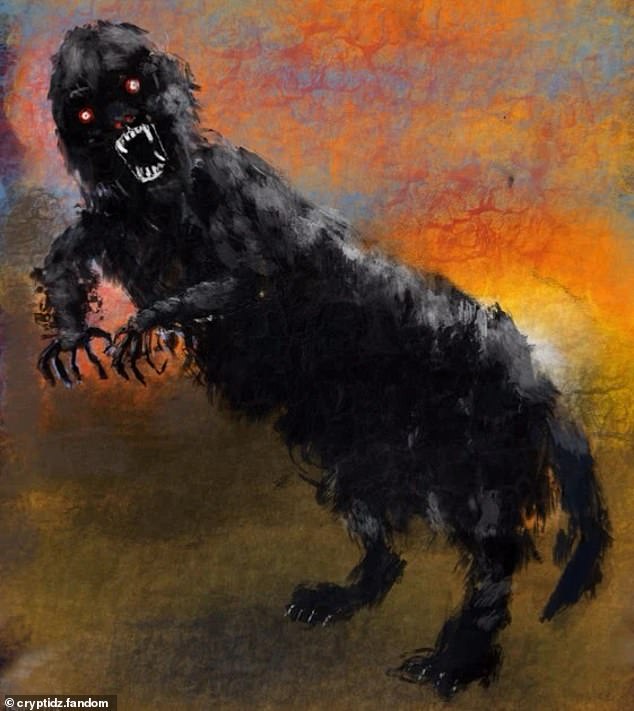
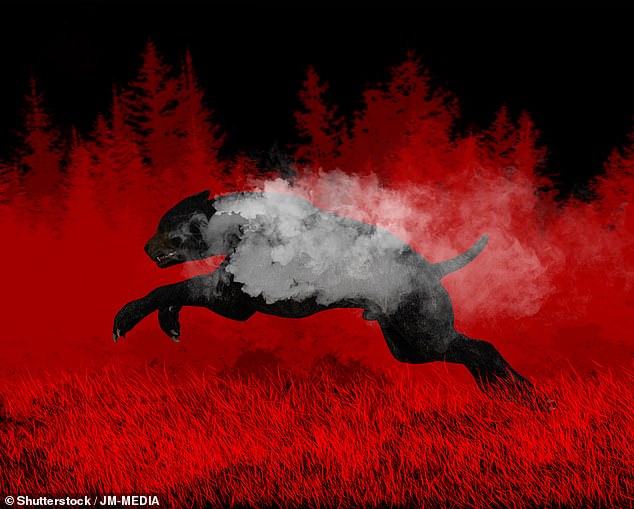
One of the most feared creatures in British folklore is the Shug Monkey, a mysterious and terrifying being that has haunted the rural lanes of Cambridgeshire for over a century. Standing about eight feet tall, this creature is said to be a hybrid monster with the body of a jet-black dog and the face of a primate, complete with blazing red eyes and long, flattened claws resembling human fingernails. Some accounts describe it walking upright on its hind legs, while others claim it runs on all fours. Locals have long believed that encountering the dark figure is an omen of death.
Now, experts are shedding light on the truth behind this legendary beast, which holds a place alongside other famous cryptids like the Loch Ness Monster and Black Shuck in British folklore.
Origins and Descriptions of the Shug Monkey
The Shug Monkey is said to haunt Slough Hill Lane, a path leading from the village of West Wratting to nearby Balsham, just southeast of Cambridge. According to folklore expert Daniel Codd, sightings of the creature date back more than a century. In his 2010 book Mysterious Cambridgeshire, he describes the Shug Monkey as a “large, rough-coated animal with big, blazing bright eyes.” He notes that children avoided the area after dark in the early 1900s, but the exact nature of the creature remained unclear. It was not thought to be a Yeti-like creature or even an escaped primate.
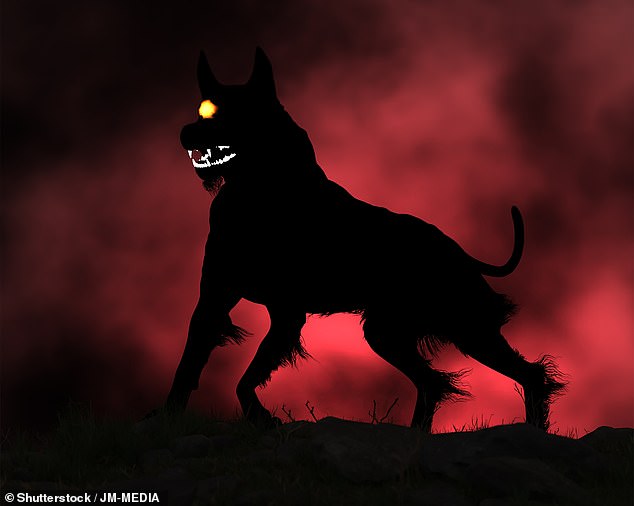
Dr. David Waldron, a historian and anthropologist at Federation University in Australia, explains that the term “shug” comes from the Old English word scucca, meaning devil. He links the legend to the shape-changing devil dog stories of the region, such as Black Shuck. “Shug Monkey is often tied into lonely lanes, thresholds, and for travelers, operating as a warning figure or omen bringing tales of misfortune,” he told the Daily Mail.

The Legend of the Shug Monkey
The Shug Monkey is a well-known folklore legend in Cambridgeshire, with origins dating back at least 100 years. It is described as having the body of a black dog and the face of a monkey, with demonic red eyes. In 1954, local writer and broadcaster James Wentworth Day first documented stories of the Shug Monkey in Here Are Ghosts and Witches. A local Police Constable, A. Taylor, who had heard the stories in his youth, described it to Wentworth Day as “a cross between a big rough-coated dog and a monkey with big shining eyes.”
However, most sightings of the half-monkey, half-dog creature are likely the result of odd shapes along the road and poor lighting conditions at night. Dr. Waldron explained that “hedgerows, gates, and moving shadows ‘jump’ into animal forms.” People may also be seeing a dog, a fox, or a deer, while mist and car headlights create “halos and glare that enlarge heads and eyes.” As for the demonic red eyes, larger animals in Britain have a reflective layer behind their retinas that may make their eyes glow red.
According to Dr. Waldron, there is “no definitive evidence” that the Shug Monkey exists in physical form, although it certainly exists as a living tradition. “England is also a difficult environment for a large animal like that to exist undetected,” he said. “The name is what turns fear on a lane into a story others can share (and, sometimes, relive) and it connects people to heritage, the landscape and tradition.”
Scientific Explanations and Modern Perspectives
Tim Coulson, a professor of zoology at Oxford University, grew up near the area where the Shug Monkey is supposedly sighted. “I sadly never encountered the Shug Monkey, but this is no great surprise as I am confident it does not exist,” he told the Daily Mail. “Once a story like this starts, people often claim to have seen it. They have likely caught a fleeting glimpse of a fox or badger or deer and then convince themselves they saw the mythical Shug Monkey.”
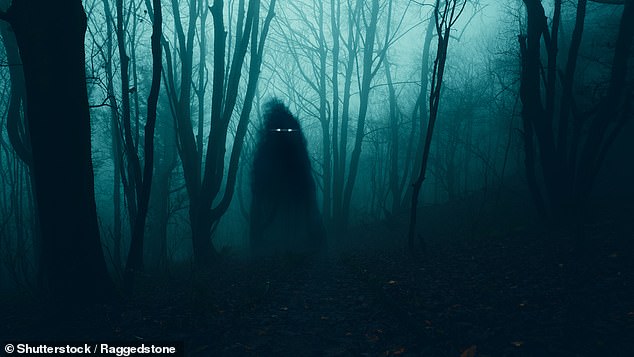
Dr. Brian Sharpless, clinical psychologist and author of Monsters on the Couch, called descriptions of the Shug Monkey “fascinating.” However, he suggested that alleged witnesses may be experiencing pareidolia – the tendency of the human mind to see things from everyday visual stimuli. “Our brains tend to construct meaning out of chaos,” he said. “Pareidolia is more likely to occur in low light conditions and in stressful, scary environments. Therefore, our brains might be creating hairy monsters out of far more mundane objects like trees, shadows, or red deer.”
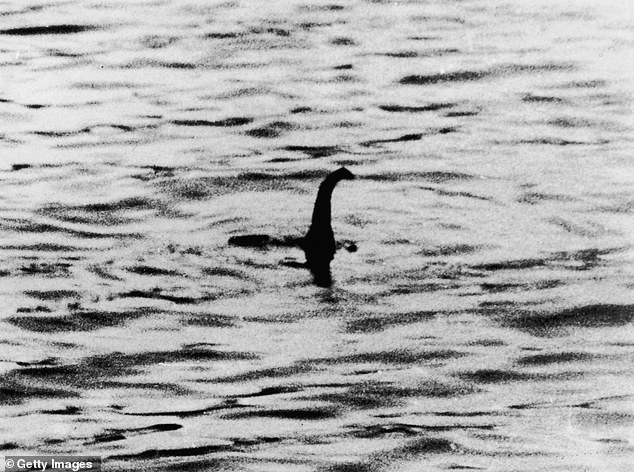
Dr. Jason Gilchrist, an ecologist and lecturer at Edinburgh Napier University, thinks the mystery of “cryptids” – animals whose existence is disputed – is “self-perpetuating.” He noted that some of the most famous cryptids worldwide include the Loch Ness Monster, Bigfoot, and the Abominable Snowman. “Reports over time are likely to be the result of ‘expectant attention’ – people seeing what they expect to see,” he told the Daily Mail. “Once a myth or story of something exotic takes hold, people want to see ‘the monster’ and are predisposed to see or interpret things that their mind then fits to the search image for ‘the monster.’”
Conclusion: Myths, Misinterpretations, and Cultural Significance
While the Shug Monkey remains a powerful symbol in local folklore, scientific explanations suggest that most sightings are the result of natural phenomena and psychological factors. Nevertheless, the legend continues to captivate the imagination of those who hear it, serving as a reminder of the deep connection between culture, history, and the human need to tell stories. Whether it’s a real creature or simply a product of the imagination, the Shug Monkey remains an enduring part of British folklore.


