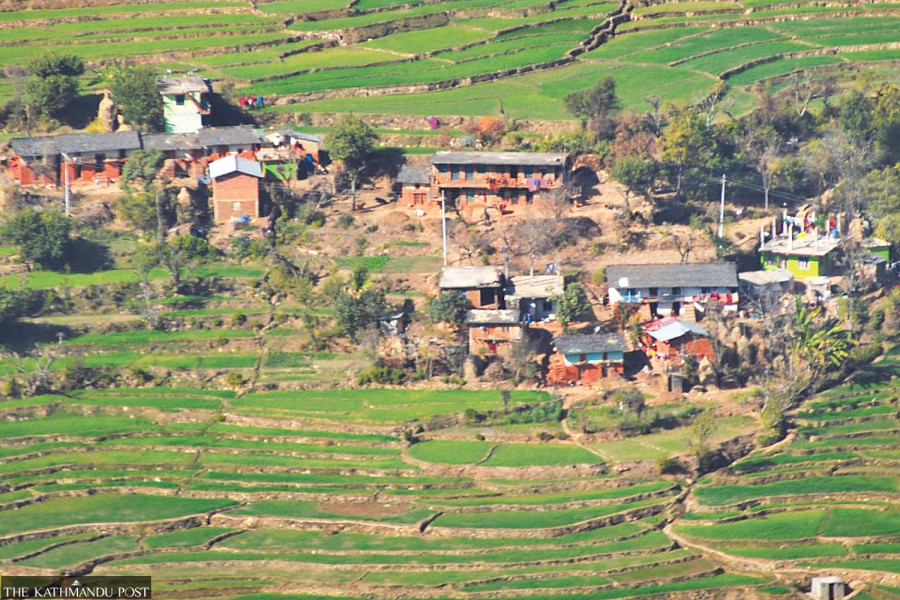
The Baitadeli Dialect: A Linguistic Heritage of the Far West
Baitadeli, a dialect primarily spoken in the districts of Baitadi, Kanchanpur, and Kailali in Nepal’s Far West, is part of the Doteli language family. It belongs to the broader Khas language group, which is considered an ancient precursor to modern Nepali. Over centuries, the Khas linguistic tradition has given rise to various dialects, including Baitadeli, shaped by historical and cultural influences.
Historically, the region was part of the Great Katyuri kingdom before coming under the Khasa Kingdom during the medieval period and later the Chand dynasty. These political transitions significantly influenced the cultural practices and language use of the area. Baitadi, as a key center within the Khas Kingdom, became a hub for the development of its unique linguistic traits.
According to Rajendra Rawal, senior vice president of Mahakali Sahitya Sangam, one of the oldest literary organizations in Far Western Nepal, there are few copperplate inscriptions that provide insights into the history of the region. These inscriptions, written in Sanskrit, often conveyed messages to the local population in languages such as Baitadeli or Doteli. For example, words like palayati, ijar jagga, and phagalo appear in these records. Some artifacts also feature monograms, such as swords and peacocks, symbolizing figures like Kartikeya.
Unlike Nepali, which developed a rich written tradition, Baitadeli remained predominantly oral. It shares grammatical and phonological features with other Doteli dialects but lacks a distinct script. When written, it uses the Devanagari script, same as Nepali.
Linguistically, Baitadeli is considered one of the major dialects of Doteli, spoken across several districts in Far Western Nepal. While mutual intelligibility among these dialects is generally high, Tirtha Raj Bhatta, a native of Baitadi, highlights that Baitadeli retains unique phonological, morphological, and syntactic characteristics specific to the region.
The dialect differs from standard Nepali in phonology, grammar, and vocabulary. It includes pronouns and deictic expressions not found in Nepali, along with idiomatic expressions rooted in the environment of Baitadi. According to Rawal, “In standard Nepali grammar, there are 32 consonants, but in the far west language we identify an additional consonant ‘Ana’.” His organization has developed a basic grammar of the far western language, covering morphology and syntax.
Baitadeli is the mother tongue of nearly every community in Baitadi district, used for at least 1300 years by communities such as Brahmins, Chhetris, Lavads, and Luhars. Although Nepali is the language of formal administration, Bhatta notes that in daily life, Baitadeli or Swaradi prevails. It is used in everyday communication, festivals, and ceremonies such as Gaura Parva and marriages.
Variations exist within Baitadeli, with differences in tone, accent, and vocabulary between settlements. For instance, speakers from the Tallo Swarad (Lower Swarad) region differ from those in the Mallo Swarad (Upper Swarad). Similarly, speakers from border areas with Darchula differ slightly from those near Dadeldhura. These variations are integral to the identity and speech of the people.
Bhatta raises concerns about the relationship between Baitadeli and Dotyali. While Dotyali is sometimes used as an umbrella term for dialects in Baitadi, Bajura, Bajhang, Doti, and Achham, Baitadeli specifically refers to the dialect of Baitadi. Many speakers of different dialects do not support the idea of a single Dotyali language, as each district maintains its own distinct identity.
For the people of Baitadi, Baitadeli is inseparable from their cultural life. Folklore, rituals, myths, and oral history have long been preserved through oral traditions before being recorded in writing. This heritage continues today in religious hymns like Phaaga and Sagoona, folk songs like Deuda, Thadibhaka, and Dhamari, and folktales such as Baatai. Stories from the Mahabharata, Gaura Faag, Thadokhel, Baira, Charitra gaan, and auspicious songs are carried forward in the native tongue, reinforcing Baitadeli as a vessel of collective memory.
Festivals further reinforce the dialect’s vitality. Events such as Gaura, Navaratra, Bhailo, fairs of different deities, and Chhaliya dance are significant examples. When people from Baitadi move elsewhere, the dialect becomes a marker of origin, offering a counter response to dominant linguistic trends.
Despite its cultural significance, Baitadeli faces challenges. Structured preservation campaigns are rare, with conservation relying on individual efforts by writers, poets, and journalists. Confusion among speakers regarding the distinction between Baitadeli and Dotyali complicates its identity.
The population speaking Baitadeli may be declining as younger generations gravitate toward Nepali, English, or Hindi, aided by media, education, and mobility. Census data shows that 155,666 people, or about 0.52 percent of Nepal’s population, speak Baitadeli. In Baitadi district, 97.9 percent of the population reported Baitadeli as their first language in the 2011 census.
Despite these challenges, there are hopeful signs in digital and community spaces. Locally produced YouTube videos, Facebook groups, and social media posts are adopting Baitadeli. Examples include viral comedy videos by Rakesh Bhatta, a ward chairperson, and content created by artists such as Bhanubhakta Joshi and Gaurav Joshi.
Writers and performers continue to keep the dialect alive. Notable contributors include Late Dev Raj Bhatta Sharma, Bir Bahadur Chand, Rajendra Rawal, Pushkar Bhatta, and many others. Artists perform Deuda songs in Baitadeli, preserving its cultural essence.
For Bhatta, Baitadeli is more than just a language—it is a medium of connection and identity. He emphasizes its role in shaping his sense of belonging and cultural presence. Through writing, singing, and festival participation, he seeks to anchor local memory and heritage.
Inside Sudurpaschim Province, linguistic diversity is profound. Each district has its own distinct dialect, reflecting the region’s deep-rooted Khas linguistic tradition while maintaining unique identities. These variations highlight how Sudurpaschim’s districts, despite shared roots, have developed distinct forms of expression that preserve local heritage even as they intermingle across borders.


