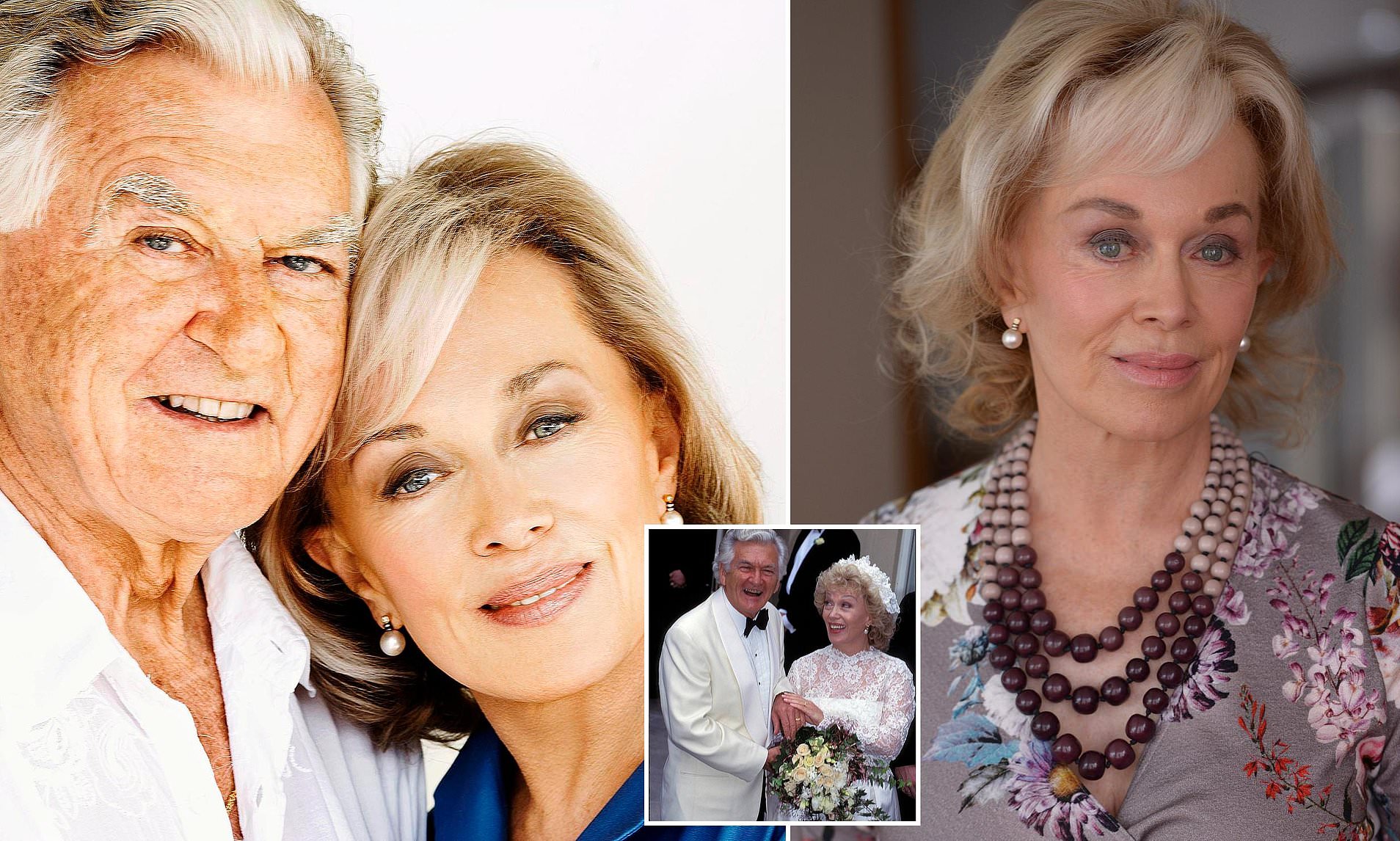
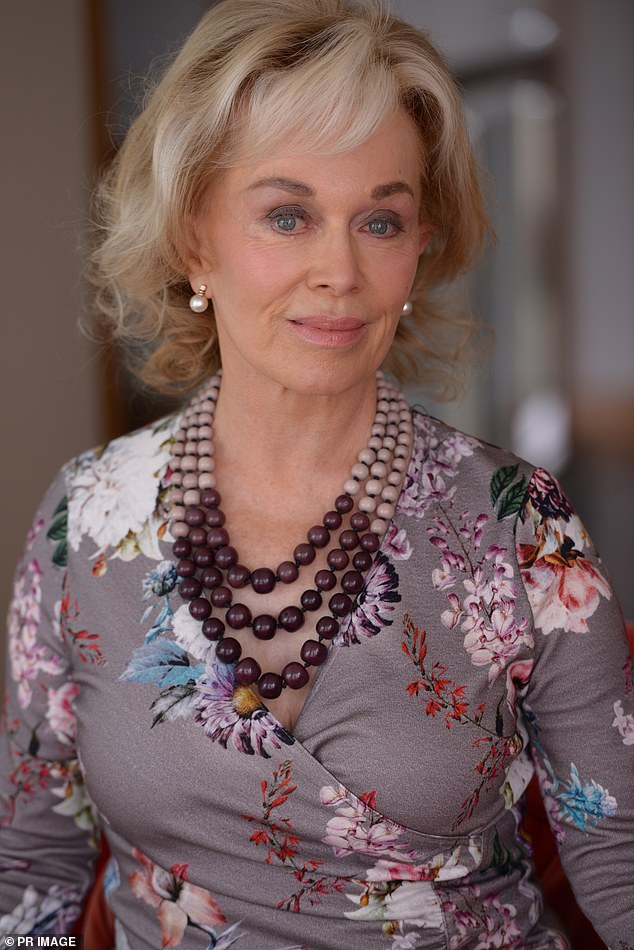
Former Prime Minister Bob Hawke’s widow Blanche D’Alpuget, who was once described as the ‘most hated woman in Australia’ for her affair, has died aged 82 following complications from influenza.
The award-winning author asked her family to share her final message to Australia.
‘Our highest calling and greatest achievement is love, the rule of life. Love one another,’ it read.
She is survived by her son, artist and sculptor Louis Pratt, daughter-in-law Brianna and granddaughter Sienna. She was also close to Hawke’s children, Sue Pieters-Hawke, Rosslyn Dillon and Stephen Hawke, and their families.
‘Blanche wrote and lived entirely on her own terms,’ her family said.
‘She was full of vitality, generosity and curiosity, with an extraordinary appetite for beauty, ideas, history, new places and spirited conversation.
‘She refused to be confined by convention or by other people’s expectations of who she should be.
‘We will miss her force, her humour, her curiosity and her love beyond measure.’
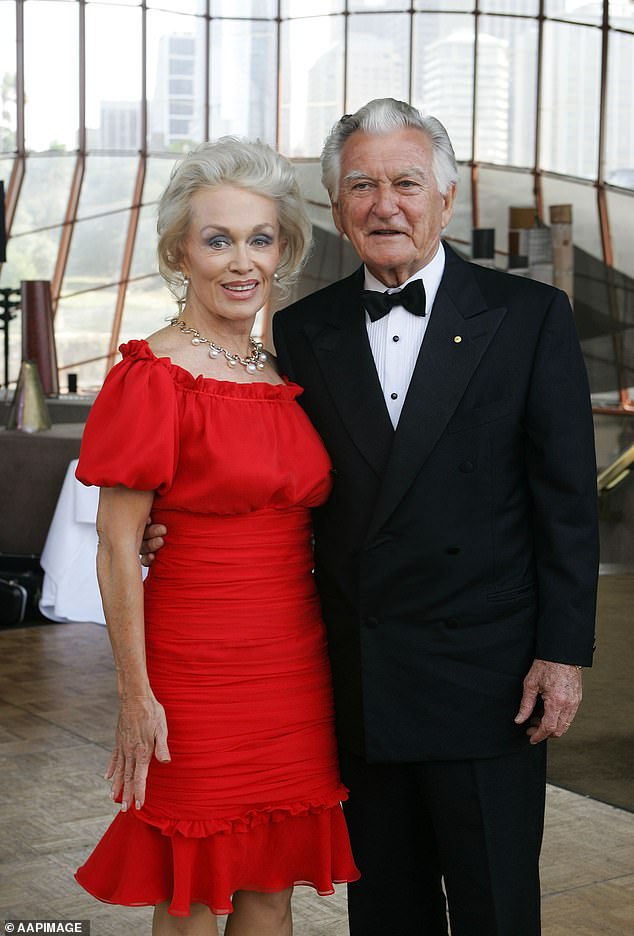
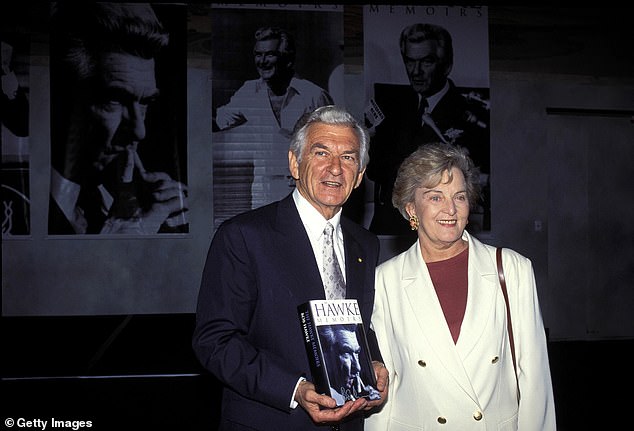
D’Alpuget died seven years after Hawke, Australia’s longest-serving Labor prime minister, who she first met in Jakarta in 1970.
They then met again in 1976 and became lovers, despite Hawke being married to Hazel Hawke.
She also said she was not under the illusion that she was his only affair and wrote in one instance that she realised Hawke was ‘having affairs with women all over the country’.
‘With mutual, wordless consent it was agreed we would become lovers as soon as possible,’ she told the Sydney Morning Herald.
‘He was charming, funny and straightforward: he liked me and enjoyed talking to me; what he loved was sex.’
Hawke asked d’Alpuget to marry him in 1978, only to withdraw the proposal a few months later as his political ambitions took priority.
The pair, who were nicknamed B1 and B2 as shorthand, reconnected in 1986 and began a long-running affair.
‘This voice just said, G’day – of course I knew who it was. I happened to have another boyfriend there when he rang, but I knew he was sussing things out. He said he’d love to meet me again.’
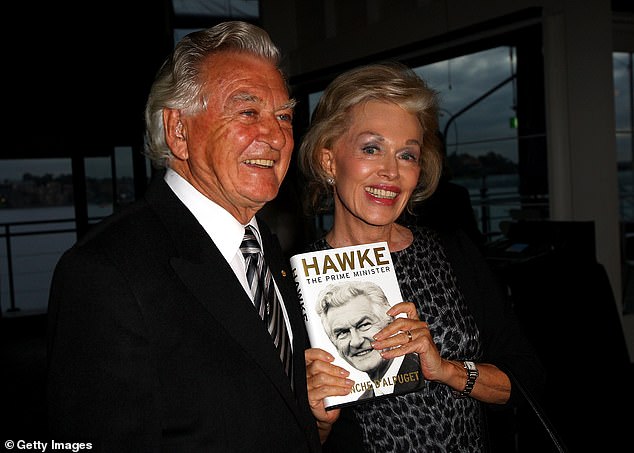
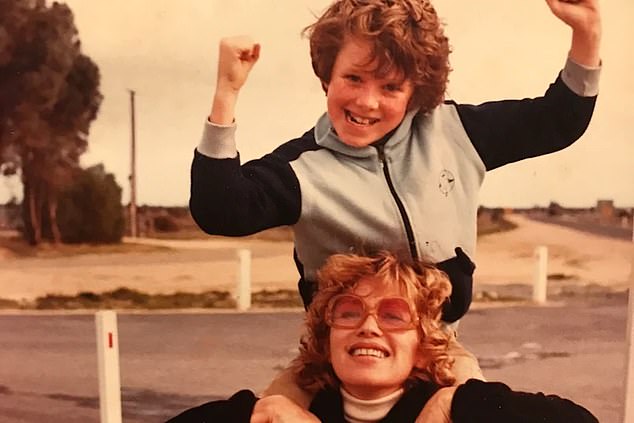
A light plane carrying d’Alpuget crashed into the sea off far north Queensland in 1993, an incident that prompted Hawke to take their relationship more seriously.
‘I was in a light plane crash in North Queensland. A friend who was our go-between rang him up and told him,’ she said.
‘Bob said he felt himself die and that was it.
‘At that moment, he decided. He suddenly took the relationship extraordinarily seriously and made it clear to me. But it was timing. It was an angel, holy angels.’
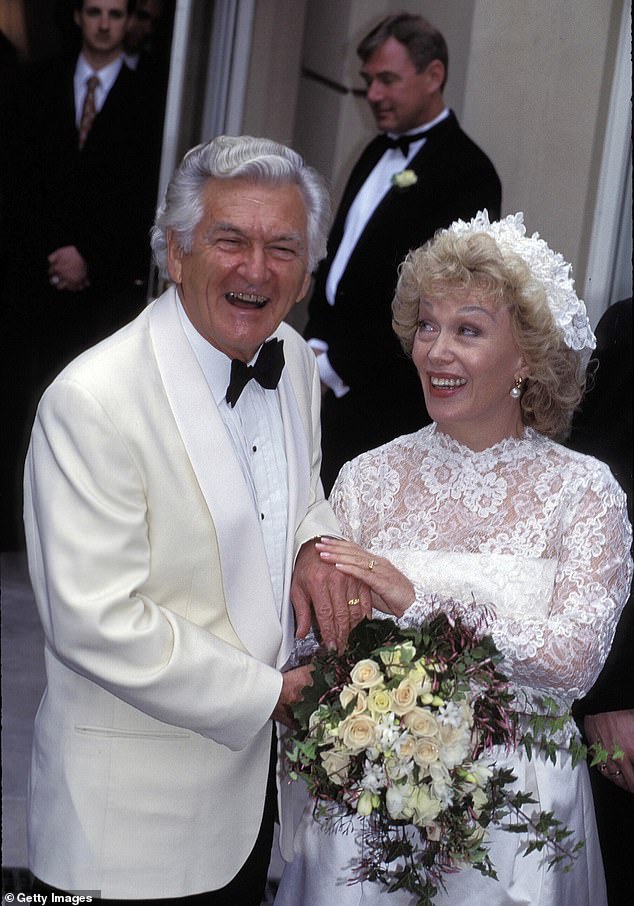
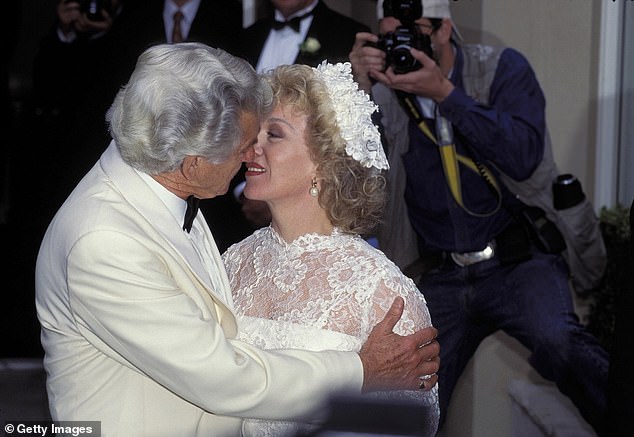
Hawke divorced Hazel and the couple married eight months later in 1995 and were together until the former Prime Minister died in May 2019, aged 89.
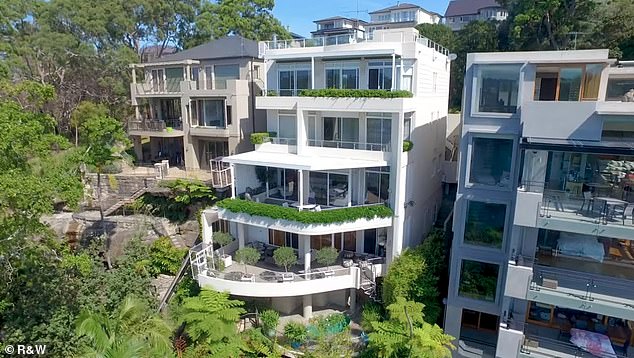
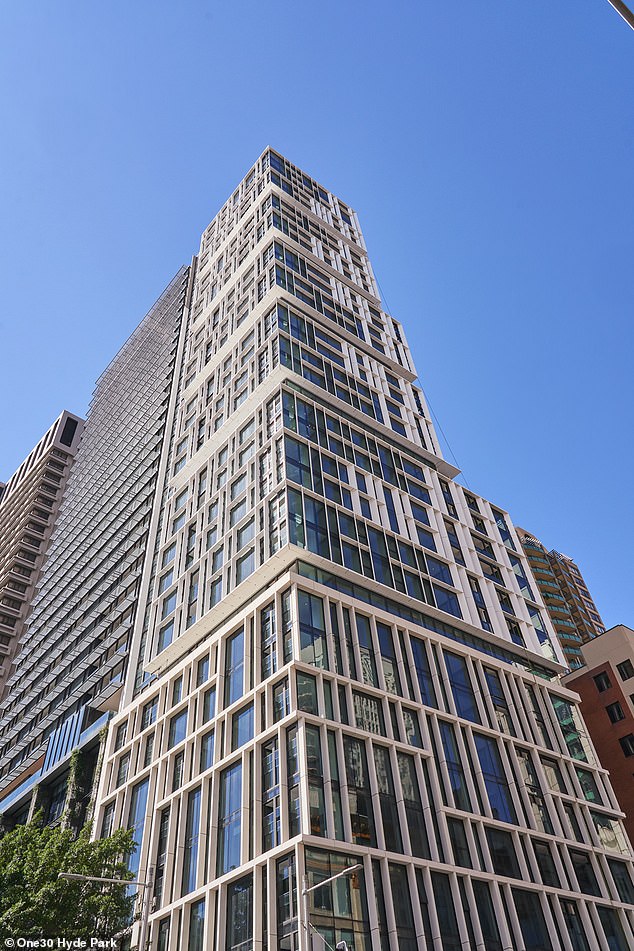
Week before his death, Hawke sold his waterfront house in Northbridge for more than $14 million and downsized to a pad in Sydney CBD’s One30 development overlooking Hyde Park.
Hawke was still married to his first wife Hazel when he bought the Northbridge property in 1991 for $1.23 million, just months before he lost the party leadership to Paul Keating.
Blanche was added to the property title in 1999.
When Hawke left his first wife after years of the secret romance, D’Alpuget faced severe public backlash and was labelled the ‘most hated woman in Australia’.
‘People called her a home-wrecker,’ her son previously recalled about the public after Hawke’s divorce from Hazel.
D’Alpuget refused to hide from the public eye, despite criticism over her affair with Hawke, and spoke openly about her sex life with Hawke.
D’Alpuget told the Herald that she was under ‘intense judgmentalism’ and said it was ‘really very unfair’.
‘But I still don’t blog, or Facebook, or Link-In or any of that, because I know I’d be trolled to death,’ she said.
‘But I must also say that I don’t worry about what people think – or things in general, very much.’
D’Alpuget grew up as an only child in Sydney’s eastern suburbs and first worked as a journalist before travelling the world.
A rebellious teenager, she ran away at 17 years old with a married Polish immigrant and previously described their whirlwind romance in detail.
‘In one three-day stretch, we made love 21 times, stopping only to bathe and eat rye bread, csabai and cucumbers,’ she said
She returned to Australia at the age of 30 to begin working as a novelist.
The author also spoke candidly about how she was preparing for death in her final media interview earlier this year.
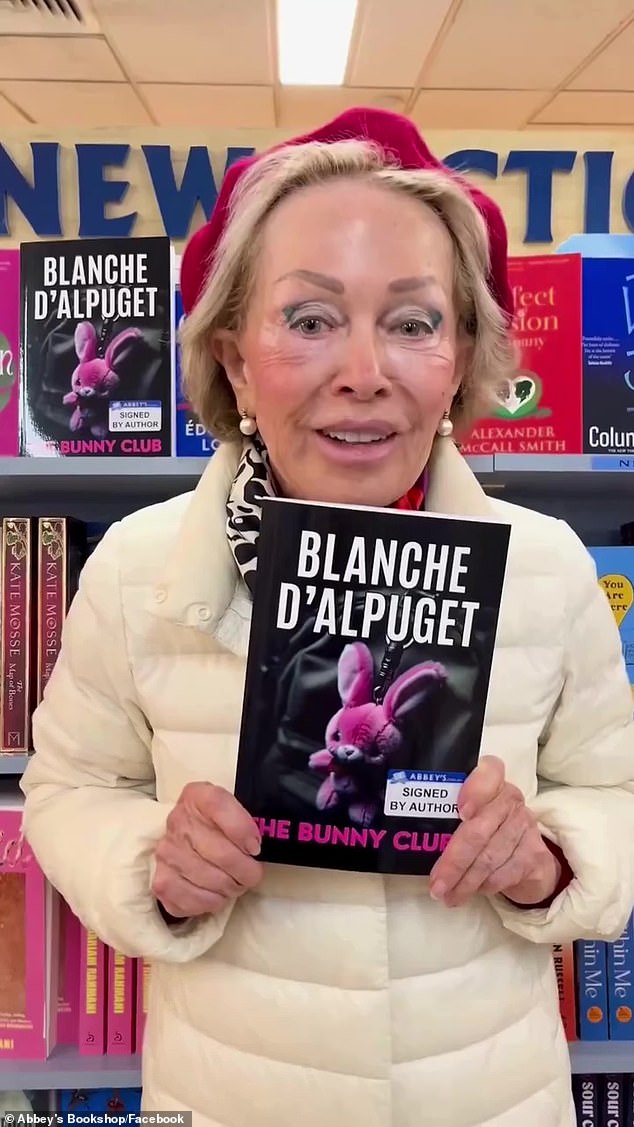
‘I think if you’re at a certain age, and you don’t start informing yourself, you’re foolish,’ she told News Corp.
‘Just as we prepare ourselves for life, by learning a language, reading, writing, and arithmetic, I think we should prepare ourselves for death.
‘But I do believe in the afterlife. Our soul lives on. I don’t know in what form, but this life in the body is not the end of your life. Maybe we are reborn. I don’t know, but it could be a huge, exciting adventure.’
She also opened up about her life in wide-ranging podcast with Neil Mitchell, including a harrowing ordeal when she was raped by a real estate agent as a 17-year-old.
‘I told my the man who became my first husband, and it got him terribly angry because this real estate agent was quite well known in Sydney and in the eastern suburbs,’ D’Alpuget recalled.
‘And I remember one night, Tony, my first husband, and I walked into a restaurant, and the man who I’ll just refer to as Billy was sitting there with a group of people, and my husband must have given him such a look that suddenly they all got up and left, fled because he obviously said to them, ”Oh, we’ve got to leave for whatever reason”.’
She also recalled how she later ran off to Melbourne at the same age to marry an already married Polish immigrant.
‘Gee, you’ve lived a life, haven’t you?’ Mitchell remarked.
D’Alpuget replied: ‘Yes, I have been a bit mad.’
When asked if she had any regrets, she replied: ‘Ah, look, I’m regretful when I think I’ve been cruel to to somebody.’
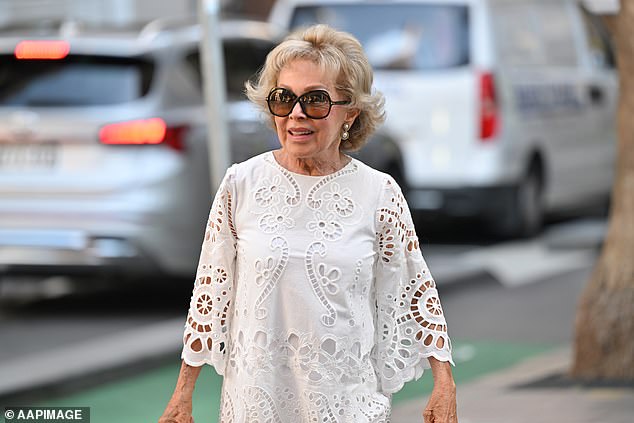
D’Alpuget also revealed to Mitchell that When the Saints Go Marching In would be played at her funeral.
‘It’s a fun song,’ she laughed.
Prime Minister Anthony Albanese was among the first to pay tribute, hailing D’Alpuget as a one-off.
‘As a writer, she was at home in fiction as she was in non-fiction, working in each realm with a keen eye for every telling detail that opened up the humanity of her subject to her readers,’ he said.
‘Blanche’s novels were compelling works of verve and originality, and her biographies comprehensive and definitive – most famously those she wrote of Bob Hawke, who became her great love and ultimately her husband.’
Derek Rielly, who wrote the Hawke biography Wednesdays With Bob, shared a heartfelt tribute with the Daily Mail.
‘Blanche believed that the pain of death is temporary, that it’s a fiery door and it will burn you but it’s a transient pain that will vanish,’ he said.
‘She lived a beautiful, complete and electric life and to her very last breath radiated a love for all humanity.
‘As she told me, ‘The more humans there are, the more love there is. Love is what distinguishes humans from the rest of creation’.’

Related posts:
Fiction park: He was the best in class. He still wasn’t good enough
Gagan Thapa takes oath as Congress president, vows to regain public trust

Inside knowledge that has locals gripped by fear after gran’s body found decomposing in cattle dip

New property purchase disclosure rule in Japan sparks fears it may curb foreign investment
Dino-mite treasures: inside Singapore’s Fort Knox storing playthings of ultra-rich