A supermarket clerk addresses an elderly customer as “father” or “mother.” In the workplace, once you become close, you’re “older brother,” and at the swimming pool, you yield your lane to “sister.” Even to strangers, you might ask them to become your child’s “uncle” or “aunt.”
Koreans frequently use familial terms of address for others. To navigate social life, one must adeptly use phrases like “It’s like my own son,” “We’re like family,” “Please treat me as your younger sibling,” or “It doesn’t feel like someone else’s problem.” The sticky sentiment of favoritism and collusion among blood relations is hard to ignore. If you emphasize only public order governed by individual independence, reason, and principles, you’re likely to be criticized as “heartless” or “disrespectful of hierarchy.”
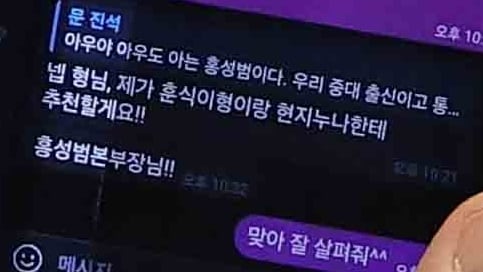
A presidential secretary sparked controversy by mentioning “Hunsik hyung (older brother)” and “Hyunji nunna (older sister)” while receiving a personnel request from a ruling party lawmaker regarding a university alumnus. While Koreans instantly grasp the context, many find it more repulsive precisely because they understand it.
In an era of recession and division where even real families struggle to support or protect one another, this article examines the anger ignited by the “pseudo-family” networks rampant in 21st-century public institutions.
Strangers, Objects… Addressed as Family
In Korea, strangers significantly older than you are called “grandfather/grandmother” or “father/mother,” as if they were direct ancestors. Even in transactional or contractual relationships, people casually refer to one another as “older brother,” “older sister,” or “uncle.”
While some Southeast Asian countries with Confucian cultural roots share similar linguistic practices, their scope is narrower than Korea’s. In English-speaking countries, the habit of calling close male friends “bro” (short for brother) originates from Black culture, but familial terms beyond that are not used.
The usage has expanded so widely that it sometimes veers off track. A prime example is “oppa,” originally used by women to refer to their boyfriend, husband, or a male celebrity they admire.
“Eomo” (aunt), originally meaning a mother’s female sibling, has broadened to include women close to one’s mother, those who are generous or caring, female workers in kitchens or cleaning roles, babysitters, and even home appliances like dishwashers, laundry dryers, and robot vacuums, collectively dubbed the “three great aunts.”
“Our family’s youngest” has become a term for a beloved pet dog, with owners identifying as “mom” or “dad.” Mr. S, a man in his 70s living in Gangseo-gu, Seoul, said, “A woman I knew in the neighborhood once held her dog and told it, ‘Say hello to Auntie Grandma,’ startling me.”
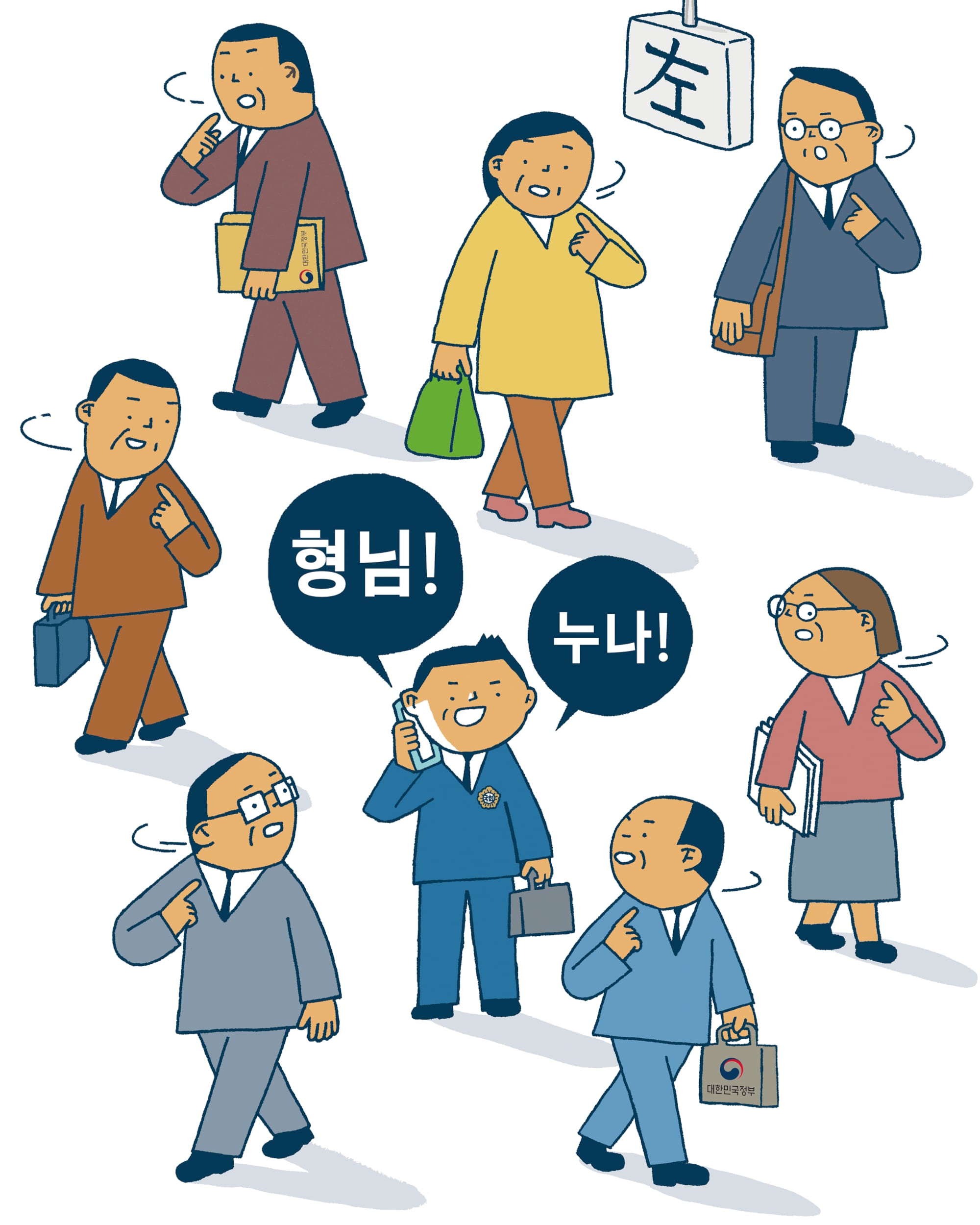
Academically, this phenomenon of using familial terms for others is called “family expansionism” or “expanded familism.” Cognitive psychologist Professor Kim Kyung-il of Ajou University explains, “Geographically and historically, survival in Korea was difficult relying solely on individual capability, leading people to seek safety within the ‘we’ boundary. Especially living closely in a small land and engaging in communal rice farming, the culture of living according to age and rank—defining oneself by ‘my position within the family’—became strong.”
While the clan-centered agrarian society collapsed in the 1970s, the habit of addressing others as kin persisted. Cultural psychologist Han Min said, “The prototype of Korean human relationships remains the family. Feeling the warmth and synergy of family toward a third party is a great psychological asset of Koreans,” but added, “Projecting expectations reserved for family onto public or contractual relationships is not the attitude of a modern society member.”
Political Fallout from ‘Oppa,’ ‘Nunna,’ and ‘Daughter’
More people now view the overflow of familial terms as inappropriate. In formal relationships defined by qualifications, rights, and obligations, ignoring established identities and ranking people by age and gender to blur public and private boundaries is no longer excused as “Korean-style affection.”
A pharmacist once reacted violently when a customer called her “nunna,” shouting, “Why am I your sister? Do you call doctors ‘oppa’ too?” The altercation escalated into a physical fight requiring police intervention. “Nunna” has acquired a derogatory nuance, often used to belittle young women, especially in entertainment industries.
Even older generations find overstepping terms uncomfortable. Surveys at senior welfare centers nationwide show that even those in their 70s and 80s now prefer being called “member” or “customer” over “father/mother” or “elder.”
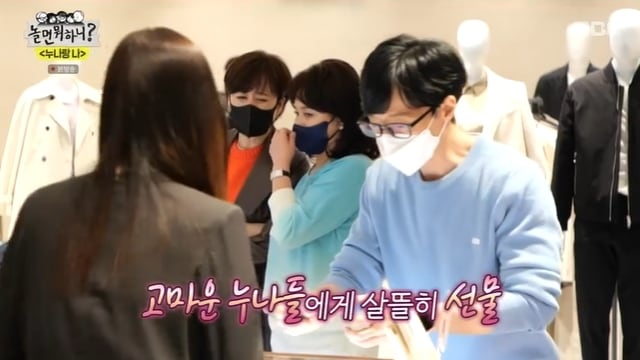
A man in his 60s, Mr. Kim, said, “A comedian dubbed the ‘national MC’ casually calls other cast members ‘hyeong’ (older brother) or ‘nunna’ on TV. Flattering private friendships among celebrities is disrespectful to viewers.”
Former First Lady Kim Keon-hee’s numerous “oppas” also drew criticism. She asked a journalist’s age and said, “Then you’re my oppa; treat me like your younger sister.” To a left-wing YouTuber stalking her, she said, “I’ll think of you as my younger sibling, so treat me as your nunna.” In a text to Myung Tae-kyun, she wrote, “Please forgive our immature oppa. Ignorance makes people act that way,” sparking debate over whether “oppa” referred to her husband or biological brother. Her approach of resolving public issues through private connections triggered massive political repercussions.
Amid this, former Presidential Digital Communications Secretary Kim Nam-kuk faced backlash for accepting a personnel request from Democratic Party lawmaker Moon Jin-seog as a “younger sibling” and referring to Chief of Staff Kang Hoon-sik and Presidential Secretary Kim Hyun-ji as “hyeong” and “nunna,” flaunting power.
Five-term lawmaker Park Ji-won commented, “Warmly calling each other ‘hyeong’ and ‘nunna’ is a longstanding linguistic tradition of the Democratic Party.” Analysis suggests that 386 movement activists, who shared meals and lived together while resisting military dictatorship, formed familial bonds that evolved into interest-based networks beyond ideological communities.
Professor Kim Dong-chun of Sociology at Sungkonghoe University said, “There was an era when people clung to family networks amid chronic war threats and an uncertain future. Even within the 1980s movement circles, factions shifted based on regional or school ties rather than ideology,” adding, “However, the expansion of familial relationships into politics, labor, and civic movements—where cliques still discuss and decide critical matters—is a major societal ill.”
“Like Family…” Shadows of a Low-Trust Society
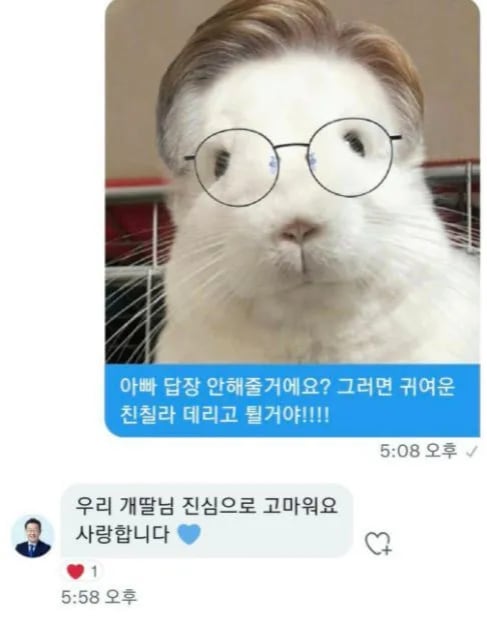
The roots of family ideology run deep in progressive circles. After losing the 2007 presidential election, pro-Roh Moo-hyun factions declared themselves “disgraced families.” A political faction advocating anti-establishment politics surprised many with its “Confucian family certification.”
President Lee Jae-myung’s fan club, nicknamed “Gaeddal” (“daughters of reform”) and “nyangadeul” (“sons of conscience”), is tightly knit around the narrative of filial piety toward “Jae-myeong Papa.” While President Lee called this “a historically significant new political behavior,” critics pointed to its exclusionary feudal order.
In Korea, organizations emphasizing “family” have become the most suspicious. Job postings saying, “We’re looking for someone to work like family,” often mean exploitative, low-wage labor. The same applies to organized crime, drug, and prostitution rings that function through “hyeongnim” (older brothers), “uncles,” and “aunts.” Perpetrators of sexual harassment justify their actions by saying, “She’s like my daughter” or “I touched her because she’s cute, like a granddaughter.”
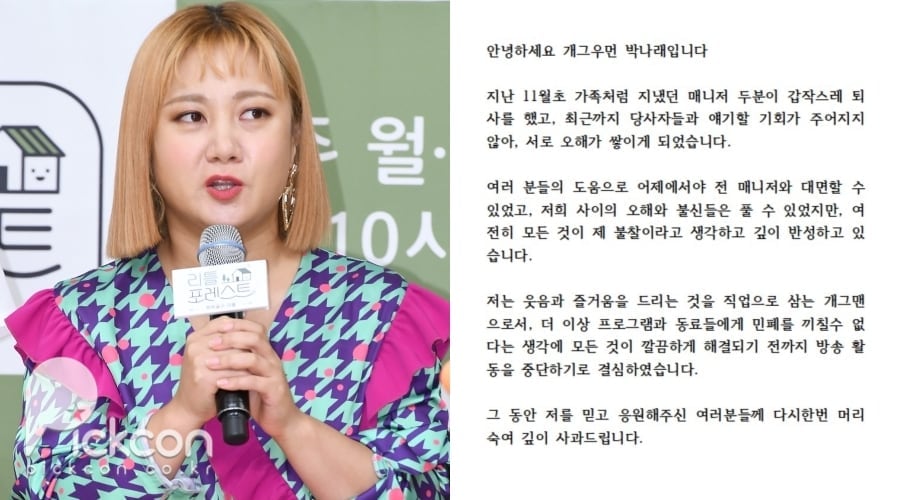
Recently, former managers of broadcaster Park Na-rae alleged verbal abuse, power harassment, and unpaid personal errands. Her first line of explanation invoked “family”: “The managers I treated like family suddenly quit, and I had no chance to talk.” Controversy also arose over her receiving unlicensed medical treatments from an “injection aunt.”
Political philosopher Francis Fukuyama of Stanford University stated, “A society where formal systems are weakened and kinship networks dominate is ultimately a ‘low-trust society’ with weak public trust capital.” If success depends on connections hidden within pseudo-family networks and cronyism rather than merit and principles, it is not an advanced society.