Burundi’s Involvement in the DR Congo Conflict
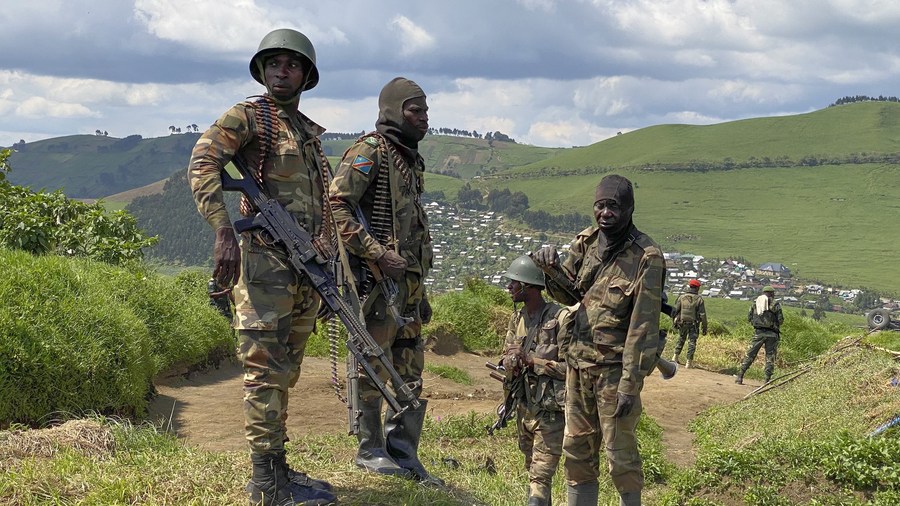
Burundi has emerged as a key player in the ongoing conflict in the Democratic Republic of Congo (DR Congo), with its troops now actively engaged in combat operations in South Kivu near the border between the two countries. According to a local military source, 24 battalions consisting of approximately 25,000 Burundian soldiers have been deployed alongside the Congolese army to counter the M23 movement. This development raises critical questions about Burundi’s motivations for entering the DR Congo conflict and the broader implications for regional stability.
The region has a long history of instability, marked by the legacy of genocide and mass violence since the 1990s. As fighting intensifies around Uvira, it threatens the outcome of peace talks brokered in Doha and Washington. Understanding how Burundi’s actions are reshaping the prospects for peace and security in the wider Great Lakes region is essential.
Burundi first sent its military into DR Congo’s North Kivu in November 2022 as part of the East African Community Regional Force (EACRF), a regional effort aimed at restoring peace and security. While the EACRF withdrew under pressure from Burundi’s EAC leadership and the DR Congo government in December 2023, Burundi maintained its military presence through a new bilateral agreement with Kinshasa. To fully grasp why Burundi is now involved in the conflict, it is necessary to consider the interlinked histories of Burundi, DR Congo, and Rwanda, whose colonial-era borders—drawn at the Berlin Conference of 1884–85—have created a landscape where instability in one nation often spills over into others.
Historical Context and Regional Entanglements
The modern roots of Burundi’s regional entanglement can be traced back to the aftermath of the 1993 assassination of President Ndadaye, which triggered the Burundian civil war. Waves of massacres of Burundian Tutsi by Hutu extremists followed and were violently repressed by the Burundian army, driving the Hutu extremists to seek refuge in Rwanda. Six months later, many of them participated in the 1994 genocide against the Tutsi in Rwanda, in which one million Tutsi were murdered in just 100 days.
When the Rwandan Patriotic Front, led by Paul Kagame, defeated the Rwandan genocidal regime, the Burundian Hutu extremists who had participated in the genocide joined fleeing Rwandan genocide perpetrators in eastern Congo, bringing their weapons and a fully formed anti-Tutsi genocide ideology. This ideology would profoundly shape regional dynamics for decades to come.
The Rise of Armed Movements
The Burundian Hutu power extremists and the masterminds of the 1994 genocide against the Tutsi in Rwanda, in exile in the forests of Congo, created powerful armed movements. The Burundians established the CNDD (Conseil national pour la défense de la démocratie), which later became the CNDD-FDD (Conseil national pour la défense de la démocratie – Forces pour la Défense de la Démocratie)—today’s ruling party in Burundi under President Évariste Ndayishimiye. Meanwhile, the Rwandan genocide perpetrators in exile founded the FDLR (Forces démocratiques de libération du Rwanda).
According to a former FDLR intelligence officer we interviewed after his capture in DR Congo, both groups were recruited, armed, and given sanctuary by Congolese President Laurent-Désiré Kabila during the Second Congo War (1998–2003). This period saw indiscriminate violence inflicted on Congolese and Rwandan Tutsi populations—“the enemy” as Kabila labeled them.
The Arusha Peace and Reconciliation Agreement
The 2000 Arusha Peace and Reconciliation Agreement, negotiated as a path to peace in Burundi under Nelson Mandela and Julius Nyerere, offers vital context for understanding the current crisis. The Arusha Accords, crafted to end decades of Hutu–Tutsi bloodshed in Burundi, introduced a strict system of ethnic power-sharing through quotas in government and the military. While this arrangement was commended by international and regional analysts as a positive tool to prevent the dominance of any single group, it also enshrined ethnic identity at the core of state institutions, thus perpetuating, rather than healing, inter-communal suspicion.
Political Crisis and Authoritarian Rule
Gradually, CNDD-FDD’s dominance turned increasingly authoritarian, marked by the restriction of freedoms, repression of the press, and escalating tensions. The system nearly unraveled in 2015 when President Pierre Nkurunziza sought a third term in violation of the Arusha constitution, sparking a popular uprising. Facing civil unrest and an attempted coup, Nkurunziza’s government called on FDLR allies from Congo to support the army and police in violently suppressing protests.
Nkurunziza also unleashed his own youth militia, the Imbonerakure, trained in the same anti-Tutsi hatred as Rwanda’s Interahamwe. The Imbonerakure’s infamous song “Tera inda abakeba bavyare imbonerakure” (“Go rape Tutsi women so they give birth to Imbonerakure”) is a chilling reminder of how genocide ideology permeates state violence, drawing disturbing parallels to 1994.
Escalation of Violence and Regional Implications
Since 2022, Burundi’s military involvement in the DR Congo has intensified. Burundian soldiers, the Imbonerakure, the FDLR, and Congolese militias known as Wazalendo, assisted by European and American mercenaries, now form a coalition with the DR Congo army, united by a virulent anti-Tutsi ideology and the explicit goal of eradicating Tutsi presence in the region. The M23 movement—portrayed as a Tutsi front—is used as a pretext to target Congolese Tutsi; conflating civilians and combatants, the coalition has carried out attacks against Tutsi communities, burnt hundreds of homes in Nturo, targeted the Bwiza camp housing displaced people, and carried out public massacres in Kitchanga.
Repeated recent attacks near Uvira at the DRC-Burundi border, in particular, have created a tinderbox for mass violence. Testimonies, news coverage, and videos posted online document these atrocities and provide disturbing evidence of a pattern of violence reminiscent of the 1994 genocide. The coalition’s primary aim appears to be the elimination of Tutsi populations they accuse—without evidence—of supporting M23, a narrative that once again makes ethnicity a matter of political survival.
Broader Consequences
The repercussions of Burundi’s intervention stretch far beyond the DR Congo borders. If the DR Congo coalition is defeated in Uvira, thousands of armed fighters—including genocidal forces such as the FDLR, CNDD-FDD’s Imbonerakure, and the Wazalendo militias—could retreat into Burundi, sparking further violence and possibly mass reprisals against Burundi’s Tutsi minority, who may be collectively targeted for supposed allegiance to the M23. This scenario is particularly troubling in light of the region’s history, where similar waves of mass violence were preceded by calculated hate speech and ideological mobilisation at both grassroots and state levels.
Burundi’s current crisis reveals the risks of power being concentrated among unaccountable elites with roots in past atrocities, reinforced by a legacy of ethnic division inscribed by colonialism, genocide, and regional war. The enduring alliances between Burundi’s ruling party CNDD-FDD and the FDLR are more than matters of strategy or survival—they are evidence of a persistent, dangerous worldview that resists reconciliation and peace.
Burundi’s current military intervention in the DR Congo is not simply a matter of national security, policy, or regional alliances. It is the latest phase of a decades-long cycle of violence, manipulation of identity, and the instrumentalisation of genocide ideology for both political and material gain.


