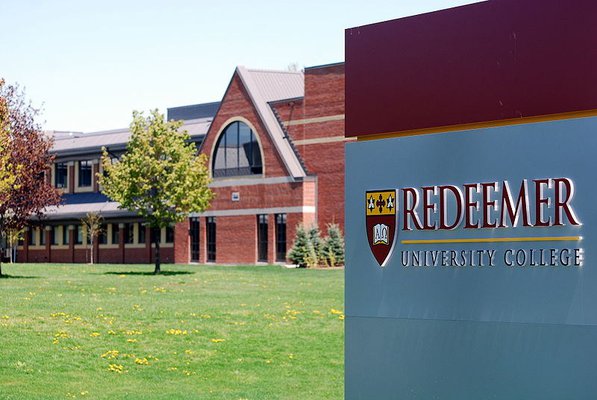
A Growing Concern Over Student Welfare at Private Nigerian Universities
During the week, a TikTok user brought attention to Redeemer’s University, sparking a broader conversation about fairness, responsibility, and the future of private education in Nigeria. The discussion has focused on how undergraduates at such institutions are treated, with concerns raised about fee enforcement and student welfare.
On Tuesday, TikTok creator Samuel Oyebamiji, known as Tech With Olajesutomiwa (@olajesutomiwa), posted a video that quickly became a focal point for students and parents questioning the university’s policies. As a computer science alumnus of the faith-based institution, now working as a data scientist and artificial intelligence engineer, Oyebamiji expressed his concern not out of rebellion but because he felt the university was straying from its founding ideals.
His initial post, which has received over 54,500 views as of Thursday, generated a significant response in the comment section. Many users, believed to be students of the university, agreed with his points. However, when contacted by Saturday PUNCH, most declined to comment, citing fear of expulsion.
“You want me to make a comment, and tomorrow the school will expel me. Hardly will you get a student to speak on this issue,” one student said.
Despite the backlash, the management of Redeemers University has responded to the claims, calling them “untrue.”
Concerns Over Tuition Policy
Oyebamiji spoke emotionally about what he saw as the original vision of the university and the gap he perceives today. He addressed the General Overseer of the Redeem Christian Church of God, Pastor Enoch Adeboye, urging him to help the students.
“Please, you need to come to the aid of Redeemer’s University students because this is not what was promised. The Redeemer’s University we see today is not the mission God sent you to accomplish,” he said.
He questioned the enforcement of tuition payments at the start of the second semester, noting reports that students were being denied access to their hostels despite having paid substantial portions of their fees.
“So, I do not understand why students are being locked out at 1 a.m., 2 a.m., or even 3 a.m., simply because they have not paid 100 per cent of their school fees at the beginning of the second semester,” Oyebamiji said.
He contrasted the current approach with the system that operated during his time as a student, which tied examination clearance to full payment rather than hostel access.
A Parent’s Perspective
Mrs. Olawunmi Ojo, a parent, highlighted that the problem is not limited to one university, but reflects a pattern within privately owned institutions.
“It’s not Redeemer University alone; students don’t have a voice in private universities,” she wrote.
She recounted a troubling academic incident involving her son at Lead City University, where examination scripts allegedly went missing. She challenged the level of administrative accountability when errors occur within academic processes.
“It’s real. No voice. My son’s four exam sheets got missing in Lead City, only for the dean of faculty to ask him to rewrite four papers. His name is on the exam register. What happened to the lecturers whose students’ papers went missing? It wasn’t like that in our days,” Ojo said.
Wider Issue Across Private Universities
There were also claims from several contributors insisting that the issue is widespread across the private university sector.
Mrs. Oluwadarasimi Alade described the situation as a generalised challenge affecting multiple institutions rather than an isolated case.
“I think this is a general issue. Private universities don’t allow the voices of the students to be heard. We are experiencing the same in my school,” she stated.
Similarly, Mrs. Abigeal Awolola maintained that such grievances are common across private universities and cited a personal family experience.
“These issues affect all private universities. It happened to my niece,” she noted.
RUN Refutes Viral Claims
In response, the management of Redeemer’s University has denied reports that students who have not fully paid their fees have been locked out of hostels. In a statement, the university refuted what it described as “fictitious” a document circulating online that claims changes to the school’s fee payment schedule and the resumption dates for returning students for the Second Semester of the 2025/2026 academic session.
“Students who do not make full payment of their 2025/2026 academic session fees by Friday, 13th February 2026, shall proceed on vacation and resume on Friday, 27th February 2026,” the management clarified, stating that this information is false.
The university insisted that its installment payment system remains 40 per cent at the resumption of the first semester, 20 per cent before first-semester examinations, and the remaining 40 per cent at the resumption of the second semester.
VC Assures Continuous Support
In the statement, the Vice-Chancellor of RUN, Prof Akindele, emphasized that the university will continue to offer flexibility for parents who may need additional time to meet payment obligations.
“Even though we have our payment rules, we still accommodate parents who request an extension on an individual basis,” he said.
He highlighted the various measures the university has put in place to ease the financial burden on students.
“As a university, we offer different categories of scholarships to students who excel in their studies, students who excel in sports, and students who win prizes in the university debates,” he said.
The Vice-Chancellor also noted that external support is available for students in need, “We also engage with various philanthropists to help pay the fees of indigent students among us. Students whose parents are members, workers, or ministers in RCCG receive different levels of educational grants,” he added.


